


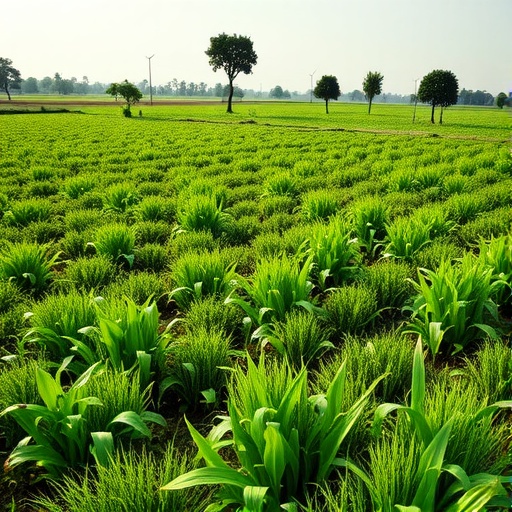
In a groundbreaking study set to reshape agricultural policy frameworks, researchers have introduced a novel approach targeting crop diversification in Bangladesh. The significance of this research lies not only in its innovative methodology but also in its potential to augment food security and improve rural livelihoods in a rapidly changing climatic landscape. The study is a comprehensive analysis that merges advanced data analytics with traditional agricultural practices, creating a unique model that could be adapted by policymakers globally.
The researchers, led by R. Nandi, alongside T.J. Krupnik and B. Narayana Rao, delve into the multifaceted challenges facing Bangladesh’s agricultural sector amidst relentless climate changes and socio-economic pressures. Bangladesh, a nation heavily reliant on its agriculture, is continuously grappling with increased flooding, soil salinity, and shifting weather patterns that threaten crop yields. This study comes at a crucial time when the intersection of agriculture, policy, and environmental sustainability could dictate food availability and economic stability for millions.
Through their analysis, the team has identified a plethora of traditional and modern crops viable for diversification in various regions of Bangladesh. By meticulously mapping climatic data with soil health metrics, they propose tailored crop choices that farmers can implement based on specific local conditions. This granular approach aims to empower farmers, providing them with the strategic insights necessary to enhance their resilience to environmental challenges while also aiming for higher economic returns.
Moreover, the importance of involving local communities in the decision-making process is a cornerstone of this research. By conducting participatory research with farmers, the team ensures that their policy recommendations are grounded in the realities of rural life in Bangladesh. This unique involvement not only enriches the data but also fosters ownership among farmers, making the adoption of new practices more sustainable in the long term.
The methodology employed in this study sets a new benchmark for agricultural policy analysis. Utilizing a data-driven approach that integrates climatic models, economic factors, and agricultural practices, the researchers emphasize the need for dynamic policies that adapt to both environmental shifts and socio-economic changes. This holistic view contrasts starkly with traditional policy-making that often relies on static models and outdated data, making this research particularly timely and relevant.
Furthermore, as climate change continues to disrupt agricultural timelines and affect planting seasons, the team advocates for the development of a flexible policy framework that can respond rapidly to these changes. Incorporating predictive analytics into policy planning allows stakeholders to foresee potential challenges and pivot accordingly, reducing the vulnerability of the agricultural sector.
Financial investments in research and development are also highlighted as essential. The study posits that for effective crop diversification to occur, both public and private sectors must commit to funding agricultural innovation. By providing financial backing for research initiatives that focus on sustainable practices, the potential for significant advancement in agricultural productivity can be unlocked, creating a win-win scenario for farmers and the national economy.
Integration of technology along with a focus on traditional agricultural knowledge represents another key component of this research. As farmers grapple with diverse challenges, the introduction of technologically enhanced farming practices can offer immediate solutions. The study advocates for training programs to educate farmers on the use of smart agricultural tools, thus bridging the gap between traditional practices and modern efficiencies.
The implications of this work extend beyond Bangladesh. The model proposed in this study offers insights that can be universalized to other developing nations facing similar agricultural dilemmas. By adjusting the methodologies to reflect local contexts, countries worldwide could benefit from the lessons learned in Bangladesh, promoting global food security more effectively.
The potential for this research to influence not just local agricultural policies but also international dialogues on food systems is profound. As nations grapple with the repercussions of climate change on agriculture, the insights from this study could propel new conversations about sustainable practices and collaboration between countries facing similar food security threats.
Importantly, the call to action from the authors emphasizes the urgency of revisiting agricultural policies in light of contemporary challenges. Policymakers are urged to adopt a proactive stance, utilizing the findings from this research as a foundation for comprehensive agricultural reform. It is essential not only for the survival of farming communities but for the long-term sustainability of global food systems.
As the study prepares for publication in the journal “Discover Sustainability” in 2025, it stands poised to make significant waves within both academic circles and policy-making arenas. The research signifies a pivotal shift in how agricultural policies can be crafted—namely, through an inclusive, data-driven, and adaptive lens that places farmers at the heart of decision-making processes.
In conclusion, this innovative study is a clarion call for a re-examination of agricultural practices and policies globally. By embracing a multifaceted approach to crop diversification, the researchers offer a solution that not only safeguards the future of Bangladeshi agriculture but also serves as a model for sustainable practices worldwide.
Cite Scienmag News
Alan Morgan. (December 19, 2025). Innovative Agricultural Policy Analysis: Crop Diversification in Bangladesh. Scienmag. https://scienmag.com/innovative-agricultural-policy-analysis-crop-diversification-in-bangladesh/
Alan Morgan. "Innovative Agricultural Policy Analysis: Crop Diversification in Bangladesh." Scienmag, 19 December 2025, https://scienmag.com/innovative-agricultural-policy-analysis-crop-diversification-in-bangladesh/. Accessed 5 September 2026.
Alan Morgan. "Innovative Agricultural Policy Analysis: Crop Diversification in Bangladesh." Scienmag. December 19, 2025. https://scienmag.com/innovative-agricultural-policy-analysis-crop-diversification-in-bangladesh/


