


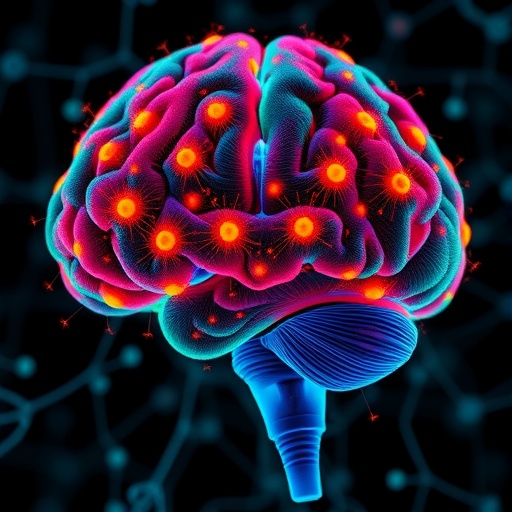
In a groundbreaking study published in Cell Death Discovery, researchers have unveiled novel insights into the complex relationship between inflammation and cognitive decline in multiple sclerosis (MS). By employing advanced transcriptome analysis techniques on the prefrontal cortex of an MS model, the team identified a suite of inflammatory genes that appear intimately linked with the neurological deficits characteristic of the disease. This work represents a significant leap forward in our understanding of the molecular underpinnings of MS-associated cognitive impairment, shining a spotlight on potential therapeutic targets that could transform patient outcomes in the future.
Multiple sclerosis is a relentlessly debilitating disorder defined by multifocal inflammation and demyelination within the central nervous system. While motor dysfunction and sensory deficits have long dominated clinical concerns, cognitive impairment is increasingly being recognized as a profound burden for many patients. The exact mechanisms orchestrating this cognitive decline have remained elusive, yet it is apparent that inflammatory processes in the brain play a pivotal role. To interrogate this further, Zupo and colleagues performed comprehensive transcriptomic profiling of the prefrontal cortex—an area critically involved in executive function, decision-making, and memory consolidation.
The prefrontal cortex sits at the nexus of neural networks underpinning higher-order cognitive processes. Damage or dysfunction in this region can precipitate widespread deficits in attention, working memory, and information processing speed, all of which are frequently impaired in MS patients. By examining gene expression changes in this brain region in an animal model that recapitulates key aspects of MS pathology, the researchers were able to pinpoint specific immune and inflammatory pathways that correlate tightly with cognitive performance metrics. This innovative approach enabled a more granular analysis than previous studies that often analyzed whole-brain homogenates, which tend to obscure region-specific molecular alterations.
Leveraging high-throughput RNA sequencing, the study delineated a unique transcriptional signature marked by upregulation of genes involved in innate immunity, cytokine signaling, and microglial activation. Notably, genes encoding pro-inflammatory cytokines such as TNF-α, IL-1β, and IL-6 were significantly overexpressed in the prefrontal cortex of MS model rodents displaying pronounced cognitive deficits. These cytokines are known to modulate synaptic plasticity and neuronal viability, suggesting a direct mechanistic link between immune activation and disruption of cognitive circuits. Moreover, the authors identified the induction of chemokine genes responsible for leukocyte recruitment, which could exacerbate neuroinflammation and tissue damage.
Microglia, the resident immune cells of the central nervous system, emerged as key players in the observed molecular landscape. The transcriptomic data revealed increased expression of microglial activation markers and phagocytic receptors, indicative of a neuroinflammatory milieu. Persistent microglial activation has been implicated in synaptic pruning and neuronal loss, processes that undermine cognitive integrity over time. Intriguingly, the study also discovered dysregulation of genes regulating oxidative stress and mitochondrial function, highlighting the multifactorial nature of neurodegeneration in MS.
One of the most compelling aspects of this research is the identification of novel candidate genes not previously linked to MS-related cognitive dysfunction. For instance, the upregulation of genes involved in complement cascade activation hints at aberrant immune interactions that may facilitate synapse elimination and neuronal injury. Additionally, alterations in genes governing blood-brain barrier integrity suggest that compromised vascular function could permit peripheral immune cell infiltration, amplifying local inflammation. These findings open the door to new therapeutic avenues aimed at preserving cognitive function through modulation of peripheral-central immune crosstalk.
The translational implications of these insights are profound. Currently available MS therapies primarily target relapse frequency and physical disability, with limited efficacy against cognitive decline. By elucidating the specific inflammatory pathways implicated in cognitive impairment, this study sets the stage for development of targeted immunomodulatory strategies tailored to protect neural circuits critical for cognition. For example, antagonists of pro-inflammatory cytokines or inhibitors of microglial activation may hold promise in arresting or even reversing cognitive deficits.
Furthermore, the employment of transcriptome analysis underscores the power of omics approaches in unraveling complex neuroimmune interactions. Such comprehensive molecular profiling allows not only the discovery of gene expression changes but also a better understanding of functional networks and signaling cascades perturbed in disease states. Future research integrating transcriptomics with proteomics, metabolomics, and neuroimaging could provide an even richer picture of MS pathophysiology and guide precision medicine frameworks.
The study’s methodology also merits attention. Utilizing a well-established animal model that simulates both demyelination and cognitive abnormalities adds robustness to the findings. The rigorous behavioral assessments used to quantify cognitive impairment were correlated with molecular data to establish causal inferences rather than mere associations. This multi-disciplinary approach exemplifies the modern standard for mechanistic neuroscience research, enhancing the validity and potential clinical relevance of the results.
Notably, the research team took care to dissect temporal dynamics of gene expression changes, revealing that inflammatory gene signatures evolve over the course of disease progression. Early-stage activation patterns were distinct from those observed at later chronic phases, a nuance that could inform timing and selection of therapeutic interventions. Such temporal resolution emphasizes that MS is not a static condition but a dynamic interplay of immune and neurodegenerative processes.
The complex interplay between inflammation and neurodegeneration elucidated here challenges the traditional binary dichotomy that treats immune activation solely as a driver of tissue damage. Instead, the evidence suggests that inflammation may have context-dependent effects, sometimes protective but often detrimental when chronic or dysregulated. This highlights the need for sophisticated therapies capable of recalibrating immune responses rather than blunt suppression.
Importantly, the authors acknowledge limitations inherent to animal models and extrapolation to human disease. While the findings are compelling, validation in human post-mortem tissue or patient-derived cells will be essential to confirm translational relevance. Additionally, cognitive impairment in MS is heterogeneous, influenced by genetic and environmental factors; hence, future studies need to decipher how these variables interplay with neuroinflammatory gene expression profiles.
The discovery of inflammatory gene signatures associated with cognitive decline in MS reinforces the paradigm that neurological diseases must be understood through the lens of neuroimmune communication. By decoding the transcriptomic alterations in the prefrontal cortex, Zupo and colleagues illuminate pathways that can be harnessed for therapeutic gain, offering hope that cognitive dysfunction in MS may one day be effectively prevented or treated. This research represents a seminal contribution to the field and paves the way for more personalized interventions aimed at preserving brain health amid the challenges of neuroinflammation.
As multiple sclerosis continues to affect millions worldwide, with cognitive impairment emerging as a major determinant of quality of life, studies like this invigorate the scientific community’s efforts to deliver breakthroughs. Future integration of molecular insights with clinical trials will be crucial to translate these findings into tangible benefits for patients, marking a turning point in how we approach neurodegenerative autoimmune diseases. The era of transcriptome-guided therapy for MS cognitive impairment appears within reach, promising a brighter future for those afflicted.
In summary, the comprehensive analysis of the prefrontal cortex transcriptome in an MS model highlights a constellation of inflammatory genes actively shaping cognitive outcomes. This work underscores inflammation’s dual role as a mediator of both immune defense and neuronal injury and identifies concrete molecular targets for novel treatments. As we deepen our grasp of brain-immune interactions, the potential to mitigate cognitive deficits in MS grows ever more attainable, signaling a new chapter in neuroimmunology and precision neuromedicine.
Cite Scienmag News
Juliet Wilcox. (March 27, 2026). Inflammatory Genes Linked to Cognitive Decline in MS. Scienmag. https://scienmag.com/inflammatory-genes-linked-to-cognitive-decline-in-ms/
Juliet Wilcox. "Inflammatory Genes Linked to Cognitive Decline in MS." Scienmag, 27 March 2026, https://scienmag.com/inflammatory-genes-linked-to-cognitive-decline-in-ms/. Accessed 3 September 2026.
Juliet Wilcox. "Inflammatory Genes Linked to Cognitive Decline in MS." Scienmag. March 27, 2026. https://scienmag.com/inflammatory-genes-linked-to-cognitive-decline-in-ms/


