


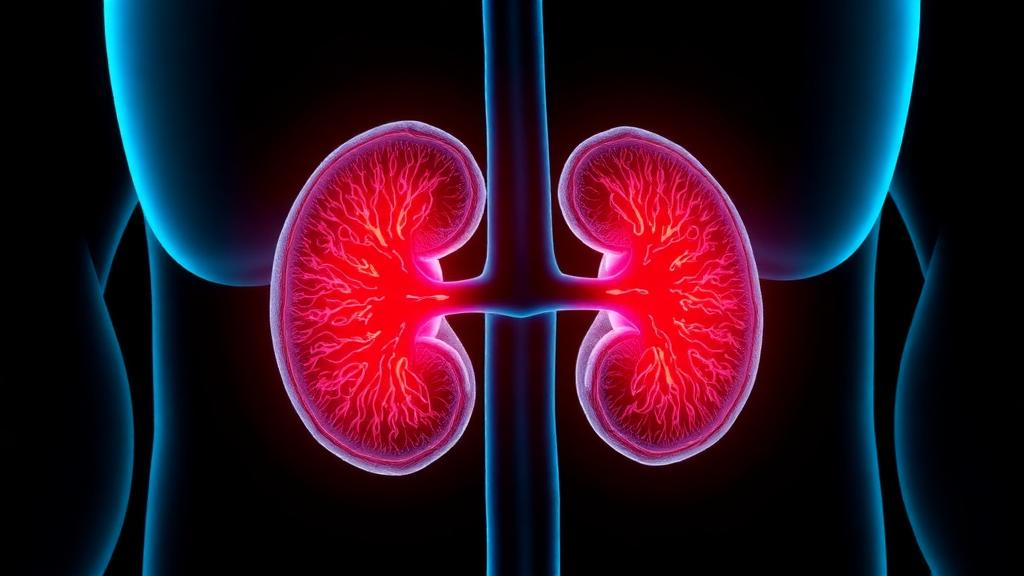
Two familiar players in the body’s inflammatory repertoire may hold the key to identifying which patients with type 2 diabetes are most likely to develop kidney disease. A new cross-sectional study from Uzbekistan, published in BMC Endocrine Disorders, reports that elevated blood levels of high-sensitivity C-reactive protein (hs-CRP) and interleukin-6 (IL-6) are independently associated with diabetic nephropathy, the devastating kidney complication that represents one of the leading causes of chronic kidney disease worldwide. The findings, drawn from 227 patients in a country where such data have been scarce, add weight to a growing body of evidence that chronic low-grade inflammation is not merely a bystander in diabetes but an active participant in the destruction of renal tissue.
Diabetic nephropathy develops when prolonged exposure to high blood sugar damages the delicate filtering units of the kidneys, the glomeruli. Clinically, it announces itself through rising levels of albumin in the urine and a gradual decline in the estimated glomerular filtration rate, the standard measure of kidney function. Because the condition often progresses silently for years before symptoms appear, clinicians have long sought biomarkers that could flag patients at risk before irreversible damage sets in. Inflammation has been a prime suspect: hyperglycemia triggers the production of pro-inflammatory cytokines, and these signaling molecules in turn promote the fibrosis, thickening of basement membranes, and vascular dysfunction that characterize the failing diabetic kidney.
The research team, led by Olimjan Nazirkulov of the Institute of Immunology and Human Genomics of the Academy of Sciences of the Republic of Uzbekistan, together with colleagues from Samarkand State Medical University, Tashkent State Medical University, and Kimyo International University, recruited 227 patients with type 2 diabetes. Of these, 95 had no microvascular complications, while 132 had diabetic nephropathy. The investigators collected demographic, clinical, laboratory, and medication data, and measured hs-CRP and IL-6 concentrations in the blood. The study protocol was approved by the Institutional Review Board of the Institute of Immunology and Human Genomics, and all participants provided written informed consent in accordance with the Declaration of Helsinki.
The differences between the two groups were striking. Patients with diabetic nephropathy had a median hs-CRP concentration of 7.50 milligrams per liter, compared with 4.54 milligrams per liter in patients without microvascular complications. Their median IL-6 levels were similarly elevated, at 13.30 picograms per milliliter versus 8.40 picograms per milliliter. Both differences were highly statistically significant, with P values below 0.001. Beyond the inflammatory markers, the nephropathy group was also older, had lived with diabetes for longer, and more frequently suffered from hypertension, all factors known to compound kidney risk.
To determine whether these inflammatory markers carried independent predictive weight, the researchers constructed five multivariable logistic regression models, progressively adjusting for potential confounders. In the fully adjusted model, each unit increase in hs-CRP was associated with a 31 percent higher odds of diabetic nephropathy, with an adjusted odds ratio of 1.31 and a 95 percent confidence interval of 1.07 to 1.59. IL-6 proved an even stronger signal: each unit increase carried a 50 percent higher odds of nephropathy, with an adjusted odds ratio of 1.50 and a confidence interval of 1.31 to 1.72. Longer diabetes duration, hypertension, and higher fasting plasma glucose levels were also independently associated with the complication.
Perhaps the most technically compelling result concerns how much the inflammatory markers improved risk prediction. The researchers evaluated model discrimination using receiver operating characteristic (ROC) curve analysis and pairwise comparisons of the area under the curve (AUC). A clinical model built on conventional risk factors alone achieved an AUC of 0.814, already respectable performance. When hs-CRP and IL-6 were added, the AUC climbed to 0.943, a substantial gain that pushed the model into the range of excellent discrimination. Because such gains can be inflated by overfitting, the team performed internal validation using 1,000 bootstrap resamples; the optimism-corrected AUC remained at 0.921, indicating that the improvement was robust rather than a statistical artifact.
Calibration, the question of whether a model’s predicted probabilities match observed outcomes, was assessed through calibration plots, Brier scores, and the Hosmer–Lemeshow test, providing a methodologically thorough evaluation that goes beyond the discrimination statistics often reported in isolation. Group comparisons in the study were performed using the Mann–Whitney U test for continuous variables and the chi-square test for categorical variables, appropriate choices given that biomarker distributions in biological samples are typically skewed. Statistical significance was defined as a P value below 0.05 throughout.
The study’s setting matters. Central Asian populations have been markedly underrepresented in diabetes research, and evidence linking inflammatory biomarkers to diabetic nephropathy has come overwhelmingly from East Asian, European, and North American cohorts. By demonstrating that the hs-CRP and IL-6 associations hold in an Uzbekistani patient population, the researchers provide a valuable data point from a region where diabetes prevalence is rising and nephrology resources are often stretched. The work also benefited from institutional support, with the authors acknowledging the Samarkand Branch of the Republican Specialised Scientific and Practical Medical Centre of Endocrinology and the Institute of Immunology and Human Genomics for organizational and technical assistance. The study received no specific external funding, and the authors declare no competing interests.
Mechanistically, the findings fit a coherent biological narrative. IL-6 is a pleiotropic cytokine released by immune cells, adipose tissue, and damaged endothelium; it drives hepatic production of CRP, which is why the two markers tend to rise together. In the diabetic kidney, IL-6 signaling has been implicated in mesangial cell proliferation, increased vascular permeability, and the activation of fibrotic pathways that progressively scar the glomeruli. hs-CRP, meanwhile, serves as a stable, easily measured readout of systemic inflammatory burden. The fact that both markers remained significant after adjustment for glycemic control, blood pressure, and diabetes duration suggests that inflammation captures risk information that conventional clinical variables miss, consistent with the hypothesis that inflammatory pathways contribute actively to nephropathy rather than simply reflecting it.
The authors are careful to frame their conclusions appropriately. As a cross-sectional study, the work captures a single moment in time and cannot establish whether elevated hs-CRP and IL-6 precede kidney damage or accompany it; reverse causation, in which declining kidney function itself drives inflammation, remains a plausible alternative explanation. The researchers note that prospective and externally validated studies are needed to determine the clinical utility of hs-CRP and IL-6 before the markers can be considered for routine clinical risk assessment. Still, the magnitude of the associations, the near doubling of model performance, and the bootstrap-validated robustness make a strong case that these inexpensive, widely available blood tests deserve a place in future longitudinal trials. If those trials confirm the signal, a simple pair of measurements could one day help clinicians identify which of their diabetic patients needs the closest kidney surveillance, years before dialysis becomes the only option.
Subject of Research: Associations of inflammatory biomarkers hs-CRP and IL-6 with diabetic nephropathy in type 2 diabetes patients
Article Title: Associations of hs-CRP and interleukin-6 with diabetic nephropathy in patients with type 2 diabetes mellitus: a cross-sectional study from Uzbekistan
Article References: Nazirkulov, O., Abdullayeva, N., Ziyadullaev, S., Tulyaganova, D., Kodirov, A., Kadirov, J., Eshbayeva, K., Ishonhajaev, H., Akhmedov, A., Nasretdinova, M., Samibaeva, U., & Ruzimurodov, N. (2026). Associations of hs-CRP and interleukin-6 with diabetic nephropathy in patients with type 2 diabetes mellitus: a cross-sectional study from Uzbekistan. BMC Endocrine Disorders. https://doi.org/10.1186/s12902-026-02515-4
Image Credits: AI Generated
DOI: 10.1186/s12902-026-02515-4
Keywords: type 2 diabetes, diabetic nephropathy, hs-CRP, interleukin-6, inflammation, chronic kidney disease, biomarkers, risk prediction, Uzbekistan, cross-sectional study, logistic regression, microvascular complications
Cite Scienmag News
Ophelia Keating. (October 11, 2026). Inflammation Markers Signal Kidney Damage in Type 2 Diabetes, Uzbek Study Finds. Scienmag. https://scienmag.com/inflammation-markers-signal-kidney-damage-in-type-2-diabetes-uzbek-study-finds/
Ophelia Keating. "Inflammation Markers Signal Kidney Damage in Type 2 Diabetes, Uzbek Study Finds." Scienmag, 11 October 2026, https://scienmag.com/inflammation-markers-signal-kidney-damage-in-type-2-diabetes-uzbek-study-finds/. Accessed 11 October 2026.
Ophelia Keating. "Inflammation Markers Signal Kidney Damage in Type 2 Diabetes, Uzbek Study Finds." Scienmag. October 11, 2026. https://scienmag.com/inflammation-markers-signal-kidney-damage-in-type-2-diabetes-uzbek-study-finds/


