


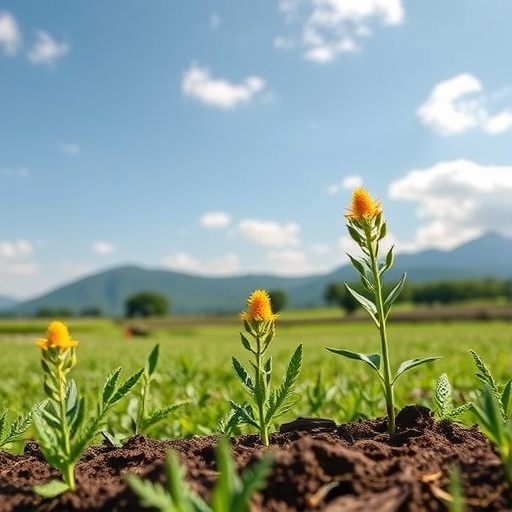
In an intriguing exploration into sustainable agricultural practices, researchers have brought to light the potential of indigenous essential oils in managing nitrogen levels in soil. The team, led by Awojide et al., investigates a groundbreaking approach that encourages the use of nature-derived substances as effective nitrification inhibitors. This resonates with the ever-growing demand for sustainable farming methods amid concerns about environmental degradation and fertilizer overuse. The findings could usher in a new era of agriculture, merging traditional knowledge with scientific innovations.
Nitrification, the microbial process that converts ammonia into nitrate, plays a crucial role in the nitrogen cycle. However, excessive nitrification can lead to soil degradation, increased greenhouse gas emissions, and water contamination. By inhibiting this process, farmers can potentially minimize the negative impacts associated with synthetic fertilizers. Awojide and his team emphasize that essential oils, derived from indigenous plants, offer an environmentally friendly alternative to conventional nitrification inhibitors, often synthesized from non-renewable resources.
The unique chemical compounds found in various essential oils possess characteristics that can hinder the growth of nitrifying bacteria, thereby slowing down the conversion of ammonia. This research highlights how traditional knowledge about local flora can inform modern agricultural practices. The study draws attention to the rich biodiversity of indigenous plants, each offering distinctive properties that can be harnessed for agricultural benefit. It is a step towards recognizing the symbiotic relationship between agriculture and nature, urging for a return to holistic practices.
This innovative research involves a meticulous examination of different essential oils derived from local plants. The researchers conducted a series of experiments to assess the efficacy of these oils in inhibiting nitrification rates. By measuring soil samples treated with varying concentrations of essential oils, they observed a notable decrease in nitrification activity compared to control groups. This empirical evidence bolsters the case for integrating essential oils into nitrogen management strategies.
In addition to their inhibitory properties, the indigenous essential oils also exhibit potential synergistic effects when combined with other natural amendments. The research team meticulously analyzed how these combinations could enhance soil health and nutrient availability. The overarching goal is to create a more balanced approach to nitrogen management—one that does not solely rely on chemical fertilizers but rather fosters a diverse and resilient soil ecosystem.
The implications of the study extend beyond just nitrogen management. By adopting indigenous essential oils, farmers can promote soil biodiversity and contribute to the cultivation of a sustainable agricultural landscape. This approach could significantly reduce the reliance on synthetic fertilizers, which can have detrimental effects on both the ecosystem and human health. The transition towards organic farming practices aligns with consumer trends that increasingly favor environmentally responsible products.
Moreover, this research opens avenues for further scientific inquiry into the properties of various essential oils. The team encourages other researchers to explore the untapped potential of the rich biodiversity found globally. This initiative can foster a deeper understanding of how indigenous plants can bolster agricultural resilience in the face of climate change. In this context, the study underscores the critical role of indigenous knowledge systems in shaping sustainable farming practices.
The publication of this research is timely, considering the pressing global responsibility to address environmental challenges. Agricultural systems worldwide are at a crossroads, and the emergence of sustainable practices is increasingly paramount. Essential oils derived from indigenous plants represent a unique intersection of environmental stewardship and agricultural productivity, aligning with modern sustainability goals.
Another promising aspect of the study is the potential economic benefit for local communities. By utilizing indigenous resources, farmers can reduce their dependence on expensive chemical inputs, improving their profitability. This also promotes local cultivation and harvesting of essential oil-producing plants, further enhancing community engagement with sustainable practices. As a result, this research does not only offer ecological benefits but can directly correlate with economic empowerment.
The research team advocates for the incorporation of findings into agricultural policy. By influencing policymakers, they aim to support programs that incentivize the use of natural fertilizers and sustainable practices. This can lead to broader acceptance of indigenous essential oils in agricultural systems, fostering a shift towards organic farming models that prioritize environmental health.
As the agricultural sector grapples with the implications of climate change, the urgency for innovative solutions cannot be overstated. The findings from this study by Awojide et al. demonstrate how sustainability can be achieved through a return to traditional methodologies and an appreciation for natural biodiversity. Farmers have the opportunity to leverage indigenous knowledge and scientific research to cultivate crops sustainably while preserving ecological integrity.
In summary, this latest research accentuates the interplay between sustainable practices and agricultural productivity, as indigenous essential oils present a viable solution to a pressing global issue. The continued pursuit of innovative approaches like these will be essential in navigating the future of agriculture. As the world looks toward more sustainable practices, integrating indigenous knowledge and biodiversity into modern farming will be a pivotal step forward.
As we move forward, the implications of such groundbreaking research will be felt far beyond the laboratory. Embracing nature’s resources could offer pathways toward more sustainable food systems while nurturing the planet. The findings serve as a reminder that solutions to modern agricultural challenges might already be rooted in nature, waiting to be rediscovered.
Cite Scienmag News
Alan Morgan. (February 1, 2026). Indigenous Essential Oils: Sustainable Nitrogen Management Revolution. Scienmag. https://scienmag.com/indigenous-essential-oils-sustainable-nitrogen-management-revolution/
Alan Morgan. "Indigenous Essential Oils: Sustainable Nitrogen Management Revolution." Scienmag, 1 February 2026, https://scienmag.com/indigenous-essential-oils-sustainable-nitrogen-management-revolution/. Accessed 3 September 2026.
Alan Morgan. "Indigenous Essential Oils: Sustainable Nitrogen Management Revolution." Scienmag. February 1, 2026. https://scienmag.com/indigenous-essential-oils-sustainable-nitrogen-management-revolution/


