Wednesday, October 28, 2026
Science
No Result
View All Result
  • Login
  • HOME
  • SCIENCE NEWS
  • CONTACT US
  • HOME
  • SCIENCE NEWS
  • CONTACT US
No Result
View All Result
Scienmag
No Result
View All Result
Home Science News Medicine

Incretin-based weight loss drugs may also trim lean mass, meta-analysis finds

October 28, 2026
in Medicine
Ophelia Keating
By Ophelia Keating Scienmag Editorial Profile - Health Services Research
Reading Time: 3 mins read
0
Incretin-based weight loss drugs may also trim lean mass, meta-analysis finds

Incretin-based weight loss drugs may also trim lean mass, meta-analysis finds

65
SHARES
587
VIEWS
Share on FacebookShare on Twitter
ADVERTISEMENT

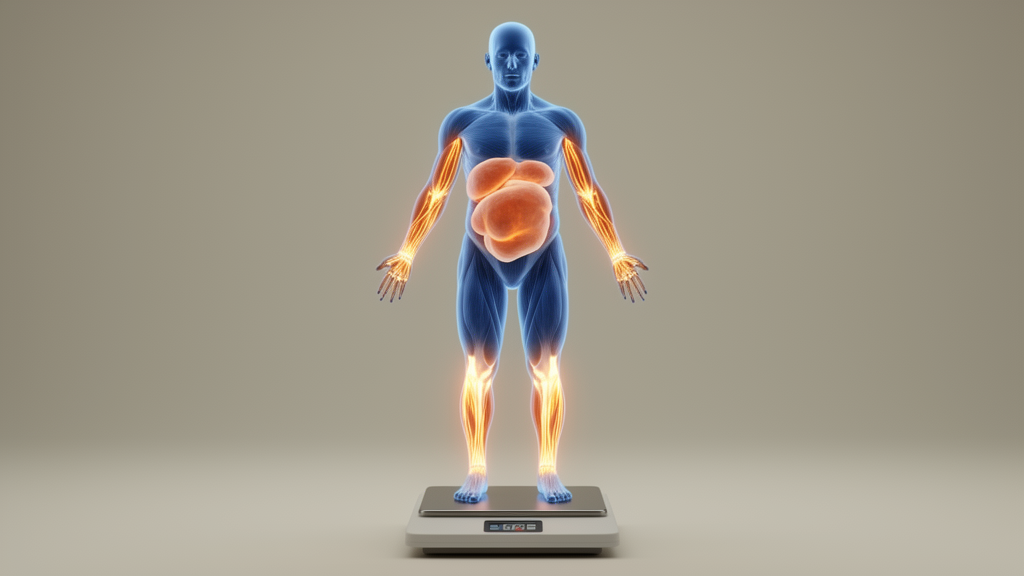
People taking incretin-based therapies such as semaglutide and tirzepatide lose not only fat but also a measurable amount of lean body mass, according to a new meta-analysis of phase 3 randomized trials published in BMC Endocrine Disorders. The analysis, which pooled dual-energy X-ray absorptiometry (DXA) measurements from five trials involving 569 adults with obesity or type 2 diabetes, found that trial-level point estimates consistently favored lower lean mass with incretin-based therapy than with the comparator, although the authors graded the certainty of the evidence as very low.

The researchers, Birkan Alaycı and Öykü Zeynep Gerçek, searched PubMed, Scopus and Cochrane CENTRAL to 23 March 2026, with an update on 4 September 2026, and searched Web of Science on 6 September 2026. They included phase 3 randomized trials of GLP-1 receptor agonists or dual GIP/GLP-1 receptor agonists versus placebo or an active comparator lasting at least 24 weeks, with DXA-derived lean body mass and fat mass reported. Mean differences were pooled using a random-effects approach with the Hartung–Knapp–Sidik–Jonkman adjustment, separately for placebo-controlled trials in obesity and active-comparator trials in type 2 diabetes, with leave-one-out and Bayesian sensitivity analyses, Risk of Bias 2.0 assessment and GRADE certainty rating. Extracted values were independently audited.

In the two placebo-controlled obesity trials, which tested semaglutide 2.4 mg and tirzepatide over 68 to 72 weeks, lean body mass was 3.43 kg and 4.40 kg lower than with placebo, and fat mass was 6.99 kg and 12.30 kg lower. The pooled lean mass difference across those two trials was −3.95 kg, with a 95% confidence interval of −10.10 to +2.19 kg, an interval that includes zero. In the three active-comparator trials in type 2 diabetes, testing semaglutide 1.0 mg and liraglutide 1.8 mg over 26 to 52 weeks, lean mass differences were −0.78, −2.82 and −0.96 kg, pooling to −1.53 kg (95% CI −4.38 to +1.32 kg) with substantial heterogeneity, quantified at I² of 73%.

When all five trials were combined, the pooled lean body mass difference was −2.49 kg (95% CI −4.45 to −0.53 kg), with a prediction interval of −6.97 to +2.00 kg. However, this pooled estimate proved fragile: the confidence interval included zero whenever any one of three trials was omitted from the analysis. The pooled fat-mass difference of −5.29 kg (95% CI −10.78 to +0.21 kg) was itself compatible with no difference between the treatments and comparators.

The authors emphasize that the comparisons differ in population, drug, dose, comparator and analysis strategy, that heterogeneity cannot be explained, and that DXA lean mass is a composite compartment of unknown functional significance. In other words, while every trial-level point estimate pointed in the same direction — lower lean mass with incretin-based therapy, ranging from 3.4 to 4.4 kg versus placebo at obesity doses and 0.8 to 2.8 kg versus active comparators in type 2 diabetes — several trial-level and both stratum-level confidence intervals included zero, and the very low certainty rating means the findings should be interpreted with caution. The review was registered prospectively on PROSPERO (CRD420261323497) on 23 March 2026, and the article is published open access.

Subject of Research: DXA-measured lean and fat mass changes with GLP-1 and dual GIP/GLP-1 receptor agonist therapy in phase 3 trials

Article Title: DXA-measured lean and fat mass differences with incretin-based therapy versus comparators: a meta-analysis of phase 3 trials

Article References: Alaycı, B., & Gerçek, Ö. Z. (2026). DXA-measured lean and fat mass differences with incretin-based therapy versus comparators: a meta-analysis of phase 3 trials. BMC Endocrine Disorders. https://doi.org/10.1186/s12902-026-02679-z

Image Credits: AI Generated

DOI: 10.1186/s12902-026-02679-z

Keywords: GLP-1 receptor agonists, tirzepatide, semaglutide, lean body mass, fat mass, DXA, meta-analysis, obesity, type 2 diabetes, phase 3 trials, body composition, certainty of evidence

Cite Scienmag News

Ophelia Keating. (October 28, 2026). Incretin-based weight loss drugs may also trim lean mass, meta-analysis finds. Scienmag. https://scienmag.com/incretin-based-weight-loss-drugs-may-also-trim-lean-mass-meta-analysis-finds/


Ophelia Keating. "Incretin-based weight loss drugs may also trim lean mass, meta-analysis finds." Scienmag, 28 October 2026, https://scienmag.com/incretin-based-weight-loss-drugs-may-also-trim-lean-mass-meta-analysis-finds/. Accessed 28 October 2026.

Ophelia Keating. "Incretin-based weight loss drugs may also trim lean mass, meta-analysis finds." Scienmag. October 28, 2026. https://scienmag.com/incretin-based-weight-loss-drugs-may-also-trim-lean-mass-meta-analysis-finds/

Tags: body compositioncertainty of evidenceDXADXA measurements of body compositionefficacy and safety of GLP-1 receptor agonistsevidence certainty in clinical researchfat massGIP/GLP-1 receptor agonistsGLP-1 receptor agonistsimpact on lean versus fat massIncretin-based weight loss drugslean body masslean body mass reductionmeta-analysismeta-analysis of weight loss therapiesobesityphase 3 clinical trials on obesityPhase 3 trialsrisks of lean mass loss with incretin drugssemaglutideSemaglutide and tirzepatide effectstirzepatideType 2 diabetesweight management in type 2 diabetes
Share26Tweet16
Previous Post

Multi-column bridge bents face at least 25% higher tsunami forces than single piers

Next Post

Iron-Engineered Nanoplatform Delivers DMDD and Targets Immune Checkpoints in Breast Cancer Model

Related Posts

Systematic review maps end-of-life psychosocial and spiritual needs in physical disability
Medicine

Systematic review maps end-of-life psychosocial and spiritual needs in physical disability

October 28, 2026
Text Message Campaign Reached Only a Third of Patients Overdue for Colorectal Cancer Screening
Medicine

Text Message Campaign Reached Only a Third of Patients Overdue for Colorectal Cancer Screening

October 28, 2026
FOXO1 Emerges as Candidate Regulator and Biomarker in Hip Dysplasia
Medicine

FOXO1 Emerges as Candidate Regulator and Biomarker in Hip Dysplasia

October 28, 2026
Regulators, developers and clinicians in Shenzhen voice concerns over medical AI governance
Medicine

Regulators, developers and clinicians in Shenzhen voice concerns over medical AI governance

October 28, 2026
Modified One-Layer Vasovasostomy Matches Gold Standard in Vasectomy Reversal
Medicine

Modified One-Layer Vasovasostomy Matches Gold Standard in Vasectomy Reversal

October 28, 2026
Small Bone Window Surgery Completely Obliterates Rare C1 Dural Fistulas
Medicine

Small Bone Window Surgery Completely Obliterates Rare C1 Dural Fistulas

October 28, 2026
Next Post
Iron-Engineered Nanoplatform Delivers DMDD and Targets Immune Checkpoints in Breast Cancer Model

Iron-Engineered Nanoplatform Delivers DMDD and Targets Immune Checkpoints in Breast Cancer Model

  • Mothers who receive childcare support from maternal grandparents show more optimized

    Mothers who receive childcare support from maternal grandparents show more parental warmth, finds NTU Singapore study

    27656 shares
    Share 11059 Tweet 6912
  • University of Seville Breaks 120-Year-Old Mystery, Revises a Key Einstein Concept

    1061 shares
    Share 424 Tweet 265
  • Bee body mass, pathogens and local climate influence heat tolerance

    682 shares
    Share 273 Tweet 171
  • Researchers record first-ever images and data of a shark experiencing a boat strike

    546 shares
    Share 218 Tweet 137
  • Groundbreaking Clinical Trial Reveals Lubiprostone Enhances Kidney Function

    531 shares
    Share 212 Tweet 133
Science

Embark on a thrilling journey of discovery with Scienmag.com—your ultimate source for cutting-edge breakthroughs. Immerse yourself in a world where curiosity knows no limits and tomorrow’s possibilities become today’s reality!

RECENT NEWS

  • Systematic review maps end-of-life psychosocial and spiritual needs in physical disability
  • Text Message Campaign Reached Only a Third of Patients Overdue for Colorectal Cancer Screening
  • FOXO1 Emerges as Candidate Regulator and Biomarker in Hip Dysplasia
  • Regulators, developers and clinicians in Shenzhen voice concerns over medical AI governance

Categories

  • Agriculture
  • Anthropology
  • Archaeology
  • Athmospheric
  • Biology
  • Biotechnology
  • Blog
  • Bussines
  • Cancer
  • Chemistry
  • Climate
  • Earth Science
  • Editorial Policy
  • Marine
  • Mathematics
  • Medicine
  • Pediatry
  • Policy
  • Psychology & Psychiatry
  • Science Education
  • Science News
  • Social Science
  • Space
  • Technology and Engineering

Subscribe to Blog via Email

Enter your email address to subscribe to this blog and receive notifications of new posts by email.

Join 5,151 other subscribers

© 2025 Scienmag - Science Magazine

Welcome Back!

Login to your account below

Forgotten Password?

Retrieve your password

Please enter your username or email address to reset your password.

Log In
No Result
View All Result
  • HOME
  • SCIENCE NEWS
  • CONTACT US

© 2025 Scienmag - Science Magazine

Discover more from Science

Subscribe now to keep reading and get access to the full archive.

Continue reading