


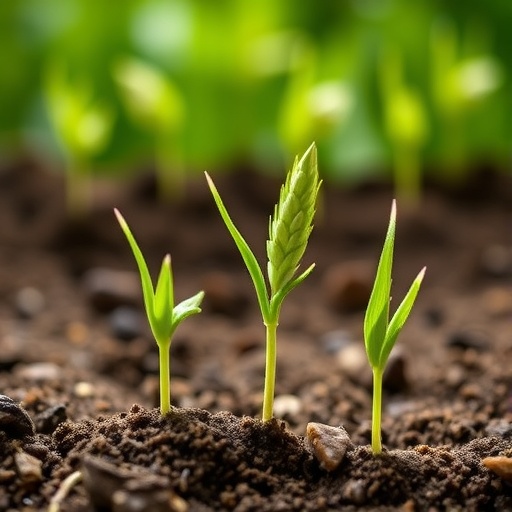
In a groundbreaking study conducted by researchers Šerá, Doshi, and Věchet, the effects of various stimulants on wheat grain, specifically Triticum aestivum L., have been meticulously examined. This research is particularly significant in the context of global food security, as wheat serves as one of the most vital crops worldwide. The investigation reveals how differing treatments can influence not only the germination process but also the early growth stages of this essential cereal.
Wheat is a staple food source, sustaining billions of people globally. The current study delves into agronomic practices that can augment wheat production, posing critical questions regarding how the application of various stimulants may enhance the crop’s germination rates. Understanding these processes could lead to more efficient agricultural interventions that optimize yield potential under changing environmental conditions.
Among the stimulants tested, the research explored several biostimulants—organic substances that can enhance plant growth and productivity. These biostimulants are crucial in the face of challenges such as climate change and soil degradation. By analyzing their effects on wheat grain, the authors aim to uncover insights that could lead to improved agricultural practices and heightened food security.
Germination is a pivotal stage in the life cycle of a plant, marking the transition from seed to seedling. The study’s findings highlight how the application of specific stimulants can accelerate the germination process, allowing for a more rapid establishment of plants in the field. This can be particularly beneficial in regions where growing seasons are short or where adverse weather conditions may delay traditional planting times.
The results of this research indicate varying degrees of effectiveness among the tested stimulants. Some formulations showed a marked improvement in germination percentages, while others appeared to have negligible impacts. This variability underscores the importance of selecting the right stimulant based on environmental conditions and soil health, a critical consideration for farmers seeking to optimize crop yields.
Beyond germination, the early growth of wheat is vital for achieving robust plants capable of withstanding challenges later in their development. The research provides compelling evidence that certain stimulants can enhance early growth metrics such as root length and biomass accumulation. These growth parameters are essential for establishing a plant’s resilience to pests, diseases, and fluctuating weather conditions in the field.
The methodological approach adopted by the researchers involved rigorous experimentation, with controlled conditions ensuring that the results were both reliable and applicable to real-world farming scenarios. This level of scrutiny is essential in scientific research, particularly when drawing conclusions that could ultimately influence agricultural practices.
Additionally, the insights garnered from this study extend beyond the laboratory. Farmers and agronomists can utilize these findings to make informed decisions regarding the application of stimulants in their practices. The potential to improve crop growth and yield through scientifically-backed methods can significantly impact agricultural productivity, particularly in areas facing food scarcity.
Collaboration among scientists from various disciplines has played a crucial role in advancing this research. Interdisciplinary approaches foster a more comprehensive understanding of plant biology, agronomy, and environmental science, ultimately leading to innovative solutions for contemporary agricultural dilemmas. This study exemplifies how harnessing diverse expertise can drive agricultural innovation.
Moreover, as the world grapples with pressing issues such as climate change and resource depletion, optimizing agricultural practices through studies like this becomes increasingly vital. The ability to enhance the efficacy of staple crops like wheat is integral to achieving sustainable food production systems that can meet the growing demands of the global population.
The discussion generated by the study is likely to stimulate further research in areas such as soil health, pest resistance, and crop resilience. As agricultural sciences progress, the integration of new technologies and methodologies, including precision agriculture and genetic research, will build upon the foundations established by studies like that of Šerá, Doshi, and Věchet.
Overall, the significance of the research cannot be overstated. By investigating the influence of different stimulants on wheat, the authors are contributing to a body of knowledge that has far-reaching implications for food security and agricultural sustainability. As such, this research represents a pivotal step forward in our quest to feed the world’s growing population while preserving the environment and natural resources.
The study not only highlights the importance of wheat as a global food source but also emphasizes the role of scientific investigation in addressing the challenges that agriculture faces today. As we look to the future, ongoing research in this area will continue to play a crucial role in cultivating resilient, productive crops capable of sustaining humanity.
In conclusion, the findings from this research underscore the potential for agricultural innovations to transform wheat cultivation practices. By leveraging the power of various stimulants, scientists and farmers alike can work together to ensure food security for generations to come, making strides toward a more sustainable agricultural future.
Cite Scienmag News
Alan Morgan. (September 9, 2025). Impact of Stimulants on Wheat Germination and Growth. Scienmag. https://scienmag.com/impact-of-stimulants-on-wheat-germination-and-growth/
Alan Morgan. "Impact of Stimulants on Wheat Germination and Growth." Scienmag, 9 September 2025, https://scienmag.com/impact-of-stimulants-on-wheat-germination-and-growth/. Accessed 5 September 2026.
Alan Morgan. "Impact of Stimulants on Wheat Germination and Growth." Scienmag. September 9, 2025. https://scienmag.com/impact-of-stimulants-on-wheat-germination-and-growth/


