


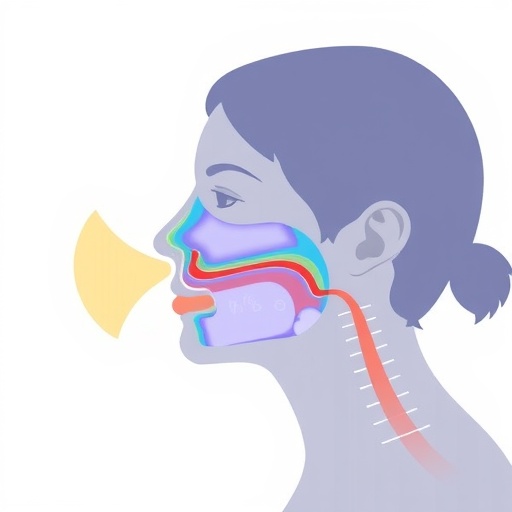
Recent research has shed new light on the relationship between Peak Nasal Inspiratory Flow (PNIF) and nasal obstruction, particularly in patients suffering from Severe Chronic Rhinosinusitis with Nasal Polyps (CRSwNP). Conducted by Desrosiers, Nash, Lane, and their colleagues, this study expands our understanding of how nasal airflow dynamics correlate with the levels of obstruction experienced by patients. The findings are particularly significant within the context of the SINUS-24 and SINUS-52 clinical trials, which were initially designed to evaluate treatment outcomes in this challenging patient population.
Chronic Rhinosinusitis is a common condition affecting millions worldwide, which creates significant morbidity and can severely impact a patient’s quality of life. Severe CRSwNP represents a particularly troubling subset of this condition, characterized by long-lasting inflammation in the nasal passages and the presence of polyps. These growths can obstruct airflow, leading to symptoms such as nasal congestion, loss of smell, facial pain, and pressure. The complexity of this disease makes effective management critical and emphasizes the need for tools that can accurately assess the severity of nasal obstruction.
One key aspect of effective clinical assessment lies in the measurement of respiratory function, and in this case, nasal inspiratory flow provides vital insight. PNIF is a simple yet effective metric for quantifying the airflow through the nostrils during inhalation. By understanding how PNIF relates to nasal obstruction in patients with severe CRSwNP, researchers can develop more targeted and effective treatment strategies. This study stands at the forefront of such research by providing evidence of this association.
The authors analyzed data collected from the extensive SINUS-24 and SINUS-52 trials, both of which included a diverse cohort of patients diagnosed with severe CRSwNP. These trials were designed not only to assess the efficacy of new therapeutic interventions but also to deepen the understanding of clinical profiles that accompany severe nasal obstruction. As such, the authors aimed to draw correlations between clinical severity scores, PNIF measurements, and patient-reported outcomes.
What is particularly fascinating about this research is the rigorous methodology employed in measuring PNIF. It involved sophisticated technology to ensure accuracy while considering the individual variability across patient populations. Participants were asked to perform the PNIF test under standardized conditions, allowing researchers to collect data that is both reliable and valid. The results revealed that patients with more pronounced nasal obstruction presented with significantly lower PNIF values, confirming a direct link between the two metrics.
Moreover, the implications of these findings extend beyond mere numbers. The research suggests that monitoring PNIF can serve as an effective clinical tool for evaluating treatment responses in patients with severe CRSwNP. As such, it provides a valuable objective endpoint that complements subjective assessments of nasal obstruction symptoms. This is crucial, as treatment effectiveness is often measured through patient-reported outcomes, which can be influenced by various external factors.
Additionally, the report addressed the need for enhanced awareness among healthcare professionals regarding the importance of PNIF assessments in practice. Often overshadowed by other diagnostic tools, PNIF can offer clarity in cases where patients report conflicting symptoms or when physical examinations yield inconclusive results. Researchers advocate for the integration of PNIF evaluations into routine management strategies for patients with chronic rhinosinusitis.
In the ever-evolving landscape of treatment modalities for CRSwNP, the authors of this study emphasize the urgency for personalized medicine approaches. Individual patient characteristics, disease phenotypes, and response to treatment need to be taken into account to maximize therapeutic efficacy. By establishing a clear relationship between PNIF and nasal obstruction, clinicians could potentially tailor treatments more effectively, increasing the likelihood of positive outcomes.
Emerging therapies and advancements in biologic treatments for chronic rhinosinusitis can further benefit from understanding these relationships. The knowledge gained from this study allows for improved stratification of patients in clinical trials for new therapies. As treatment options become more diversified—ranging from corticosteroids to biologics—the ability to assess nasal obstruction accurately becomes paramount to identifying candidates who would benefit most from specific interventions.
As the research community continues to build upon these findings, the role of PNIF can be expected to evolve. Future studies could explore its utility across different populations, including those with variations in age, gender, and disease severity. Furthermore, longitudinal research could assess how PNIF changes over time with treatment, offering insights into disease progression and management effectiveness.
In conclusion, the work by Desrosiers and colleagues presents critical advancements in the understanding of nasal obstruction in patients with severe CRSwNP. The unambiguous relationship between PNIF and nasal obstruction provides a pathway for clinicians to enhance their assessment and treatment strategies. As research in this area continues to evolve, it is essential to maintain focus on patient-centered outcomes and effective management strategies.
Understanding the intricate relationship between nasal airflow and obstruction is more than an academic pursuit; it directly impacts patient care and quality of life. By leveraging the insights gained from this research, practitioners can improve their approach to managing severe chronic rhinosinusitis, ultimately leading to better health outcomes for countless individuals.
In summary, the work done may not only influence clinical practice but also guide future research directions, emphasizing the importance of continued investigations into optimal assessment strategies and treatment outcomes for patients suffering from this debilitating condition.
Cite Scienmag News
Ophelia Keating. (September 27, 2025). Impact of Nasal Obstruction on Breathing Flow. Scienmag. https://scienmag.com/impact-of-nasal-obstruction-on-breathing-flow/
Ophelia Keating. "Impact of Nasal Obstruction on Breathing Flow." Scienmag, 27 September 2025, https://scienmag.com/impact-of-nasal-obstruction-on-breathing-flow/. Accessed 6 September 2026.
Ophelia Keating. "Impact of Nasal Obstruction on Breathing Flow." Scienmag. September 27, 2025. https://scienmag.com/impact-of-nasal-obstruction-on-breathing-flow/


