


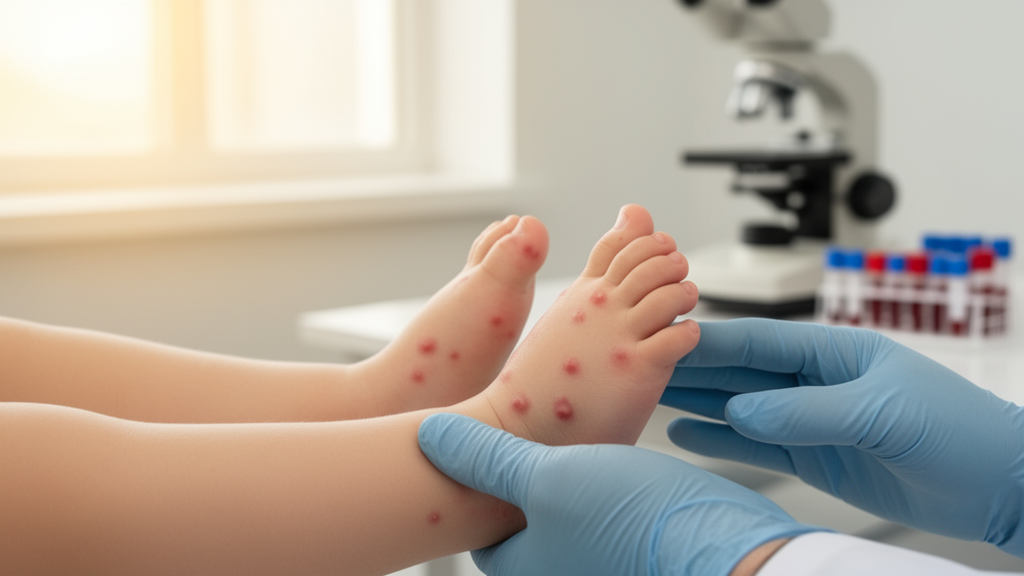
Hand, foot, and mouth disease is one of the most common childhood infections across Asia, and while most cases resolve with little more than fever, mouth sores, and a characteristic rash, a small fraction of children develop severe illness that can involve neurological complications and, in rare instances, death. For decades, clinicians have struggled to explain why two children infected with the same enterovirus can experience such dramatically different outcomes. A new candidate-gene association study from China now adds a piece to that puzzle, examining whether inherited variation in genes that govern the complement system, a key arm of innate immunity, influences the severity of disease caused by Coxsackievirus A6.
The study, published in Virology Journal by Ying Li of Zhengzhou Railway Vocational and Technical College and colleagues at Zhengzhou University and Henan Children’s Hospital, focused on children of Han Chinese ethnicity who were infected with Coxsackievirus A6, an enterovirus that has increasingly displaced enterovirus 71 as the dominant cause of hand, foot, and mouth disease outbreaks in many regions. The research team enrolled 189 children from Henan Children’s Hospital, dividing them into 94 severe cases and 95 mild cases, and then asked whether specific single nucleotide polymorphisms, or SNPs, in complement-related genes were more common among the severely ill children than among those with milder disease.
The complement system is a cascade of plasma proteins that acts as one of the body’s first lines of defense against pathogens. When activated, complement proteins such as C3 and C5 mark microbes for destruction, recruit inflammatory cells to sites of infection, and in some circumstances directly punch holes in viral envelopes or infected cell membranes. Because the complement cascade sits at the interface between pathogen recognition and inflammatory damage, it represents a biologically plausible target for genetic studies of infection severity: too little complement activity might impair viral clearance, while too much might fuel the excessive inflammation that characterizes severe cases. The central complement protein C3, the terminal component C5, and the complement regulatory protein factor H, encoded by the CFH gene, each play distinct roles in this delicate balance, and common genetic variants in these genes have previously been linked to susceptibility to other infectious and inflammatory diseases.
To test whether such variants matter in Coxsackievirus A6 infection, the researchers extracted genomic DNA from peripheral blood leukocytes using a modified phenol-chloroform method and performed SNP genotyping by polymerase chain reaction followed by restriction fragment length polymorphism analysis, a classical technique in which PCR-amplified DNA fragments are digested with restriction enzymes whose cutting patterns differ depending on the nucleotide present at a given position. This approach allowed the team to determine each child’s genotype at candidate SNPs in the C5, C3, and CFH genes and to compare genotype frequencies between severe and mild cases using both crude and multivariable logistic regression models adjusted for age group and sex.
The results revealed several nominal associations. Children carrying the GA genotype at rs3761847 in the C5 gene had roughly two and a half times the odds of severe disease compared with those carrying the GG genotype, with an adjusted odds ratio of 2.523 and a 95 percent confidence interval spanning 1.036 to 6.143. At rs2250656 in the C3 gene, the TC genotype was associated with an adjusted odds ratio of 1.982, with a confidence interval of 1.061 to 3.704, relative to the TT genotype. The strongest signals emerged at rs1065489 in the CFH gene, where the TT genotype conferred an adjusted odds ratio of 3.125, with a confidence interval of 1.249 to 7.818, and the GT genotype an adjusted odds ratio of 2.499, with a confidence interval of 1.118 to 5.588, both relative to the GG genotype. Taken at face value, these findings suggest that children carrying particular alleles at these three loci face a substantially elevated risk of progressing to severe hand, foot, and mouth disease once infected with Coxsackievirus A6.
However, the authors are careful to emphasize a critical statistical caveat. When the analysis was corrected for multiple testing using the Bonferroni method, a conservative procedure that adjusts the significance threshold to account for the number of SNPs examined, none of these associations remained statistically significant. This is a common and important pattern in candidate-gene association studies, which typically examine a modest number of preselected variants in a limited number of participants. Nominal signals that vanish after correction may reflect true effects that the study lacked the statistical power to confirm, or they may simply be chance findings that arise whenever many genetic variants are tested simultaneously in a finite sample. Distinguishing between these possibilities requires replication in independent cohorts, which is precisely what the authors call for.
Beyond the individual SNP analyses, the team also evaluated whether a combined model incorporating multiple SNPs could discriminate severe from mild cases. The combined model showed limited discriminatory performance, achieving an apparent area under the receiver operating characteristic curve of 0.653, which declined to 0.631 after bootstrap-based optimism correction. An AUC of 0.5 indicates discrimination no better than chance, while 1.0 indicates perfect discrimination, so a corrected value of 0.631 suggests that complement-related variants alone, at least in this cohort, provide only modest predictive information about disease severity. This finding underscores a broader lesson in genetic epidemiology: complex clinical outcomes such as infection severity are rarely determined by a handful of variants in a single pathway, and even biologically plausible genetic associations often translate into weak predictive models when considered in isolation.
The study also reported exploratory differences in selected laboratory parameters across genotype groups, hinting that complement variants might correlate with measurable differences in the host response to infection, although the authors frame these observations as preliminary. Such genotype-phenotype correlations, if confirmed, could eventually help explain the biological mechanism linking specific variants to clinical outcomes, for example by altering complement protein levels, activation efficiency, or regulation of the inflammatory response during enterovirus infection.
The clinical context of this work is significant. Coxsackievirus A6 has emerged as a major cause of hand, foot, and mouth disease in China and elsewhere, and unlike enterovirus 71, for which vaccines have been developed and deployed, CVA6 has no licensed vaccine. Surveillance data have shown shifting patterns of enterovirus dominance, with CVA6 outbreaks producing atypical and sometimes severe presentations, including widespread eczema coxsackium in children with atopic dermatitis and occasional neurological involvement. Understanding the host-side determinants of severity therefore has practical value: if genetic risk factors could be reliably identified and validated, they might eventually inform risk stratification in clinical settings, helping clinicians identify which children warrant closer monitoring during outbreaks.
The study was conducted in accordance with the Declaration of Helsinki and approved by the Life Sciences Institutional Review Board of Zhengzhou University, with written informed consent obtained from the parents or legal guardians of all participants. Funded by the National Natural Science Foundation of China and several provincial and postdoctoral programs, the work exemplifies the growing effort to move beyond purely virological explanations of disease severity and toward an integrated view in which viral factors, host genetics, and immune status jointly shape clinical outcomes. For now, the message of this study is one of cautious hypothesis generation: complement-related variants in C5, C3, and CFH merit further investigation as potential modifiers of Coxsackievirus A6 disease severity, but larger, independent, and ideally multi-center cohorts will be needed before these genetic signals can be considered established or translated into clinical tools. In a field where most children recover uneventfully and only a minority deteriorate, even modest advances in understanding host susceptibility could ultimately sharpen the clinical response to one of the world’s most burdensome pediatric viral diseases.
Subject of Research: Association between complement-related gene polymorphisms and severity of Coxsackievirus A6-induced hand, foot, and mouth disease in Chinese Han children
Article Title: Complement-related gene polymorphisms and severity of Coxsackievirus A6-induced hand, foot, and mouth disease in chinese han children: a candidate-gene association study
Article References: Li, Y., Li, Z., Duan, G., Chen, S., Zhang, Y., Wang, F., Dai, B., & Jin, Y. (2026). Complement-related gene polymorphisms and severity of Coxsackievirus A6-induced hand, foot, and mouth disease in chinese han children: a candidate-gene association study. Virology Journal. https://doi.org/10.1186/s12985-026-03282-3
Image Credits: AI Generated
DOI: 10.1186/s12985-026-03282-3
Keywords: hand, foot, and mouth disease, Coxsackievirus A6, complement system, C5, C3, CFH, single nucleotide polymorphisms, genetic association study, disease severity, enterovirus, pediatric infectious disease, innate immunity
Cite Scienmag News
Juliet Wilcox. (October 8, 2026). Immune Gene Variants Hint at Why Some Children Develop Severe Hand, Foot, and Mouth Disease. Scienmag. https://scienmag.com/immune-gene-variants-hint-at-why-some-children-develop-severe-hand-foot-and-mouth-disease/
Juliet Wilcox. "Immune Gene Variants Hint at Why Some Children Develop Severe Hand, Foot, and Mouth Disease." Scienmag, 8 October 2026, https://scienmag.com/immune-gene-variants-hint-at-why-some-children-develop-severe-hand-foot-and-mouth-disease/. Accessed 8 October 2026.
Juliet Wilcox. "Immune Gene Variants Hint at Why Some Children Develop Severe Hand, Foot, and Mouth Disease." Scienmag. October 8, 2026. https://scienmag.com/immune-gene-variants-hint-at-why-some-children-develop-severe-hand-foot-and-mouth-disease/


