


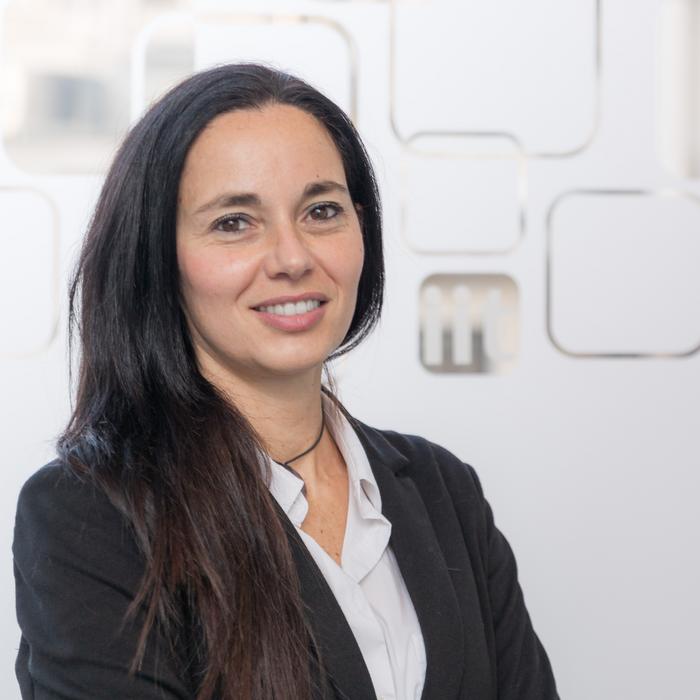
In a significant stride for the European life sciences community, Laura Cancedda, head of the Brain Development and Disease Research Unit at the Italian Institute of Technology (Istituto Italiano di Tecnologia – IIT) in Genoa, Italy, has been elected as a member of the prestigious European Molecular Biology Organization (EMBO). This election recognizes her outstanding contributions to neuroscience and developmental biology, further establishing her as a leading figure in brain research. EMBO, renowned for comprising over 2,100 distinguished scientists across Europe and beyond, acknowledges Cancedda’s groundbreaking investigations into neural development and disorders, marking a high honor in her esteemed career.
EMBO’s 2025 cohort features 60 newly elected members representing diverse disciplines ranging from RNA biology and epidemiology to molecular medicine and plant sciences, demonstrating the expansive scope of modern life sciences. What distinguishes this year’s selection is the limited representation from Italy; among the two scientists currently leading research in Italian institutions, Laura Cancedda stands prominently. This highlights the increasing visibility of Italian neuroscience within the broader European research ecosystem, amplified by Cancedda’s exemplary work merging molecular techniques with translational applications.
Membership within EMBO goes beyond recognition; it is an active engagement with the future of life sciences. Members play critical roles by influencing EMBO’s strategic direction through council participation, serving on editorial boards of top-tier scientific journals, and reviewing competitive funding applications. These responsibilities ensure that EMBO remains at the forefront of emerging scientific trends and fosters international collaboration. The rigorous nomination and peer-elected process emphasize the organization’s commitment to excellence and diversity across scientific disciplines.
Fiona Watt, EMBO’s Director, emphasized the vitality of new members by stating, “Science thrives on global collaboration, and the annual election of the new EMBO Members brings fresh energy and inspiration to our community.” This reflects EMBO’s vision of uniting researchers who not only have made substantial scientific advances but also aspire to push the boundaries of life sciences through cooperative efforts. Cancedda’s inclusion promises to infuse valuable insights from her neuroscience expertise, particularly her efforts to decode complex neurodevelopmental disorders.
The formal induction of the 2025 EMBO cohort is set to take place at the upcoming EMBO Members’ Meeting in Heidelberg, Germany, a pivotal event fostering dialogue and collaboration among Europe’s science elite. This gathering provides a platform for members to share cutting-edge research findings and catalyze interdisciplinary partnerships. Membership directories, accessible online, catalog the affiliations and research specialties of all EMBO scientists, facilitating global networking opportunities and knowledge exchange.
Laura Cancedda’s journey exemplifies a robust integration of academic rigor and innovative translational research. After earning her degree in Pharmaceutical Chemistry and Technology from the University of Genoa, she pursued a PhD in Neurophysiology at the Scuola Normale Superiore in Pisa. Her postdoctoral work at the University of California, Berkeley, further augmented her expertise, enabling her to bridge molecular neuroscience with clinical relevance. Since returning to Italy, she has led IIT’s Brain Development and Disease unit, focusing on neurodevelopmental anomalies that underlie disorders such as Down syndrome and autism spectrum conditions.
Her research has delivered groundbreaking insights into brain plasticity – the nervous system’s capacity to adapt structurally and functionally in response to experience or injury. Notably, in 2015, Cancedda’s team published pivotal studies in Nature Medicine and Nature Neuroscience demonstrating that bumetanide, a common diuretic, could restore neural plasticity and alleviate cognitive deficits in Down syndrome models. These studies have profound clinical implications, directly influencing therapeutic strategies aimed at improving cognitive function in affected individuals and inspiring a phase II clinical trial to evaluate bumetanide’s efficacy.
Beyond her academic pursuits, Cancedda co-founded IAMA Therapeutics, a biotech start-up devoted to developing neuroscience-based pharmacological interventions, particularly targeting autism spectrum disorders. This entrepreneurial endeavor exemplifies her commitment to translating laboratory discoveries into novel therapies, addressing urgent unmet medical needs and enhancing patient outcomes. Her work underscores an integrative approach, combining molecular neuroscience, pharmacology, and clinical application.
Over the years, Cancedda’s contributions have been recognized by numerous awards, reflecting her standing in the global neuroscience community. In 2025, she received the FIS2 Advanced Investigator Award from the Italian Science Fund, acknowledging her innovative research leadership. Her earlier accolades include the Telethon Career Award in 2016 for her editorial and experimental achievements in Down syndrome and the prestigious ERC Consolidator Grant, which supported her cutting-edge projects investigating brain development and neuroplasticity mechanisms.
Her dedication to advancing neuroscience is further evidenced by her membership in elite networks such as the FENS-KAVLI Network of Excellence, fostering collaboration across Europe’s leading brain researchers. In 2009, she garnered the Young Investigator Award from the Italian Society of Physiology, marking early recognition that presaged her continuing scientific impact. These honors collectively highlight her influence across basic and applied neuroscience domains.
Cancedda’s research meticulously unravels the cellular and molecular pathways governing neurodevelopmental disorders, placing particular emphasis on the interplay between synaptic function and neural circuit formation. Her laboratory employs a range of innovative methodologies, including in vivo imaging, electrophysiology, and molecular profiling, to interrogate how mutations and environmental factors disrupt brain maturation. The goal is to identify actionable molecular targets that can be modulated pharmacologically to restore typical neural function, an endeavor that holds great promise for neurodevelopmental therapeutics.
The election to EMBO is not merely a personal achievement but a testament to the vibrant scientific culture cultivated at IIT and across Italy. Cancedda’s recognition illustrates the increasing role of Italian researchers in pioneering advances that resonate on the European and global stages. By joining EMBO’s ranks, she will contribute to guiding research agendas and mentoring the next generation of scientists, fostering an environment of excellence and innovation critical for addressing complex neurological diseases.
In sum, Laura Cancedda’s election to EMBO exemplifies the convergence of scientific excellence, clinical relevance, and collaborative spirit essential for modern life sciences. Her work, spanning fundamental neuroscience to translational medicine, continues to illuminate the mechanisms of brain development and disorder, putting forward novel avenues for therapeutic intervention. As EMBO welcomes her into its community, the broader neuroscience field can anticipate exciting advancements fueled by her expertise and visionary leadership.
News Publication Date: July 1, 2025
Web References:
- EMBO Membership Directory: https://people.embo.org/
- Italian Institute of Technology: https://iit.it
Cite Scienmag News
Drew Townsend. (July 1, 2025). IIT Principal Investigator Laura Cancedda Elected as New Member of EMBO. Scienmag. https://scienmag.com/iit-principal-investigator-laura-cancedda-elected-as-new-member-of-embo/
Drew Townsend. "IIT Principal Investigator Laura Cancedda Elected as New Member of EMBO." Scienmag, 1 July 2025, https://scienmag.com/iit-principal-investigator-laura-cancedda-elected-as-new-member-of-embo/. Accessed 3 September 2026.
Drew Townsend. "IIT Principal Investigator Laura Cancedda Elected as New Member of EMBO." Scienmag. July 1, 2025. https://scienmag.com/iit-principal-investigator-laura-cancedda-elected-as-new-member-of-embo/


