


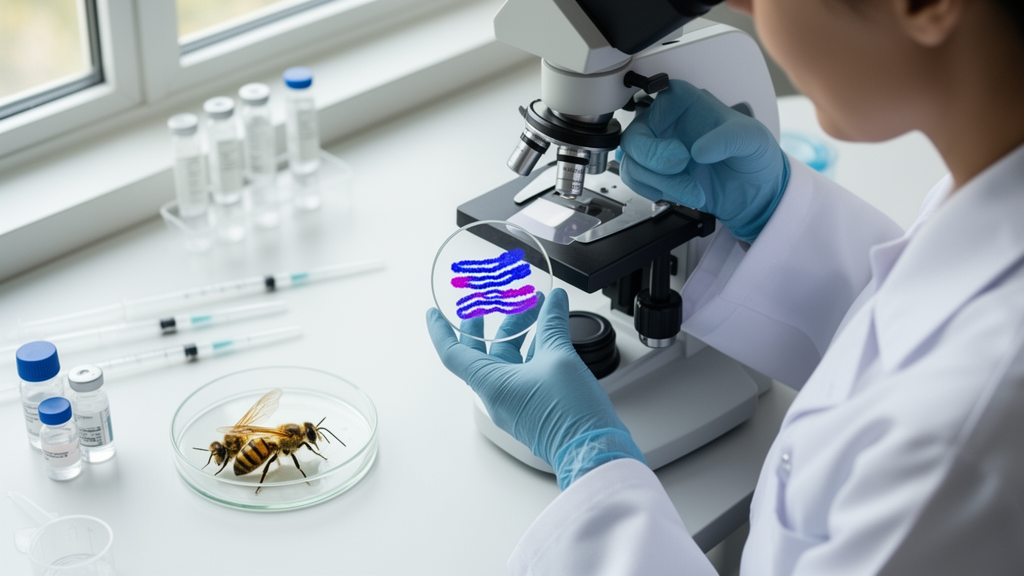
The study of chromosomes in the insect order Hymenoptera is undergoing a significant transformation, moving from traditional cytogenetic methods toward a more integrated field known as cytogenomics. This shift reflects the broader trend in biological sciences where high-throughput molecular techniques are converging with classical chromosomal analysis to provide a more comprehensive understanding of genome structure and evolution. Hymenoptera, which includes bees, ants, wasps, and sawflies, represents one of the most species-rich and ecologically important groups of insects, with over 150,000 described species and a potential total exceeding one million. Despite this vast diversity, chromosomal data have historically been limited, with karyotypes available for only about two thousand species. However, recent advances in molecular biology and computational analysis are rapidly changing this landscape, offering new insights into the evolutionary dynamics of this major insect order.
Historically, chromosome research in Hymenoptera relied on routine staining and basic banding techniques to characterize karyotypes. These methods, while foundational, provided only a superficial view of chromosomal organization. The transition to more sophisticated molecular approaches began in the early 2000s, coinciding with the first whole genome sequencing of a hymenopteran, the honeybee, Apis mellifera. This milestone marked the beginning of an era where genomic data could be directly correlated with chromosomal features. Today, the number of sequenced hymenopteran genomes has grown substantially, with the Hymenoptera Genome Database listing nearly 120 species, and the actual number of sequenced genomes likely exceeding 300. This accumulation of genomic data has enabled researchers to explore the relationship between chromosome number, genome size, and evolutionary history in unprecedented detail.
Molecular techniques such as fluorescence in situ hybridization (FISH) and staining with base-specific fluorochromes have become essential tools in modern hymenopteran cytogenetics. FISH allows for the precise localization of specific DNA sequences on chromosomes, revealing the distribution of repetitive elements, ribosomal DNA clusters, and transposable elements. For instance, studies have shown that hymenopteran chromosomes are predominantly AT-rich, with GC-rich regions often corresponding to nucleolus organizing regions. Additionally, FISH has demonstrated that heterochromatin contains repetitive sequences that vary significantly between related genera and species, providing markers for phylogenetic analysis. These molecular insights have enhanced our understanding of chromosomal evolution and have helped identify structural variations that may play a role in speciation and adaptation.
One of the most exciting developments in hymenopteran cytogenomics is the investigation of supergenes, which are tightly linked sets of loci that control complex phenotypes. Supergenes are often maintained by chromosomal inversions that suppress recombination, allowing specific combinations of alleles to be inherited together. In the ant Solenopsis invicta, a particular inversion was found to be responsible for differences in social organization, highlighting the impact of chromosomal structure on behavior. Similar supergenes have been identified in other ants and bees, suggesting that chromosomal rearrangements play a crucial role in the evolution of social traits. Recent studies have also revealed putative supergenes in cryptic species of parasitoids, where chromosomal fusions and inversions prevent recombination between divergent lineages, facilitating speciation.
The study of telomeric regions in Hymenoptera has also revealed surprising diversity in telomeric repeat sequences. While the canonical insect telomeric repeat (TTAGG)n was initially thought to be universal, subsequent research has identified multiple alternative repeats in different hymenopteran groups. For example, the (TTATTGGG)n repeat was found in the parasitoid Nasonia vitripennis, while other motifs such as TTAGGTCTGGG and TTGCGTCTGGG were detected in various aculeate Hymenoptera. This diversity is linked to the use of small nuclear RNA-type telomerase RNAs, which are transcribed by RNA polymerase III, a feature shared with green plants and ciliates. The shift in telomerase biogenesis has likely driven the evolution of diverse telomeric structures, reflecting the complex evolutionary history of the order.
The integration of cytogenetic and genomic data has also enabled the application of big data approaches to chromosome research. By analyzing large datasets of chromosome numbers and genome sizes, researchers can identify patterns of karyotype evolution across different clades. For example, studies have shown that eusocial Hymenoptera exhibit higher variance in chromosome number compared to solitary species, suggesting unique evolutionary pressures on their genomes. Databases such as the Bee Chromosome Database and the Ant Chromosome Database have systematized chromosomal information, facilitating comparative analyses and phylogenetic reconstructions. These resources are invaluable for understanding the evolutionary trajectories of karyotype features and their implications for genome stability and diversity.
Cytogenomics, defined as the synthesis of cytogenetic and molecular approaches, represents the next frontier in chromosome research. This field focuses on the comprehensive analysis of whole genomes and karyotypes, moving beyond the study of individual DNA sequences to examine the interactions between chromosomal regions and their functional consequences. In Hymenoptera, cytogenomics is enabling researchers to link chromosomal structures with genomic assemblies, providing a more holistic view of genome organization. For instance, counting chromosome numbers can validate the number of linkage groups in genome assemblies, ensuring the accuracy of genomic data. This integrative approach is crucial for resolving complex evolutionary questions and understanding the mechanisms underlying chromosomal diversity.
Looking ahead, the future of hymenopteran cytogenomics lies in the combined use of advanced cytogenetic techniques and high-resolution genomic sequencing. Methods such as microdissection and chromosome painting will become increasingly important for studying synteny and complex rearrangements between closely related species. These techniques can help reconstruct the evolutionary history of karyotypes, even in cases where chromosomal differences are too extensive for traditional analysis. Additionally, the use of specific antibodies to visualize chromosomal components, such as 5-methylcytosine, offers new opportunities to explore fine-scale chromosome structure and epigenetic regulation. As these tools continue to evolve, they will provide deeper insights into the genomic architecture of Hymenoptera and their role in ecological and evolutionary processes.
In conclusion, the transition from cytogenetics to cytogenomics in Hymenoptera marks a significant advancement in our understanding of insect genome evolution. The integration of molecular, cytogenetic, and computational approaches has revealed the complexity of chromosomal structures and their impact on phenotypic diversity. As research continues to expand, the field of cytogenomics will play a pivotal role in unraveling the evolutionary history of one of the most diverse and important insect orders. The ongoing accumulation of genomic data and the development of new analytical tools promise to further enhance our knowledge of hymenopteran chromosomes, paving the way for new discoveries in genetics, ecology, and evolution.
Subject of Research: Cytogenomic evolution and chromosomal diversity in the insect order Hymenoptera
Article Title: Chromosome study of the Hymenoptera ( Insecta ): from cytogenetics to cytogenomics
Article References: Gokhman, V. E. (2023). Chromosome study of the Hymenoptera (Insecta): from cytogenetics to cytogenomics. Comparative Cytogenetics, 17, 239-250. https://doi.org/10.3897/compcytogen.17.112332
Image Credits: AI Generated
DOI: 10.3897/compcytogen.17.112332
Keywords: Hymenoptera, Cytogenomics, Chromosome Evolution, Genomics, Insect Biology, Telomeres, Supergenes, FISH, Karyotype, Genome Assembly, Chromosome, Insecta
Cite Scienmag News
Gavin Prescott. (October 18, 2026). Hymenoptera Chromosome Research Shifts to Cytogenomics. Scienmag. https://scienmag.com/hymenoptera-chromosome-research-shifts-to-cytogenomics/
Gavin Prescott. "Hymenoptera Chromosome Research Shifts to Cytogenomics." Scienmag, 18 October 2026, https://scienmag.com/hymenoptera-chromosome-research-shifts-to-cytogenomics/. Accessed 18 October 2026.
Gavin Prescott. "Hymenoptera Chromosome Research Shifts to Cytogenomics." Scienmag. October 18, 2026. https://scienmag.com/hymenoptera-chromosome-research-shifts-to-cytogenomics/


