


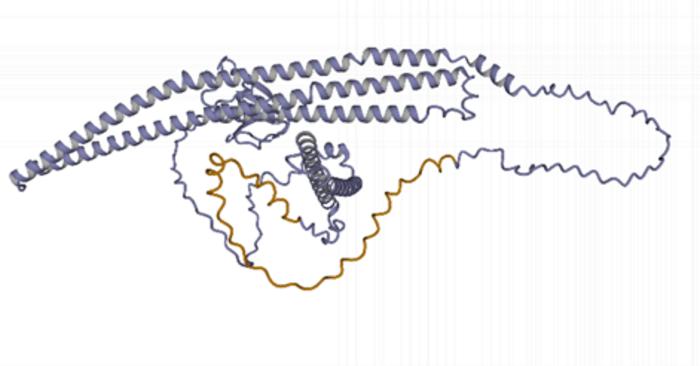
Researchers at the Centre for Genomic Regulation (CRG) have discovered hundreds of potential new cancer driver genes. The findings, published in the journal Nature Communications, significantly expands the list of possible therapeutic targets to monitor and tackle the disease.

Credit: Miquel Anglada Girotto/Centro de Regulación Genómica
Researchers at the Centre for Genomic Regulation (CRG) have discovered hundreds of potential new cancer driver genes. The findings, published in the journal Nature Communications, significantly expands the list of possible therapeutic targets to monitor and tackle the disease.
Mutations in genes are the primary cause of cancer. They can change the shape and function of proteins, altering a cell’s normal function. According to COSMIC, the most widely-used cancer mutation database worldwide, there are 626 genes which, when mutated, cause uncontrolled cell growth and survival. These are critical drug targets.
The study predicts that non-mutational mechanisms are just as prevalent. The researchers used an algorithm to find 813 genes which help cancer cells proliferate through alterations in an often-overlooked molecular mechanism known as splicing. Like with mutations, splicing can be targeted by drugs to control progression of the disease.
“When taking non-mutational mechanisms like splicing into account, we think there could be double as many potential gene targets to control cancer. These are not classic oncogenes but rather represent an entire new class of potential cancer drivers which can be targeted in isolation or in synergy with existing strategies. It’s an incredibly exciting new frontier to explore,” explains Miquel Anglada-Girotto, co-corresponding author of the study and PhD student at the CRG.
The study found little overlap between the shortlist of genes driving cancer through splicing compared to mutated cancer drivers. Only around a tenth of genes (74, or 9.1%) identified in the study are also on the COSMIC database. The vast majority (508, or 62.5%) are potential cancer drivers which have been overlooked because they do not fit the traditional mutation-centric model of the disease.
“This tells us that splicing could be a largely independent mechanism driving cancer, complementary to well-known mutational pathways. It also explains why these potential targets have been historically ignored, because cancer research has primarily focused on mutations,” adds Anglada-Girotto.
An algorithm called spotter
Splicing is a mechanism commonly hijacked by cancer. When normal cells make proteins, they first copy DNA from genes and create an initial draft of instructions. Cells use splicing to cut out unnecessary parts of the draft (introns) and stick together the important bits of information (exons).
Cancer cells include or exclude specific exons during splicing to create different versions of a protein from a single gene, some of which can promote cancer growth, survival, or drug resistance. This helps cancer adapt to different environments or stresses, making them more aggressive and harder to treat.
Historically, researchers have focused on specific splicing events or genes already suspected to be involved in cancer. The present study used a broader, “unbiased” approach, systematically analysing splicing across the entire genome to identify new potential cancer-driving splicing events.
The researchers created an algorithm called spotter. The model looked through vast amounts of genetic data to spot which exons are chosen by cancer cells during splicing to aid growth. spotter analysed data from many different types of cancer cells to spot which exons were important for cell survival.
“Not only can spotter identify potential cancer-driver exons, which we can then trace back to genes, but it can also rank which exons are more important than others in any given cancer sample. We can use this to validate each exon experimentally so that predictions made by the algorithm are confirmed,” says Anglada-Girotto.
Testing predictions in the real world
Though spotter is powerful tool for predicting potential cancer-driving genes through splicing, it’s still just a prediction model. To see if its predictions hold true in real-world conditions, the researchers looked at a large dataset of nearly 7,000 patient samples from 13 different types of cancer.
It’s known that splicing plays a more significant role in aggressive, fast-growing cancers. The researchers used spotter to test whether the algorithm could find the specific exons responsible. They used the algorithm to shortlist eight exons, and designed synthetic drugs to target their splicing in cancer cell lines. As expected, the drugs were particularly effective in targeting rapidly-growing cancer cells.
“spotter can help us move beyond the general understanding of splicing’s role in cancer to a much more detailed map of which specific parts of genes are being hijacked by cancer cells. Essentially, it’s a way of finding new, highly-specific therapeutic targets,” says Dr. Luis Serrano, co-corresponding author of the research and Director of the Centre for Genomic Regulation.
Advancing ‘precision oncology’
The researchers also tested spotter’s potential in predicting cancer’s response to a drug. Changes in splicing can alter how a gene—and the protein it produces—responds to therapeutic molecules. The study explored how the splicing of certain exons can affect a cancer cells’ sensitivity to these drugs.
The researchers combined predictions from spotter with data from large-scale experiments to identify exons linked to drug-sensitivity. They used the data to create models which can predict how a cancer cell will respond to a particular drug. The researchers tested their model on data from 49 ovarian cancer patients and found it could reliably distinguish which patients were likely to be more resistant or sensitive to chemotherapy.
“This could be part of a complementary strategy to understand a patient’s cancer biology and help oncologists determine the best risk-benefit trade-off for cancer treatments and, ultimately, improve patient outcomes,” says Dr. Luis Serrano, co-corresponding author of the research and Director of the Centre for Genomic Regulation.
The researchers have to overcome important limitations before their findings can translate into clinical applications. While spotter could identify potential cancer-driving exons, these are predictions which require extensive experimental validation to confirm their role in cancer. The study tested some predictions in cell lines, but researchers will need to carry out broader validation across more cancer types and patient samples.
“Moving from computational predictions and cell line experiments to effective clinical treatments takes time and involves many challenges. However, because splicing has not been as extensively studied as mutations, there is still a vast amount of uncharted territory to explore which is ripe for new discoveries, some of which could change the way we think about and treat cancer,” concludes Dr. Serrano.
Journal
Nature Communications
Method of Research
Experimental study
Subject of Research
Cells
Article Title
In silico RNA isoform screening to identify potential cancer driver exons with therapeutic applications
Article Publication Date
15-Aug-2024
Cite Scienmag News
Nathaniel Bowman. (September 3, 2024). Hundreds of new cancer driver genes predicted by algorithm. Scienmag. https://scienmag.com/hundreds-of-new-cancer-driver-genes-predicted-by-algorithm/
Nathaniel Bowman. "Hundreds of new cancer driver genes predicted by algorithm." Scienmag, 3 September 2024, https://scienmag.com/hundreds-of-new-cancer-driver-genes-predicted-by-algorithm/. Accessed 4 September 2026.
Nathaniel Bowman. "Hundreds of new cancer driver genes predicted by algorithm." Scienmag. September 3, 2024. https://scienmag.com/hundreds-of-new-cancer-driver-genes-predicted-by-algorithm/

