


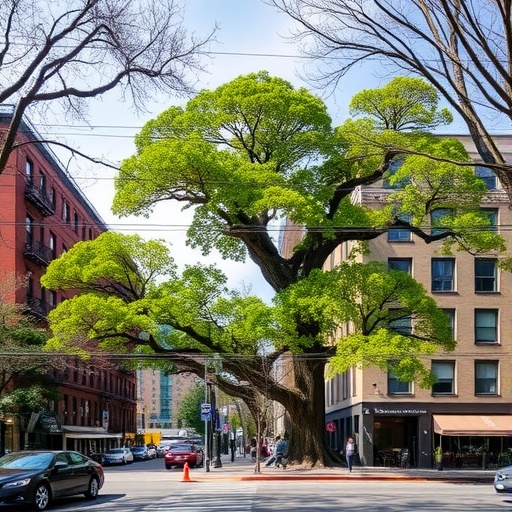
The fabric of urban ecosystems is often taken for granted, yet the trees lining our city streets represent a crucial element in maintaining biodiversity, improving air quality, and enhancing human well-being. A recent study, published in npj Urban Sustainability, sheds light on the factors that govern the diversity of urban street trees, revealing a surprising dominance of human influence over climate in shaping species variety.
Traditionally, climate has been considered the principal driver of both taxonomic and phylogenetic diversity in natural ecosystems. However, this new research challenges that paradigm within urban contexts. By integrating extensive field surveys and advanced phylogenetic analyses across multiple metropolitan areas, the study demonstrates that anthropogenic factors—such as planting strategies, urban planning policies, and socioeconomic variables—largely dictate the taxonomic makeup of street trees.
The research team employed a robust methodological framework, combining species inventories with evolutionary lineage data to dissect diversity at two levels: taxonomic (the number and identity of species) and phylogenetic (the evolutionary relationships among those species). Their findings indicate that taxonomic diversity—essentially the count and variety of tree species—is overwhelmingly governed by human decisions, from nursery availability to cultural preferences in tree planting.
Conversely, when it comes to phylogenetic diversity, climate emerges as the prevailing force. The study suggests that the evolutionary breadth of tree species—reflecting how distantly related those species are—responds more consistently to climatic gradients like temperature and precipitation. This distinction highlights that while people manage the species they plant, environmental conditions still impose a filter on which phylogenetic lineages can thrive and persist in urban environments.
A notable implication of these findings is the potential for urban planners and policymakers to actively tailor tree diversity in cities by adjusting planting practices. By consciously incorporating a wider range of phylogenetic lineages, urban forestry programs can enhance ecosystem resilience, given that phylogenetic diversity is often linked to functional diversity and ecosystem stability.
Moreover, this evidence of human dominance over taxonomic diversity presents both opportunities and challenges. It underscores the power society holds in crafting urban ecosystems but also points to vulnerabilities where homogenized species selection might reduce overall biodiversity and ecosystem services. The study calls for a nuanced approach that balances human preferences with ecological considerations.
Importantly, these insights arrive amid growing international commitments to urban sustainability and biodiversity conservation. As cities expand and face climate uncertainties, recognizing how anthropogenic and environmental factors interact to shape urban flora can inform more effective, adaptive management strategies.
In sum, the research accentuates a dual narrative for urban street trees: people write the species list, but climate frames the evolutionary story. Harnessing this knowledge could be pivotal in designing greener, more resilient cities for the future.
Cite Scienmag News
Margaret Porter. (July 13, 2026). Human Impact Shapes Urban Tree Species Diversity, Climate Influences Evolutionary Traits. Scienmag. https://scienmag.com/human-impact-shapes-urban-tree-species-diversity-climate-influences-evolutionary-traits/
Margaret Porter. "Human Impact Shapes Urban Tree Species Diversity, Climate Influences Evolutionary Traits." Scienmag, 13 July 2026, https://scienmag.com/human-impact-shapes-urban-tree-species-diversity-climate-influences-evolutionary-traits/. Accessed 4 September 2026.
Margaret Porter. "Human Impact Shapes Urban Tree Species Diversity, Climate Influences Evolutionary Traits." Scienmag. July 13, 2026. https://scienmag.com/human-impact-shapes-urban-tree-species-diversity-climate-influences-evolutionary-traits/


