


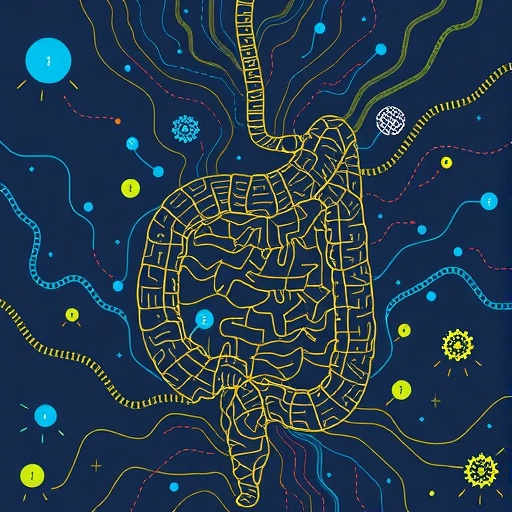
In a groundbreaking study illuminating the subtle yet profound effects of social interactions on gut microflora, researchers from the University of East Anglia (UEA) have revealed that the intimate social bonds among Seychelles warblers—a small, cooperative breeding bird species residing on Cousin Island—significantly shape the composition of their gut microbiomes. This discovery adds a vital piece to the puzzle of understanding how gut bacteria transmission occurs in natural settings, moving beyond environmental factors to highlight the dynamic role of social behavior in microbial exchange.
The research focused on the anaerobic gut bacteria of these warblers, microorganisms that thrive in oxygen-free environments within the digestive tracts of their hosts and are critical for digestion, immunity, and overall health. Unlike aerobic bacteria that can survive outside the host, these anaerobes have highly restricted transmission pathways, which, according to this study, rely substantially on direct, close-contact social interactions rather than ambient environmental exposure.
“Our extensive multi-year collection of fecal samples from individually marked warblers enabled us to map gut bacterial similarities to specific social roles and associations within the bird groups,” explains Dr. Chuen Zhang Lee, who conducted the study as part of his PhD. By meticulously comparing the gut microbiomes of breeding pairs, helpers, and non-helper individuals both within and across groups, the team was able to pinpoint that birds sharing the same nests and engaging regularly in social behaviors exhibited significantly more similar anaerobic bacterial profiles.
The research site itself—Cousin Island—is a uniquely suitable natural laboratory. Its small, isolated environment and the lifelong residence of the warblers there mean that each bird can be individually identified and followed throughout its life. This level of individual data collection, rarely achievable in the wild, parallels controlled laboratory conditions without disrupting the natural ecological and behavioral context of the subjects.
Prof. David S Richardson, senior researcher on the project, highlights the advantage: “It’s a rare opportunity to study complex biological processes such as microbiome transmission with unparalleled granularity, within an authentic ecosystem where the variables reflect the true parameters of nature.”
The study elegantly demonstrated that anaerobic gut bacteria—species that cannot survive in open air or on surfaces—are exchanged primarily among birds with frequent and intimate physical contact. This includes breeding couples and their devoted helpers who share nesting spaces and engage in cooperative breeding behaviors. Such transmission routes, the researchers suggest, occur through direct interactions like preening, feeding, and nesting proximity, facilitating a form of microbial ‘social networking’ that reinforces group cohesion and health.
These findings extend beyond avian biology, offering compelling analogues for human social and microbiome dynamics. “We postulate that similar mechanisms may operate within human households,” Dr. Lee proposes. Everyday close-contact activities that are often overlooked—hugging, kissing, shared food preparation, and even cohabitation in the same confined spaces—could foster an ongoing exchange of anaerobic gut bacteria, subtly aligning the microbial ecosystems of individuals living together.
The importance of these anaerobic bacteria cannot be overstated. They play crucial roles in nutrient metabolism, pathogen resistance, and immune system regulation by establishing long-lasting colonies that maintain gut homeostasis. Thus, the sharing of such beneficial microbes might confer communal health advantages within a household, contributing to strengthened immunity and optimized digestive health through collective microbiome shaping.
This research challenges the traditional perspective that shared environments and diets solely explain microbiome similarities in cohabiting individuals. Instead, it emphasizes that social structures themselves act as vectors for microbial exchange, distinguishing the roles of intimate social contact from passive environmental exposure. This nuanced understanding opens new avenues for exploring how human social behaviors influence health at the microbiological level.
The implications for public health, social dynamics, and even disease transmission are profound. Recognizing that social connectivity can modify internal ecosystems suggests that interventions aimed at fostering positive social interactions might supplement strategies for enhancing microbiome health. Moreover, it raises questions about the consequences of social isolation or disrupted cohabitation on microbiome diversity and associated health outcomes.
UEA’s collaborative effort included expertise from the Centre for Microbial Interactions, the Quadram Institute, and the Earlham Institute, alongside international partners like the University of Sheffield and the University of Groningen. Together, this interdisciplinary team brought molecular ecology, microbial ecology, and behavioral biology into an integrative framework that advances our understanding of host-microbiome relationships in the wild.
The paper, titled “Social structure and interactions differentially shape aerotolerant and anaerobic gut microbiomes in a cooperative breeding species,” was published in the journal Molecular Ecology, marking a significant contribution to the fields of microbial ecology and social biology. By revealing that social intimacy is a primary driver in the dissemination of crucial gut microbes, this study underscores the intricate entanglement of sociality and microbiome evolution.
In essence, this pioneering work suggests that the invisible microbial tapestry weaving through social partners is as significant as the visible bonds, potentially shaping health and disease susceptibility on both individual and community scales. As our understanding of the microbiome deepens, recognizing its social determinants becomes increasingly critical for both ecological science and human health.
Cite Scienmag News
Morgan Morrow. (April 10, 2026). How Your Housemates Might Be Altering Your Gut Microbiome. Scienmag. https://scienmag.com/how-your-housemates-might-be-altering-your-gut-microbiome/
Morgan Morrow. "How Your Housemates Might Be Altering Your Gut Microbiome." Scienmag, 10 April 2026, https://scienmag.com/how-your-housemates-might-be-altering-your-gut-microbiome/. Accessed 3 September 2026.
Morgan Morrow. "How Your Housemates Might Be Altering Your Gut Microbiome." Scienmag. April 10, 2026. https://scienmag.com/how-your-housemates-might-be-altering-your-gut-microbiome/


