

Friday, September 4, 2026
Science
No Result
View All Result
  • Login
  • HOME
  • SCIENCE NEWS
  • CONTACT US
  • HOME
  • SCIENCE NEWS
  • CONTACT US
No Result
View All Result
Scienmag
No Result
View All Result
Home Science News Cancer

How to stop cancer cachexia? Start at the top

July 8, 2024
in Cancer
Nathaniel Bowman
By Nathaniel Bowman Scienmag Editorial Profile - Precision Oncology
Reading Time: 3 mins read
0
How to stop cancer cachexia? Start at the top
66
SHARES
600
VIEWS
Share on FacebookShare on Twitter
ADVERTISEMENT

Cancer is insidious. Throughout tumor progression, the disease hijacks otherwise healthy biological processes—like the body’s immune response—to grow and spread. When tumors elevate levels of an immune system molecule called Interleukin-6 (IL-6), it can cause severe brain dysfunction. In about 50%-80% of cancer patients, this leads to a lethal wasting disease called cachexia. “It’s a very severe syndrome,” says Cold Spring Harbor Laboratory (CSHL) Professor Bo Li. 

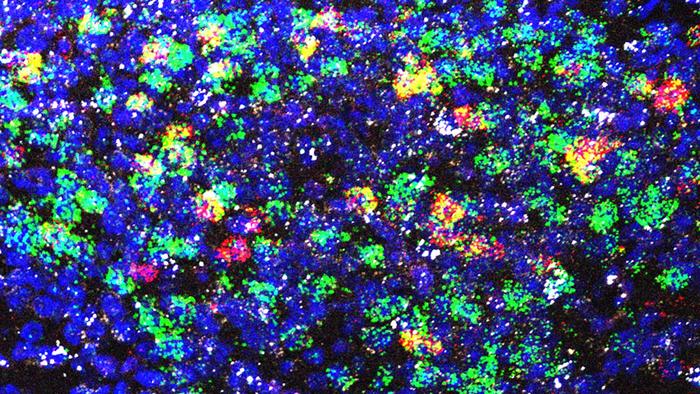
area postrema

Credit: Li lab/Cold Spring Harbor Laboratory

Cancer is insidious. Throughout tumor progression, the disease hijacks otherwise healthy biological processes—like the body’s immune response—to grow and spread. When tumors elevate levels of an immune system molecule called Interleukin-6 (IL-6), it can cause severe brain dysfunction. In about 50%-80% of cancer patients, this leads to a lethal wasting disease called cachexia. “It’s a very severe syndrome,” says Cold Spring Harbor Laboratory (CSHL) Professor Bo Li. 

“Most people with cancer die of cachexia instead of cancer. And once the patient enters this stage, there’s no way to go back because essentially there’s no treatment,” he explains. 

Now, Li and a team of collaborators from four CSHL labs have found that blocking IL-6 from binding to neurons in a part of the brain called the area postrema (AP) prevents cachexia in mice. As a result, the mice live longer with healthier brain function. Future drugs targeting these neurons could help make cancer cachexia a treatable disease.

In healthy patients, IL-6 plays a crucial role in natural immune response. The molecules circulate throughout the body. When they encounter a possible threat, they alert the brain to coordinate a response. Cancer disrupts this process. Too much IL-6 gets produced, and it begins binding to AP neurons in the brain. “That leads to several consequences,” Li says. “One is animals and humans alike will stop eating. Another is to engage this response that leads to the wasting syndrome.”

The team took a two-pronged approach to keeping elevated IL-6 out of the brain in mice. Their first strategy neutralized IL-6 with custom antibodies. The second used CRISPR to reduce the levels of IL-6 receptors in AP neurons. Remarkably, both tactics produced the same results—the mice started eating again, stopped losing weight, and lived longer.

For Li, the implications were mind-blowing:

“The brain is so powerful in regulating the peripheral system. Simply changing a small number of neurons in the brain has a profound effect on whole-body physiology. I knew there was an interaction between tumors and brain function, but not to this extent,” he says. 

Li says his team is now determined to figure out how to translate this discovery to human patients. Their recent collaborations with CSHL Professor Adrian Krainer and former CSHL Professor Z. Josh Huang may bring them one step closer. “If we can use what we’ve learned to prevent or treat cachexia, we can dramatically increase patients’ quality of life,” Li says. “This could one day have a big impact on many people.”


Journal

Nature Communications

DOI

10.1038/s41467-024-48971-1

Article Publication Date

1-Jun-2024

Subject of Research: Cancer

Article Title: How to stop cancer cachexia? Start at the top

Article References: Original research article

Image Credits: AI Generated

DOI: Not provided

Keywords: Not provided

Cite Scienmag News

Nathaniel Bowman. (July 8, 2024). How to stop cancer cachexia? Start at the top. Scienmag. https://scienmag.com/how-to-stop-cancer-cachexia-start-at-the-top/

Nathaniel Bowman. "How to stop cancer cachexia? Start at the top." Scienmag, 8 July 2024, https://scienmag.com/how-to-stop-cancer-cachexia-start-at-the-top/. Accessed 4 September 2026.

Nathaniel Bowman. "How to stop cancer cachexia? Start at the top." Scienmag. July 8, 2024. https://scienmag.com/how-to-stop-cancer-cachexia-start-at-the-top/

Share26Tweet17
Previous Post

Why some abusive bosses get a pass from their employees

Next Post

Case Western Reserve University receives $1.5M grant from Foundation Fighting Blindness to test possible new treatment for inherited retinal disease

Related Posts

Targeted nutrition during oesophageal cancer treatment preserves muscle and aids recovery
Cancer

Targeted nutrition during oesophageal cancer treatment preserves muscle and aids recovery

September 3, 2026
Digital health tools reshape cancer prevention alongside traditional in-person care
Cancer

Digital health tools reshape cancer prevention alongside traditional in-person care

September 3, 2026
What influences cancer survivors’ participation in colorectal and breast screening
Cancer

What influences cancer survivors’ participation in colorectal and breast screening

September 3, 2026
α-Synuclein curbs glioma growth via CDH13–JNK/c-Jun signaling pathway
Cancer

α-Synuclein curbs glioma growth via CDH13–JNK/c-Jun signaling pathway

September 3, 2026
A heterogeneous multimodal ensemble framework for multi-omics breast cancer prognosis
Cancer

A heterogeneous multimodal ensemble framework for multi-omics breast cancer prognosis

September 3, 2026
Largest Study of Its Kind Reveals How Australian Dogs Fare Against Lymphoma
Cancer

Largest Study of Its Kind Reveals How Australian Dogs Fare Against Lymphoma

September 3, 2026
Next Post
Case Western Reserve University receives $1.5M grant from Foundation Fighting

Case Western Reserve University receives $1.5M grant from Foundation Fighting Blindness to test possible new treatment for inherited retinal disease

  • Mothers who receive childcare support from maternal grandparents show more optimized

    Mothers who receive childcare support from maternal grandparents show more parental warmth, finds NTU Singapore study

    27656 shares
    Share 11059 Tweet 6912
  • University of Seville Breaks 120-Year-Old Mystery, Revises a Key Einstein Concept

    1061 shares
    Share 424 Tweet 265
  • Bee body mass, pathogens and local climate influence heat tolerance

    682 shares
    Share 273 Tweet 171
  • Researchers record first-ever images and data of a shark experiencing a boat strike

    546 shares
    Share 218 Tweet 137
  • Groundbreaking Clinical Trial Reveals Lubiprostone Enhances Kidney Function

    531 shares
    Share 212 Tweet 133
Science

Embark on a thrilling journey of discovery with Scienmag.com—your ultimate source for cutting-edge breakthroughs. Immerse yourself in a world where curiosity knows no limits and tomorrow’s possibilities become today’s reality!

RECENT NEWS

  • Invasive plant growth shaped by soil microbes and local leaf inputs
  • Variational autoencoders detect coronary artery disease in SPECT images
  • VESALIUS-REAL study reveals lipid treatment gaps in high-risk patients lacking prior cardiovascular events
  • GFRAL mediates metabolic responses to mitochondrial stress in brown fat

Categories

  • Agriculture
  • Anthropology
  • Archaeology
  • Athmospheric
  • Biology
  • Biotechnology
  • Blog
  • Bussines
  • Cancer
  • Chemistry
  • Climate
  • Earth Science
  • Editorial Policy
  • Marine
  • Mathematics
  • Medicine
  • Pediatry
  • Policy
  • Psychology & Psychiatry
  • Science Education
  • Social Science
  • Space
  • Technology and Engineering

Subscribe to Blog via Email

Enter your email address to subscribe to this blog and receive notifications of new posts by email.

Join 5,151 other subscribers

© 2025 Scienmag - Science Magazine

Welcome Back!

Login to your account below

Forgotten Password?

Retrieve your password

Please enter your username or email address to reset your password.

Log In
No Result
View All Result
  • HOME
  • SCIENCE NEWS
  • CONTACT US

© 2025 Scienmag - Science Magazine

Discover more from Science

Subscribe now to keep reading and get access to the full archive.

Continue reading