


High in the cloud forests of the Ecuadorian Andes, where mist coils through ancient trees and the hum of insects fills the air, a hidden drama plays out every time the skies open. Spiders, the unassuming architects of the understory, face a threat far more destructive than any predator: the kinetic brutality of falling rain. A groundbreaking study published in the journal Ecology and Evolution reveals that the very shape and placement of a spider’s web determines whether it survives the daily bombardment of tropical storms, effectively turning rainfall into an invisible ecological filter that sculpts the composition of arachnid communities across entire landscapes. Through meticulous observations and a simple yet elegant field experiment involving improvised tarps, researchers have uncovered a delicate evolutionary trade-off between the economy of silk production and the structural resilience of the web, one that could be catastrophically disrupted by climate change. The work, supported by the São Paulo Research Foundation (FAPESP) and the Natural Sciences and Engineering Research Council of Canada (NSERC), offers the first rigorous, gradient-based evidence that precipitation intensity directly selects for specific web architectures and social behaviors, rewriting our understanding of how abiotic forces engineer biodiversity in the planet’s most diverse ecosystems.
The investigation began with a fundamental ecological puzzle that had long intrigued Leticia Avilés, a professor at the University of British Columbia and the study’s lead author. For decades, biologists have classified spider webs into broad functional groups: the iconic two-dimensional orb webs, which are flat and circular; the tangled, three-dimensional cobwebs often found under leaves; and the expansive, horizontal sheet webs that can span entire branches. Intuition suggests that a delicate orb web, exposed to the full force of a downpour, would be shredded instantly, while a thick sheet web might resist damage. Yet preliminary observations in the field did not match this simple prediction. The team, including first author Yu-Heng Lin, who conducted the work during his doctoral research, set out to systematically quantify how different web types fare under varying rainfall regimes along a dramatic altitudinal gradient. The eastern slopes of the Andes provided a perfect natural laboratory, where climbing just a few thousand meters transforms the environment from a lowland deluge to a gentle high-elevation drizzle.
To capture the full spectrum of conditions, the researchers selected five forest sites in Ecuador ranging from less than 1,000 meters to over 3,400 meters above sea level. At the lowest elevations, the team recorded torrential rainfall events exceeding four millimeters per hour, the kind of pounding, large-droplet rain that can dislodge leaves, erode soil, and physically overwhelm any exposed surface. At the highest sites, precipitation rarely surpassed two millimeters per hour, manifesting more like a persistent, fine mist that clings to surfaces rather than battering them. Within each zone, the scientists identified and monitored at least 30 to 55 spider individuals and their constructions, ultimately examining a total of 207 webs in the observational phase alone. The webs were classified into the three classic typologies: orb, cob, and sheet, each representing a different investment of silk proteins and a different microhabitat preference. Lin and his colleagues used high-resolution photography and time-lapse observations to record the condition of each web before, during, and after at least three distinct rainfall events, carefully noting the extent of physical damage, the number of capture spiral radii broken, and the overall structural integrity retained.
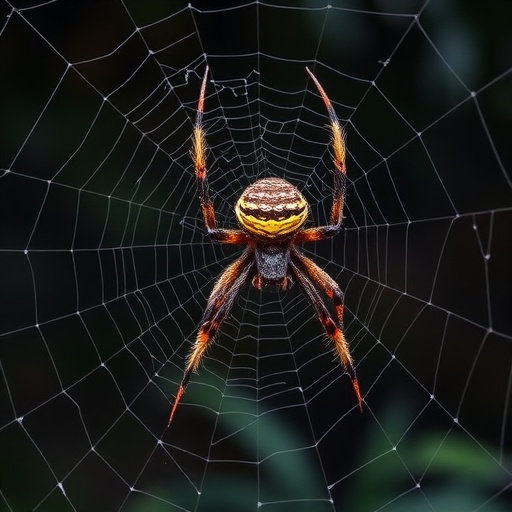
The results were both counterintuitive and illuminative. Orb webs, despite their apparent fragility, were the most common web type encountered across all elevations, even in the storm-battered lowlands. The explanation lies in the polymer economics of silk. An orb web requires a relatively minimal amount of silk to construct—it is a lean, efficient trap that can intercept flying insects with a precise arrangement of radial threads and a sticky capture spiral. Because the material cost is so low, spiders that build orb webs can afford to lose their webs to rain damage and rebuild them regularly, often on a daily basis. In fact, damage from captured prey alone can necessitate frequent repairs, so the additional toll from rain is simply folded into the spider’s energetic budget. The orb web, in this context, represents a high-turnover, disposable strategy: cheap to produce, easy to abandon, and quick to reconstruct. Avilés emphasizes that this architectural economy frees orb weavers from the need to seek complete shelter, allowing them to occupy open gaps in the vegetation where flying insects are abundant, a risky but rewarding real estate decision.
In stark contrast, sheet webs—the massive, dense, horizontal silk platforms that can blanket several square meters—exhibited a precipitous decline in abundance as rainfall intensity increased. These structures are engineering marvels that incorporate hundreds of times more silk than an orb web, forming a continuous fabric anchored to surrounding vegetation. The immense material investment, however, becomes a liability in regions of heavy precipitation. When a large raindrop strikes a sheet web, the force is distributed across the extensive silk network, but repeated impacts can cause irreversible tearing, sagging, and structural collapse. Repairing such damage is metabolically exorbitant, as the spider must secrete enormous quantities of silk proteins to patch gaps. Consequently, species that construct sheet webs are effectively filtered out of high-rainfall habitats unless they possess an additional adaptation, such as sociality. Remarkably, the few sheet-web builders that persist in the rainy lowlands are almost exclusively social spiders, living in cooperative colonies where individuals collectively share the costs of web maintenance and repair, amortizing the energetic burden across a group.
The third web type, cobwebs, occupied a middle ground. These irregular, three-dimensional tangles of sticky and non-sticky silk are typically built under the protective umbrella of broad leaves, which act as natural shields against rain. The researchers observed that cobwebs suffered significantly less damage than orb webs in open areas, not because of inherent structural strength, but because their microhabitat selection provided a rain-shadow effect. The leaf above intercepts raindrops, dissipating their kinetic energy before they can strike the silk. This symbiotic relationship between web architecture and microhabitat was so robust that the team hypothesized it was a primary determinant of spider distribution. To test causality, they executed a manipulation experiment at the lowest elevation site, where rainfall intensity was second highest among the study areas. They stretched one-square-meter plastic tarps over 31 randomly selected webs, mimicking the protective function of a leaf, while leaving 55 other webs completely exposed. The tarps created an artificial dry microhabitat, and the team then measured damage after subsequent storms. The protected webs, regardless of type, sustained dramatically less damage than their exposed counterparts, unequivocally demonstrating that the mechanical impact of raindrops—and not some correlated variable—was the causal agent filtering web persistence.
The physics behind the damage mechanism is a fascinating interplay of droplet momentum, silk tensile strength, and web geometry. A single raindrop in a heavy tropical storm can reach terminal velocities of up to nine meters per second, carrying a kinetic energy payload that, on the microscale of a spider’s silk thread, is immense. When such a drop collides with an orb web, the force is concentrated at the point of impact, often snapping the delicate capture spiral immediately. The radial threads, which are under higher tension and made of stronger dragline silk, may survive, but the web loses its prey-catching functionality. The researchers noted that orb-weaving spiders typically consume the damaged silk and recycle the proteins, an adaptation that reduces the net cost of reconstruction. In sheet webs, the droplet impact creates a transient crater-like depression, sending shockwaves through the silk sheet. Because sheet-web silk is arranged in a denser, less elastic matrix, these shockwaves can cause micro-tears that propagate across the fabric, leading to catastrophic failure. The tarps, by absorbing the droplet impact above the web, eliminated this primary failure mode entirely.
This ecological filtering by rain has profound implications for the evolutionary trajectory of spiders. Over geological time, lineages that stumbled upon the orb-web architecture may have unlocked the ability to colonize open, high-precipitation habitats that were previously inaccessible. Conversely, the elaborate sheet webs, which likely evolved in drier or more sheltered environments, represent an evolutionary specialization that restricts their builders to refugial microhabitats or forces them to evolve complex social systems as a compensatory mechanism. The study’s co-author, Antonio Domingos Brescovit from the Butantan Institute in São Paulo, points out that the findings provide a mechanistic explanation for the puzzling distributional patterns of certain spider taxa across South America. Groups that are common in the relatively drier Amazonian lowlands suddenly disappear or shift to social forms as one ascends into the stormier Andean foothills, a turnover that could now be directly attributed to the physics of precipitation rather than solely to competition or predation.
The research also carries an urgent message for conservation in an era of rapid climate change. Global circulation models predict that precipitation patterns in tropical mountain ranges will become increasingly erratic, with some regions experiencing more intense downpours and others prolonged drought. For spider communities, a shift toward heavier rainfall could decimate populations of sheet-web builders, disrupting the social networks that allow their unique colonial lifestyles. Conversely, a decrease in rainfall might enable sheet-web species to expand into previously hostile territories, potentially outcompeting orb weavers through sheer physical dominance and web longevity. Such a reorganization could cascade through the food web, altering insect population dynamics, pollination services, and the decomposition of organic matter. Spiders are major arthropod predators, and a change in their community structure would reverberate across the entire ecosystem. Brescovit emphasizes that the study provides tangible, testable predictions: if rainfall increases, species that depend on sheltered microhabitats may lose those refuges as vegetation structure changes, and webs will be damaged more frequently, reducing the spiders’ overall foraging efficiency and reproductive output.
Beyond its immediate scientific contributions, the study is a testament to the power of simple, question-driven fieldwork in an age dominated by genomic sequencing and remote sensing. The team spent months in remote Andean forests, enduring the very rain they were studying, to develop an intimate empirical record of web fates. Yu-Heng Lin’s experiment with tarps, which might seem almost rustic in its simplicity, provided the causal evidence that transformed a correlation into a mechanism. The work was part of a broader project, “Expansion, Enhancement, and Modernization of the Butantan Institute’s Zoological Collections,” which aims to systemize the taxonomy and systematics of Neotropical haplogynid spiders, but it also underscores how natural history observations can illuminate fundamental ecological principles. The data they gathered—meticulous notes on web persistence, silk investment ratios, and social grouping—will serve as a baseline for monitoring future ecological shifts in one of the world’s most biodiverse and rapidly changing corridors.
Ultimately, the story told by these spiders is one of resilience, constraint, and delicate balance. Every day, as the Andean afternoon clouds gather and release their torrential cargo, countless tiny engineers make a life-or-death gamble on the architecture they have spun. The orb weaver bets on speed and disposability, rebuilding its elegant spiral in the quiet intervals between storms. The social sheet-weaver bets on cooperation, pooling its silk and labor in a communal fortress that can only persist if the rain holds back or if many mouths and spinnerets work together to mend the damage. The cobweb weaver hedges its bet, hiding under a leaf and accepting a smaller but more stable hunting platform. These strategies, sculpted by millions of years of evolution, now face a new, unpredictable variable: a climate whose rhythm is beginning to stutter. The research by Avilés, Lin, Brescovit, and their colleagues not only decodes the rules of a silent, invisible game—it also illuminates the fragility of the adaptations that have allowed life to thrive in the ever-wet mountains. As we look to the future, the fate of these spiders may well foretell the broader biological consequences of a world where the rain itself becomes an agent of rapid, disruptive change.
Cite Scienmag News
Russell Cooper. (July 6, 2026). How Storms Reshape Spider Web Architecture—and Decide Who Survives. Scienmag. https://scienmag.com/how-storms-reshape-spider-web-architecture-and-decide-who-survives/
Russell Cooper. "How Storms Reshape Spider Web Architecture—and Decide Who Survives." Scienmag, 6 July 2026, https://scienmag.com/how-storms-reshape-spider-web-architecture-and-decide-who-survives/. Accessed 3 September 2026.
Russell Cooper. "How Storms Reshape Spider Web Architecture—and Decide Who Survives." Scienmag. July 6, 2026. https://scienmag.com/how-storms-reshape-spider-web-architecture-and-decide-who-survives/


