


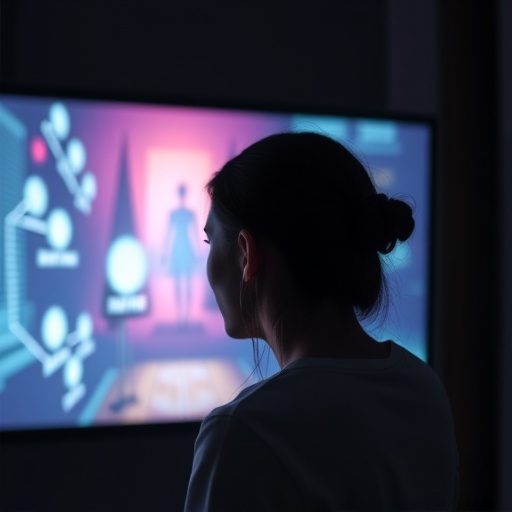
In an era dominated by digital connectivity, adolescents increasingly find themselves navigating complex psychological landscapes shaped by their interaction with multiple screens. A groundbreaking study by Yıldırım, Batmaz, and Türk, set to be published in BMC Psychology in 2026, unveils a nuanced model explaining how the overuse of multiple digital devices impacts mental health through intricate psychological mechanisms. This research compellingly reveals that psychological flexibility and psychological vulnerability serve as parallel mediators between multiple-screen addiction and various mental health outcomes in adolescents, marking a pivotal advance in understanding digital addiction’s psychological ramifications.
The proliferation of smartphones, tablets, and computers has altered how young people engage with their environment, often blurring the lines between virtual and real-world experiences. Multiple-screen addiction—the compulsive, excessive use of various digital devices simultaneously or interchangeably—has been rising dramatically, raising urgent concerns about its potential to foster psychological distress. Unlike traditional single-screen addiction, this phenomenon encompasses a dynamic interaction with multiple digital platforms, intensifying the risk factors for mental health issues such as anxiety, depression, and emotional dysregulation.
Central to this new research is the concept of psychological flexibility, a construct defined as the capacity to adapt to changing psychological demands and to maintain contact with the present moment despite unpleasant thoughts, feelings, or sensations. Psychological flexibility acts as a buffer against stress, enabling adolescents to adjust their behavior in alignment with their values despite digital distractions. Conversely, psychological vulnerability, characterized by cognitive and emotional fragility, predisposes individuals to maladaptive responses when confronted with distressing digital habits, magnifying the adverse effects of screen overuse on mental health outcomes.
The researchers employed rigorous quantitative methodologies, using validated psychometric scales to assess screen addiction, psychological flexibility, vulnerability, and various mental health indices among a large adolescent cohort. Statistical analyses, including parallel mediation models, allowed the team to dissect the independent and simultaneous roles of psychological flexibility and vulnerability in the pathways linking multiple-screen addiction to mental health disturbances. This meticulous approach provides robust evidence that these psychological processes do not merely coexist but dynamically interact to determine the severity and trajectory of mental health impacts.
Findings from the study illuminate a critical dual-pathway model: adolescents entrenched in multiple-screen addiction often exhibit decreased psychological flexibility and heightened psychological vulnerability, both of which independently exacerbate adverse mental health outcomes. Notably, psychological flexibility emerges as a potential resilience factor, offering a promising target for clinical interventions aimed at mitigating the psychological damage wrought by relentless digital consumption. These insights hold significant implications for designing preventive mental health strategies in an increasingly screen-saturated world.
Moreover, the study highlights that multiple-screen addiction is not a monolithic construct but is intricately linked with the adolescent’s ability to psychologically adapt or succumb to stressors associated with digital overexposure. The interactive effects identified underscore the importance of fostering adaptive psychological traits through educational and therapeutic frameworks, which may ultimately curtail the escalation of digital addiction’s detrimental consequences.
This research also invites a broader reflection on how modern technology reshapes adolescent development, emphasizing an urgent need for integrative approaches combining psychological science, digital literacy education, and policy interventions. The intricate mediation effects uncovered reveal that reducing screen time alone may be insufficient; instead, enhancing psychological flexibility and reducing vulnerability should be core components of comprehensive adolescent mental health programs addressing digital addiction.
By elucidating the psychological mechanisms interposed between multiple-screen addiction and mental health disturbances, this study charts a forward-looking agenda for research and practice. It invites mental health professionals to reconceptualize digital addiction within a framework that appreciates the complexity of adaptive and maladaptive psychological responses, highlighting pathways through which therapeutic efforts may promote resilience in young digital natives.
The researchers also emphasize the longitudinal importance of these mediating psychological constructs. Psychological flexibility, for example, may foster long-term wellbeing by enabling adolescents to disengage from compulsive digital behaviors and cultivate healthier coping strategies. Conversely, sustained psychological vulnerability may entrench maladaptive digital habits, propelling a vicious cycle of addiction and psychological distress that could persist into adulthood if left unaddressed.
Clinicians and educators stand at a critical juncture where knowledge of these mediating pathways can inform tailored interventions, such as Acceptance and Commitment Therapy (ACT), which specifically targets enhancement of psychological flexibility. Such interventions could be adapted for digital contexts to empower adolescents to navigate their digital environments more mindfully and resist the compulsive allure of multiple screens.
The implications for public health policy are equally compelling. Recognizing psychological flexibility and vulnerability as parallel mechanisms suggests multifaceted prevention and treatment models, combining digital hygiene education with mental health resources promoting psychological resilience. Efforts to incorporate these constructs into school curricula or community programs could yield a profound impact on adolescent mental health outcomes in the face of pervasive digital exposure.
It is noteworthy that the study fills a critical gap in the rapidly expanding literature on digital addiction and mental health, which has predominantly focused on singular psychological or behavioral factors. The parallel mediation model proposed here advances the field by demonstrating that psychological flexibility and vulnerability operate simultaneously yet distinctly, thereby offering a more comprehensive understanding of the complex dynamics at play.
Looking ahead, the study’s authors advocate for continued exploration into the neurobiological underpinnings of these mediating processes, positing that brain-imaging techniques might elucidate how multiple-screen addiction reshapes neural circuits related to emotional regulation and cognitive control. Such integrative research blending psychological assessment with neurotechnology could pave the way for precision interventions finely tuned to individual psychological profiles.
In conclusion, the pioneering investigation conducted by Yıldırım, Batmaz, and Türk not only advances scientific understanding of how multiple-screen addiction impacts adolescent mental health through the dual lenses of psychological flexibility and vulnerability but also charts a transformative course for intervention, prevention, and policy. As screens become ever more embedded in young lives, this research offers a beacon of hope—highlighting actionable paths to safeguard mental wellbeing, foster resilience, and navigate the digital age with informed psychological insight.
Cite Scienmag News
Glenn Wilkins. (January 10, 2026). How Psychological Flexibility Links Screen Addiction and Mental Health. Scienmag. https://scienmag.com/how-psychological-flexibility-links-screen-addiction-and-mental-health/
Glenn Wilkins. "How Psychological Flexibility Links Screen Addiction and Mental Health." Scienmag, 10 January 2026, https://scienmag.com/how-psychological-flexibility-links-screen-addiction-and-mental-health/. Accessed 3 September 2026.
Glenn Wilkins. "How Psychological Flexibility Links Screen Addiction and Mental Health." Scienmag. January 10, 2026. https://scienmag.com/how-psychological-flexibility-links-screen-addiction-and-mental-health/


