


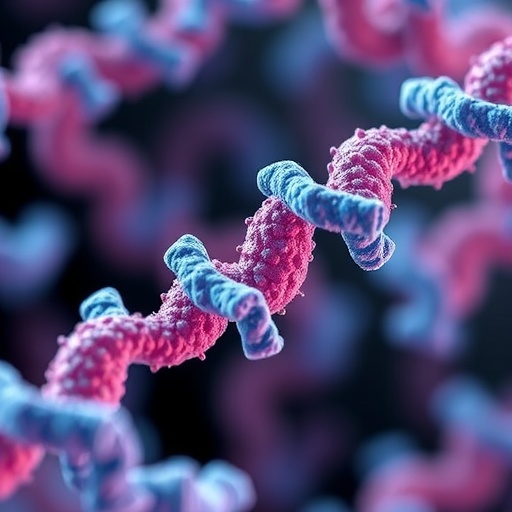
In the intricate world of cellular biology, proteins serve as vital workhorses, orchestrating a plethora of biological activities necessary for life. Beyond their mere existence, these proteins undergo a variety of biochemical modifications post-translation—termed post-translational modifications (PTMs)—which dramatically influence their structure, function, localization, and interaction capacities. A groundbreaking study from Scripps Research has now illuminated the profound impact of PTMs on the pharmacological landscape, specifically demonstrating how these modifications can redefine protein druggability across the human proteome. This research, published in Nature Chemical Biology in May 2026, offers an unprecedented proteome-wide view of how subtle chemical tags appended to proteins modulate their ability to engage with drug-like small molecules, heralding a transformative shift in precision therapeutic development.
Drilling into the molecular subtleties of PTMs reveals that these modifications—such as phosphorylation and N-linked glycosylation—serve as dynamic regulators of protein conformations and molecular interactions. The Scripps team designed an innovative chemical biology toolkit comprising specialized small-molecule probes capable of covalently locking onto target proteins within living cells. By monitoring the binding profiles of these probes under experimentally manipulated PTM states, researchers mapped how the addition or removal of specific PTMs influences protein accessibility and binding site architecture on a proteome-wide scale. This approach unveiled over 400 proteins whose ligand-binding capacities were significantly altered based on their PTM status, indicating that the same protein’s druggability is not static but fluctuates according to its chemical modification landscape.
Intriguingly, these PTM-driven modulations of drug-binding are not uniform; they manifest through diverse mechanisms. In many cases, PTMs directly reshape drug-binding pockets by occurring at or near these sites, thereby either facilitating or impeding access for pharmacological agents. Conversely, some modifications modify protein-protein interactions, indirectly exposing cryptic binding sites or concealing accessible surfaces. This nuanced understanding challenges the conventional paradigm that protein targets possess fixed binding pockets, instead advocating for a model in which the proteome’s ligandability is highly contingent on the PTM-driven conformational ensemble of proteins.
A particularly impactful facet of this study lies in its elucidation of the cancer-associated protein KRAS, a notorious oncoprotein long regarded as ‘undruggable’ until the recent clinical success of covalent inhibitors targeting the KRAS G12C mutant variant. The Scripps researchers discovered that phosphorylation at distinct residues on KRAS profoundly affects the binding efficiency and inhibitory potency of clinically approved drugs like sotorasib and adagrasib. This finding offers a molecular rationale for the variability observed in patient responses to KRAS-targeted therapies and underscores the potential necessity of considering PTM profiles when stratifying patients or designing combination regimens for precision oncology.
Beyond oncological implications, the study sheds light on PTM-related druggability in the context of rare genetic diseases. The identification of a sugar-based PTM on NPC2—a protein central to Niemann-Pick disease pathogenesis—as a determinant of ligand-binding underscores the wider applicability of PTM-centric pharmacology. Such insights pave the way for rational drug design for conditions where traditional drug discovery has faltered, by exploiting PTM states that reveal unique binding epitopes amenable to therapeutic intervention.
This comprehensive analysis across thousands of proteins also highlights an expansive frontier of previously untapped drug targets. A significant proportion of the identified proteins lack well-characterized pharmacological modulators, suggesting that PTM-informed drug discovery could unveil novel therapeutic opportunities. By targeting specific PTM conformers of proteins, it becomes conceivable to enhance treatment specificity, minimize off-target toxicity, and tailor drugs to the molecular idiosyncrasies of diseased cells.
The methodological advancements driving this discovery are rooted in the strategic use of living-cell chemical probes combined with proteomic technologies. This synergy enabled an unprecedented resolution in capturing dynamic protein states under physiologically relevant conditions, moving beyond static structural snapshots to incorporate functional variability driven by cellular context. Such integrative chemical proteomic approaches are set to revolutionize how drug target validation and inhibitor screening are conducted in biomedical research.
Looking ahead, the scientists at Scripps plan to expand their investigative framework to encompass a broader spectrum of PTMs and disease models. By deploying more chemically diverse probe libraries and applying their technique to pathological tissues, they aim to generate disease-state-specific druggability maps. This vision posits PTM profiling as a cornerstone in the development of targeted therapies that exploit vulnerabilities unique to diseased cells—a precision medicine strategy likened to uncovering “unique chinks in the armor” of pathological proteomes.
The implications of this study resonate deeply within the realms of chemical biology, proteomics, and drug discovery. The recognition of PTMs as modulators of protein-ligand interactions introduces an additional molecular dimension to consider during therapeutic development and clinical implementation. Such perspectives may redefine biomarker selection, drug screening pipelines, and patient stratification methodologies, ultimately contributing to more effective and personalized medical interventions.
Importantly, this work exemplifies the growing confluence of interdisciplinary approaches—melding synthetic chemistry, proteomics, computational biology, and pharmacology—to tackle complex biological challenges. It underscores the critical role of innovative chemical tools in unraveling cellular complexity and guiding the rational design of next-generation therapeutics. As such, the study not only advances our molecular understanding but also sets a new paradigm for exploiting the malleable landscape of the proteome for medical innovation.
In conclusion, the Scripps Research findings mark a significant leap forward in our grasp of how post-translational modifications influence drug interactions on a proteome-wide scale. By uncovering the mutable nature of protein druggability governed by PTMs, this research charts a strategic path toward more precise, adaptive, and efficacious therapeutic paradigms. It invites the scientific community to embrace protein modifications as key variables in the quest for cures, transforming longstanding obstacles into new avenues for discovery and treatment.
News Publication Date: May 5, 2026
Web References:
References:
- Parker C, Li W, Wei Q et al. Posttranslational modifications remodel proteome-wide ligandability. Nature Chemical Biology, 2026.
Keywords
Posttranslational modification, PTM dynamics, Protein drug-binding sites, Chemical biology, Proteomics, Drug discovery, KRAS phosphorylation, Niemann-Pick disease, Proteome-wide ligandability, Precision medicine, Protein-ligand interactions, Therapeutic development
Cite Scienmag News
Bethany Barker. (May 6, 2026). How Protein Modifications Influence Drug Interactions in Next-Generation Precision Therapies. Scienmag. https://scienmag.com/how-protein-modifications-influence-drug-interactions-in-next-generation-precision-therapies/
Bethany Barker. "How Protein Modifications Influence Drug Interactions in Next-Generation Precision Therapies." Scienmag, 6 May 2026, https://scienmag.com/how-protein-modifications-influence-drug-interactions-in-next-generation-precision-therapies/. Accessed 4 September 2026.
Bethany Barker. "How Protein Modifications Influence Drug Interactions in Next-Generation Precision Therapies." Scienmag. May 6, 2026. https://scienmag.com/how-protein-modifications-influence-drug-interactions-in-next-generation-precision-therapies/


