


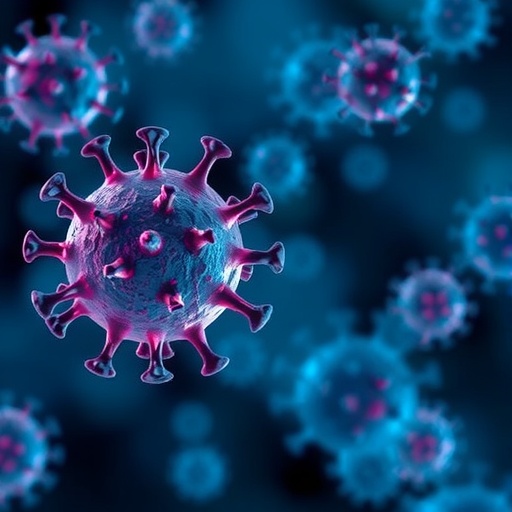
A pivotal study conducted by researchers at Weill Cornell Medicine has uncovered profound insights into how prior infection with one influenza A virus strain can fundamentally shape, and in some cases impair, the immune system’s response to subsequent influenza infections in children. This breakthrough sheds light on the phenomenon known as immune imprinting—a long-observed but poorly understood immunological bias—that may have significant implications for the design of pediatric influenza vaccines moving forward.
At the core of the research was a detailed analysis of antibody responses in children aged between 2 and 6 years, each with sequential first exposures to the two major human influenza A subtypes: H3N2 and H1N1. These viruses, responsible for seasonal flu outbreaks globally, share similarities yet have distinct antigenic profiles that critically influence immunity. The investigators found that after an initial encounter with H3N2, the children’s immune systems produced cross-reactive antibodies capable of binding to both H3N2 and H1N1 viral hemagglutinin proteins. However, these antibodies were markedly deficient in neutralizing activity against H1N1, rendered almost functionally ineffective against the virus they were supposed to guard against.
This immunological imprinting effect is thought to derive from early childhood, where the immune system’s first viral exposure imprints a lasting memory that biases responses to future infections. The study confirmed that this phenomenon could create a paradoxical scenario: antibody responses recalling previous viral contacts may simultaneously inhibit fresh antibody development against novel but related viral strains, impairing effective immune defense. The researchers pinpointed a key antigenic site in the viral hemagglutinin stalk—a region conserved between these subtypes yet subtly different—that underlies this impaired cross-protection.
High-resolution cryo-electron microscopy provided a striking revelation: the difference compromising antibody efficacy traced back to a single amino acid substitution in the stalk domain of older H1N1 strains. This seemingly minute molecular variation was sufficient to diminish the binding capacity and neutralization potency of nearly all cross-reactive antibodies sourced from the memory B cell pool of affected children. The subtlety of this antigenic drift illustrates how minor viral mutations can have outsized impacts on immune memory and vaccine effectiveness.
Delving deeper, the researchers observed that this memory-driven antibody glare was not uniform across all individuals but highlighted in children exposed first to H3N2 followed by H1N1. In contrast, younger infants vaccinated concurrently against both viruses with the seasonal flu vaccine exhibited no such immune imprinting limitations. This critical observation suggests that simultaneous immunization against multiple influenza subtypes during infancy could prevent the deleterious effects of imprinting, preserving broader and more effective immunity.
Imprinting, first described in the 1960s and sometimes called “original antigenic sin,” remains a vexing challenge for immunologists and vaccinologists aiming to circumvent its effects. This study’s novel pediatric cohort—children with clearly documented sequential natural infections—provided a rare and valuable window into how primary viral encounters gestate immune memory biases. The data demonstrated striking differences when juxtaposed with adult responses, indicating that repeated exposures over a lifetime broaden and strengthen immune repertoire versatility, contrasting sharply with the vulnerability imprinting induces early in childhood.
The biological mechanism centers on memory B cells generated after initial infection. These specialized cells, tasked with rapid antibody production upon viral re-exposure, may paradoxically cripple the immune response to related but distinct viruses by preferentially amplifying existing—not optimally protective—antibodies. This phenomenon limits the generation of de novo B cell responses tailored to novel viral antigens, effectively allowing the virus to evade immune surveillance despite cross-reactive antibody presence.
The interplay between viral molecular evolution and host immune memory underscores a critical challenge in influenza vaccine design. As the virus continually drifts and shifts antigenically, vaccines must contend not only with viral mutation but also with the imprint-shaped immunological landscape of recipients. This reality highlights the importance of vaccination strategies that deploy multivalent formulations targeting multiple viral strains simultaneously from infancy, to outmaneuver imprinting biases and ensure the establishment of a balanced and robust immune memory.
Senior investigator Dr. Patrick Wilson emphasized the clinical implications, noting that past viral exposures can modulate vaccine responsiveness, complicating efforts to achieve broad and durable protection. This research, published in the prestigious journal Nature, exemplifies a collaborative effort involving multiple research institutions, combining structural biology, immunology, and clinical epidemiology to unravel the nuanced immunodynamics underpinning influenza protection in children.
Understanding the mechanisms by which immune imprinting operates will be crucial in refining next-generation influenza vaccines—not just for pediatric populations but for all age groups. In-depth structural and functional analyses of viral epitopes and host antibody interactions portend exciting opportunities to engineer vaccines that can either circumvent or recalibrate imprinting effects, potentially transforming influenza prevention paradigms worldwide.
The findings also underscore an urgent need for continued monitoring of influenza virus evolution and immune responses within diverse populations. Integrative studies combining longitudinal clinical cohorts, advanced imaging techniques, and molecular immunology will remain indispensable to illuminate the complex interdependencies between viral antigenic variation and human immune memory.
As public health authorities advocate for universal seasonal flu vaccination starting from six months of age, this research supports such policies while providing new insights that may influence vaccine formulations and schedules, ultimately enhancing the effectiveness of pediatric influenza immunization programs globally.
News Publication Date: March 11, 2024
Web References: https://vivo.weill.cornell.edu/display/cwid-pcw4001; https://www.scripps.edu/; https://www.stjude.org/; https://sph.umich.edu/
References: Published in Nature, March 11, 2024
Cite Scienmag News
Kristina Jarvis. (March 11, 2026). How One Flu Virus Can Undermine the Immune Response to Another. Scienmag. https://scienmag.com/how-one-flu-virus-can-undermine-the-immune-response-to-another/
Kristina Jarvis. "How One Flu Virus Can Undermine the Immune Response to Another." Scienmag, 11 March 2026, https://scienmag.com/how-one-flu-virus-can-undermine-the-immune-response-to-another/. Accessed 3 September 2026.
Kristina Jarvis. "How One Flu Virus Can Undermine the Immune Response to Another." Scienmag. March 11, 2026. https://scienmag.com/how-one-flu-virus-can-undermine-the-immune-response-to-another/


