

Thursday, July 9, 2026
Science
No Result
View All Result
  • Login
  • HOME
  • SCIENCE NEWS
  • CONTACT US
  • HOME
  • SCIENCE NEWS
  • CONTACT US
No Result
View All Result
Scienmag
No Result
View All Result
Home Science News Athmospheric

How Mice Survive Extreme Environments Revealed by Researchers

July 9, 2026
in Athmospheric
Reading Time: 2 mins read
0
How Mice Survive Extreme Environments Revealed by Researchers

How Mice Survive Extreme Environments Revealed by Researchers

65
SHARES
587
VIEWS
Share on FacebookShare on Twitter
ADVERTISEMENT

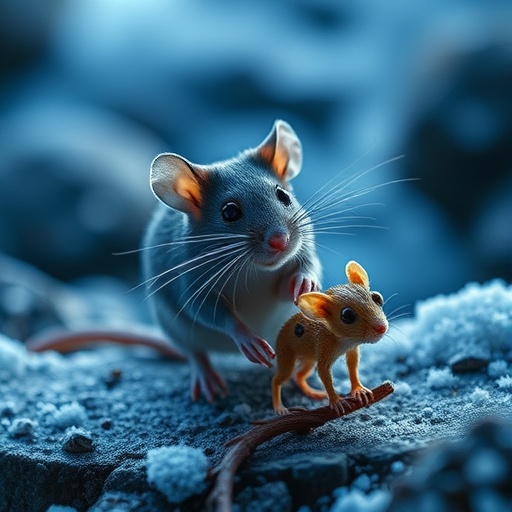
Hamilton, ON, July 9, 2026 — A diminutive mammal dwelling nearly 7,000 meters above sea level in the Andes is reshaping scientific understanding of life’s upper limits on Earth. The leaf-eared mouse, previously unknown to inhabit such extreme altitudes, challenges the established belief that mammals cannot survive beyond approximately 5,500 meters, the elevation of the highest known permanent human settlements.

This study, co-authored by researchers from McMaster University, reveals that survival in this harsh environment—characterized by hypoxia, subzero temperatures, scarce water, and minimal vegetation—is a multifaceted evolutionary achievement. “The presence of these mice at such heights was entirely unexpected,” explains Graham Scott, professor in McMaster’s Department of Biology. “It overturns the notion that mammals are restricted to lower elevations due to physiological constraints.”

Collaborating with an international team, Scott and colleague Grant McClelland conducted comparative analyses of high-altitude mice and their lowland counterparts in Chile. The research, published in Science, demonstrates that adaptation to these conditions is not the product of a solitary physiological change but arises from integrated modifications across multiple biological systems.

High-altitude mice maintain core body temperature and oxygen consumption rates effectively in conditions that would incapacitate most mammals. Their skeletal muscle tissue exhibits cellular profiles analogous to those of elite endurance athletes—mitochondria-dense cells facilitate sustained heat production essential for survival in frigid, oxygen-depleted environments.

Metabolically, these mice preferentially oxidize lipids, efficiently fueling both shivering muscles and specialized thermogenic tissues. This lipid-centric energy strategy provides a critical advantage in an environment with limited carbohydrate resources.

Beyond thermoregulation and oxygen transport, a surprising dimension of adaptation emerged concerning the animals’ diet. At extreme elevations where typical food sources are virtually nonexistent, the mice subsist on lichens and other wind-deposited organic matter. Genomic sequencing identified mutations in genes related to xenobiotic metabolism, enabling detoxification of plant compounds that would otherwise be harmful or indigestible.

McClelland highlights the complexity of evolutionary responses, emphasizing that “organisms confronting multifactorial environmental pressures evolve coordinated physiological and genetic strategies rather than isolated traits.” This multidimensional adaptation underscores the plasticity and resilience inherent in mammalian life.

These revelations not only recalibrate the recognized boundaries of terrestrial life but also offer predictive insight into how animals might confront rapidly changing ecosystems under global climate stress. “Temperature is just one piece of a larger puzzle,” Scott observes. “Survival depends on navigating a constellation of challenges simultaneously—oxygen, temperature, food availability—and evolution may work in unexpected ways to meet these demands.”

Subject of Research: Adaptations of Andean leaf-eared mice to extreme high-altitude environments
Article Title: Adaptation across an extreme elevational gradient in Andean leaf-eared mice, the world’s highest-dwelling mammal
News Publication Date: July 9, 2026
Web References: https://doi.org/10.1126/science.aec8347
Keywords: Evolutionary biology, Adaptation, High-altitude physiology, Metabolic adaptation, Climate change, Hypoxia

Tags: biological systems involved in high-altitude adaptationchallenges to established altitude limits for mammalscomparative analysis of highland and lowland miceevolutionary strategies for cold toleranceextreme altitude survival mechanismshigh-altitude adaptation in mammalsimplications for understanding species resilience in harsh conditionsleaf-eared mouse high-altitude habitatmammalian survival at 7000 metersMcMaster University research on extreme environment survivalphysiological adaptations to hypoxia
Share26Tweet16
Previous Post

Wood-Based Device Generates Continuous Electricity from Wastewater Salts

Next Post

Flapping-wing robot reveals how birds transition between air and water

Related Posts

Decoding Earth’s Historical Climate Patterns Through Past Temperatures
Athmospheric

Decoding Earth’s Historical Climate Patterns Through Past Temperatures

July 9, 2026
Young gas giant Beta Pic B hides its origins from astronomers
Athmospheric

Young gas giant Beta Pic B hides its origins from astronomers

July 9, 2026
Scientists Reveal Rapid Butterfly Effect Dynamics in Deep Ocean Currents
Athmospheric

Scientists Reveal Rapid Butterfly Effect Dynamics in Deep Ocean Currents

July 9, 2026
AI Study Uncovers True Experience of Urban Heat in Cities
Athmospheric

AI Study Uncovers True Experience of Urban Heat in Cities

July 9, 2026
Climate Change Threatens Northern Tree Swallow Populations Most
Athmospheric

Climate Change Threatens Northern Tree Swallow Populations Most

July 8, 2026
FSU Finds Rock Gas Emissions Linked to Ancient Climate Changes and Extinctions
Athmospheric

FSU Finds Rock Gas Emissions Linked to Ancient Climate Changes and Extinctions

July 8, 2026
Next Post
Flapping-wing robot reveals how birds transition between air and water

Flapping-wing robot reveals how birds transition between air and water

  • Mothers who receive childcare support from maternal grandparents show more

    Mothers who receive childcare support from maternal grandparents show more parental warmth, finds NTU Singapore study

    27656 shares
    Share 11059 Tweet 6912
  • University of Seville Breaks 120-Year-Old Mystery, Revises a Key Einstein Concept

    1061 shares
    Share 424 Tweet 265
  • Bee body mass, pathogens and local climate influence heat tolerance

    682 shares
    Share 273 Tweet 171
  • Researchers record first-ever images and data of a shark experiencing a boat strike

    546 shares
    Share 218 Tweet 137
  • Groundbreaking Clinical Trial Reveals Lubiprostone Enhances Kidney Function

    531 shares
    Share 212 Tweet 133
Science

Embark on a thrilling journey of discovery with Scienmag.com—your ultimate source for cutting-edge breakthroughs. Immerse yourself in a world where curiosity knows no limits and tomorrow’s possibilities become today’s reality!

RECENT NEWS

  • Satellites Track Penguin Poo Color to Reveal Climate Change Impact
  • Doctors struggle to learn from experiences that challenge AI recommendations
  • Genome Editing in Rats Advances Accurate ER+ Breast Cancer Models
  • Quantum optics could transform rare visual effects into innovative eye exams

Categories

  • Agriculture
  • Anthropology
  • Archaeology
  • Athmospheric
  • Biology
  • Biotechnology
  • Blog
  • Bussines
  • Cancer
  • Chemistry
  • Climate
  • Earth Science
  • Editorial Policy
  • Marine
  • Mathematics
  • Medicine
  • Pediatry
  • Policy
  • Psychology & Psychiatry
  • Science Education
  • Social Science
  • Space
  • Technology and Engineering

Subscribe to Blog via Email

Enter your email address to subscribe to this blog and receive notifications of new posts by email.

Join 5,146 other subscribers

© 2025 Scienmag - Science Magazine

Welcome Back!

Login to your account below

Forgotten Password?

Retrieve your password

Please enter your username or email address to reset your password.

Log In
No Result
View All Result
  • HOME
  • SCIENCE NEWS
  • CONTACT US

© 2025 Scienmag - Science Magazine

Discover more from Science

Subscribe now to keep reading and get access to the full archive.

Continue reading
