


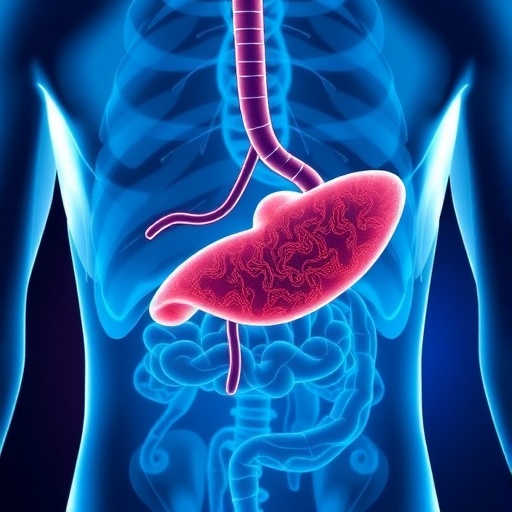
A new review in Experimental & Molecular Medicine is drawing attention to the gut–liver axis as one of the body’s most influential biological communication networks—and a potential frontier for treating chronic inflammatory disease. The article, by Akira Murao, Muhammad Aziz and Peng Wang, examines how signals moving between the intestine and liver can transform local disturbances in the gut into systemic inflammation, metabolic dysfunction and progressive organ damage. Rather than treating the gut and liver as separate systems, the authors present them as interconnected tissues linked by blood flow, bile circulation, immune pathways and microbial metabolites.
The relationship begins with anatomy. Blood from much of the intestine travels directly to the liver through the portal vein, carrying nutrients, microbial products and chemical signals absorbed across the intestinal wall. Under healthy conditions, the liver acts as a biochemical filter, while the intestinal barrier limits the passage of potentially harmful substances. This barrier is maintained by mucus, epithelial cells and protein complexes known as tight junctions, which seal the spaces between neighboring cells. When inflammation, infection, dietary stress or metabolic disease weakens these defenses, bacterial components can cross into the circulation and place the liver under sustained immune pressure.
Among the most important signals are pathogen-associated molecular patterns, or PAMPs, such as lipopolysaccharide from the outer membrane of Gram-negative bacteria. Damage-associated molecular patterns released by injured host cells can intensify the same response. In the liver, these molecules are detected by pattern-recognition receptors, including Toll-like receptors and NOD-like receptors, on immune cells and other hepatic cell types. Activation of these sensors stimulates transcription factors such as NF-κB and promotes the production of cytokines including tumour necrosis factor, interleukin-1β and interleukin-6. A short-lived response can be protective, but persistent signalling may drive chronic inflammation and fibrosis.
The review also highlights the microbiome as a chemical partner in gut–liver communication. Intestinal bacteria transform dietary components into short-chain fatty acids, including acetate, propionate and butyrate, which influence epithelial integrity, immune-cell activity and energy metabolism. Other microbial products can be harmful when produced in excess or insufficiently cleared. Changes in bacterial composition, known as dysbiosis, may increase the generation of ethanol, ammonia, indole derivatives or other metabolites that affect hepatic inflammation. The biological impact depends not only on which microbes are present, but also on their activity, the integrity of the intestinal barrier and the liver’s ability to process incoming compounds.
Bile acids create a second major communication circuit. Produced in the liver and released into the intestine, these molecules aid fat digestion before being modified by intestinal bacteria and returned through the enterohepatic circulation. Beyond their digestive role, bile acids act as signalling molecules through receptors such as the farnesoid X receptor and the G-protein-coupled bile acid receptor TGR5. These pathways help regulate lipid and glucose metabolism, immune responses and the composition of the microbiome. Disrupted bile-acid synthesis, transport or microbial conversion can therefore affect both intestinal inflammation and liver disease, linking metabolic disorders to changes in immune signalling.
This network becomes particularly important in conditions such as metabolic dysfunction-associated steatotic liver disease, alcohol-associated liver disease, inflammatory bowel disease and advanced liver fibrosis. In metabolic liver disease, excess dietary energy and insulin resistance can promote fat accumulation in hepatocytes, while microbial products and inflammatory mediators amplify cellular stress. Kupffer cells, the liver’s resident macrophages, respond to these signals and communicate with stellate cells. Once activated, stellate cells produce extracellular matrix proteins, including collagen, that gradually remodel liver tissue. Persistent matrix deposition can lead to fibrosis and, in severe cases, cirrhosis.
The authors describe the gut–liver axis as a therapeutic opportunity, but the review also suggests why simple solutions have often failed. Antibiotics may reduce selected bacterial signals but can disrupt beneficial communities and promote resistance. Probiotics and prebiotics can influence microbial ecology, although their effects may vary according to the patient’s diet, baseline microbiome and disease stage. Approaches under investigation include targeted microbial consortia, postbiotics, faecal microbiota transplantation, engineered bacteria and dietary strategies designed to restore production of protective metabolites. The central challenge is to modify the ecosystem precisely rather than suppressing it indiscriminately.
Drug development is also moving toward the molecular links that connect intestinal signals with hepatic inflammation. Potential targets include receptors that detect microbial products, enzymes involved in bile-acid metabolism, inflammatory cytokine pathways and mechanisms controlling epithelial tight junctions. Therapies designed to alter bile-acid signalling or reduce fibrogenic activation in the liver could potentially interrupt disease progression. However, the review emphasizes that the gut–liver axis is highly individualized. Sex, age, genetics, medication use, diet and environmental exposures can all influence microbial communities and immune responses, making broad treatment strategies difficult to apply uniformly.
Future progress may depend on combining multiple forms of biological information. Metagenomic sequencing can identify microbial genes, while metabolomics reveals the compounds actually produced in the intestine and transported to the liver. Imaging, immune profiling and computational modelling may then connect these molecular signals to tissue damage and clinical outcomes. Such integrated approaches could help distinguish harmless dysbiosis from the specific microbial and metabolic patterns that predict inflammation or fibrosis. The emerging picture is not of a single disease pathway, but of a dynamic network that can be measured, manipulated and, potentially, reset.
By bringing together immunology, microbiology, hepatology and metabolism, Murao, Aziz and Wang position inflammatory gut–liver crosstalk as a central problem in modern medicine. The review’s message is both cautionary and promising: damage in one organ can reverberate through the entire network, but that same connectivity creates several points for intervention. Treatments that protect the intestinal barrier, rebalance microbial chemistry and calm excessive hepatic immune activation could eventually offer more precise ways to prevent chronic liver disease before irreversible scarring develops.
Cite Scienmag News
Nathaniel Bowman. (August 7, 2026). How Inflammatory Gut–Liver Crosstalk Drives Disease and Reveals New Treatment Targets. Scienmag. https://scienmag.com/how-inflammatory-gut-liver-crosstalk-drives-disease-and-reveals-new-treatment-targets/
Nathaniel Bowman. "How Inflammatory Gut–Liver Crosstalk Drives Disease and Reveals New Treatment Targets." Scienmag, 7 August 2026, https://scienmag.com/how-inflammatory-gut-liver-crosstalk-drives-disease-and-reveals-new-treatment-targets/. Accessed 3 September 2026.
Nathaniel Bowman. "How Inflammatory Gut–Liver Crosstalk Drives Disease and Reveals New Treatment Targets." Scienmag. August 7, 2026. https://scienmag.com/how-inflammatory-gut-liver-crosstalk-drives-disease-and-reveals-new-treatment-targets/


