


Could Falling in Love With Food Help Save the Planet?
What if the next major shift in sustainable eating does not begin with a calorie count, a carbon label or a ban on meat advertising, but with the way people feel about food? A new perspective published in Ambio argues that transforming the global food system may require more than changing prices, technologies and regulations. It may require rebuilding a relationship. The authors, Mabel Ramisch of the Leibniz Institute of Ecological Urban and Regional Development and Martina Artmann of the Leibniz Institute and Weihenstephan-Triesdorf University of Applied Sciences, propose a framework called “human-food resonance” to explain how people might reconnect with food as something meaningful, living and capable of shaping human behavior. Their argument arrives as food production, distribution and consumption continue to drive climate change, biodiversity loss, pollution, resource depletion and social inequality. Food, they suggest, is not merely a commodity moving through an industrial supply chain. It is also a powerful point of contact between bodies, communities, landscapes, animals and the wider living world.
The framework draws on German sociologist Hartmut Rosa’s theory of “resonance,” which describes a form of relationship in which people are genuinely affected by the world and respond to it in ways that can change them. Resonance is not simply enjoyment or emotional intensity. It involves a dynamic exchange: something reaches a person, the person responds, and the encounter alters how they understand or inhabit the world. In contrast, alienation describes relationships that feel mute, detached or purely instrumental. Ramisch and Artmann apply this distinction to food, arguing that modern food systems often encourage alienated interactions. Consumers may encounter food as anonymous packaging on supermarket shelves, disconnected from the soil, water, labor, animals and ecological processes that made it possible. Even the act of eating can become an exercise in control, optimization and speed, shaped by conflicting diet advice, marketing and constant pressure to consume more efficiently. Yet the same system contains opportunities for reconnection, particularly when people grow, prepare, share or thoughtfully choose what they eat.
The authors describe human-food resonance as having two dimensions: how resonant moments occur and where they develop into longer-lasting relationships. The “how” is based on four qualities. The first is affect, meaning that food or its material forms can touch, move or disturb people. A tomato grown in a community garden, bread kneaded by hand or a meal associated with family memory may produce a sensory and emotional response that is absent from an anonymous product. The second is response, in which a person reacts through care, responsibility, empathy, restraint or practical action. The third is transformation, occurring when those experiences begin to align personal values with everyday behavior. Someone who becomes more aware of the ecological and social life of food may gradually change how they shop, cook or eat. The fourth is alienation, which the authors treat not only as the opposite of resonance but also as a possible interruption that exposes what has been lost. Recognizing food as distant, opaque or exploitative can itself become the beginning of a more attentive relationship.
This perspective is rooted in a technical debate within sustainability science about “inner” and “outer” transformation. Outer change includes institutions, infrastructure, policies, markets and technologies: more resilient agriculture, lower-emission supply chains, better labeling or improved access to plant-based foods. Inner change involves values, emotions, identities, worldviews and capacities such as compassion, reflection and self-efficacy. The authors argue that sustainability research has often emphasized the outer dimension while treating the inner world as secondary or private. That creates a persistent gap between what people say they value and what they do. Many consumers express support for environmentally responsible food but continue to follow habits constrained by cost, time, availability, social expectations and limited information. Human-food resonance is proposed as a way to connect these dimensions without reducing sustainable eating to individual consumer responsibility. Personal choices are shaped by supermarkets, kitchens, farms, advertisements, families, cultural traditions and public policy, so relationships with food must be studied across individual, collective and systemic levels.
The framework also incorporates ideas from “new materialism,” a family of theories that challenges the assumption that humans are the only meaningful agents in the world. In this view, plants, animals, microbes, soils and food materials can influence what happens, even though their agency is not equivalent to human intention. A seed has biological capacities, a crop responds to weather and soil conditions, fermentation is shaped by microbial activity, and an animal’s sentience imposes ethical questions on the systems that raise and kill it. The authors do not claim that food thinks or communicates like a person. Rather, they use agency in a broader relational sense: anything that makes a difference to other entities participates in shaping events. This matters because food is normally treated as passive matter, available to be produced, processed and consumed. Recasting it as an affective entity encourages researchers and citizens to consider how bodies, materials and ecological processes actively participate in human life—and how human practices, in turn, alter them.
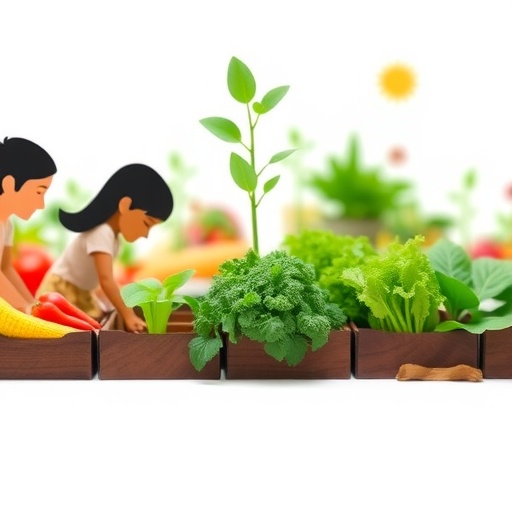
Care provides the proposed mechanism linking emotional recognition to sustainable action. In the framework, care begins internally, as feelings of responsibility, empathy, gratitude, modesty or concern. It becomes externally visible through practices such as reducing waste, protecting soil, supporting farmers, choosing seasonal foods, growing vegetables, preparing meals carefully or reconsidering the treatment of farmed animals. This does not mean that caring automatically produces environmentally beneficial behavior, nor that every emotionally powerful food experience is sustainable. Instead, care is treated as a relational process in which well-being is produced through giving and receiving attention. A community-supported farm, for example, can connect consumers with producers and seasonal conditions while distributing risk and strengthening local networks. Gardening can reconnect urban residents with soil, weather and biological cycles. Cooking can preserve cultural knowledge and make the labor and materials of food more visible. Such practices may help people experience sustainable diets not as deprivation, but as part of a satisfying vision of a good life.
Ramisch and Artmann organize these relationships across four “resonance axes.” The diagonal axis concerns relations with material things: food can be learned about, cultivated, harvested, bought, cooked and eaten. Kneading dough, tending edible plants, foraging, selecting regional products or preparing a meal can create repeated encounters that develop into a stable relationship with food. The horizontal axis concerns social relationships, including family, friendship, community and wider movements. Social networks can make plant-based or low-impact diets easier by offering identity, solidarity and practical support, but they can also generate stigma and pressure against dietary change. The self-axis links food with the body and mind. Mindful eating, self-care and reflection can help people recognize how food affects physical and psychological well-being while developing confidence in their ability to act sustainably. The vertical axis concerns transcendent relationships with nature, including spiritual, ethical and Indigenous understandings that regard food as a valuable and limited part of the living world rather than a resource without intrinsic worth.
The proposal is deliberately theoretical, and the authors emphasize that it is not a ready-made solution to the food system’s problems. Resonance is difficult to measure, cannot be summoned on demand and may mean different things to different people. A meal that creates belonging for one person may create exclusion for another; a food tradition can be emotionally meaningful while relying on environmentally damaging practices; and an individual may feel deeply connected to a product without understanding the harms embedded in its production. The authors also warn that resonance should not replace structural action. Feelings of connection cannot substitute for fair wages, accessible healthy food, effective environmental regulation or changes to industrial agriculture. Instead, the framework is intended to guide future empirical research. Studies could examine how people experience food in supermarkets, farms, slaughterhouses, restaurants, public institutions and family kitchens, using interviews, observation and other relational methods to trace connections between emotions, places, bodies and institutions. The researchers envision work that moves between inner experience and external systems rather than isolating either one.
The central message is both provocative and practical: sustainable food systems may depend partly on whether people can encounter food as more than an object of consumption. Human-food resonance offers a vocabulary for examining the sensory, ethical, social and ecological forces that shape eating, while recognizing that these relationships are constantly changing. A person may move from alienation to attention, from attention to care, and from care to transformation—but the process is neither linear nor guaranteed. By placing food at the center of the relationship between humans and the more-than-human world, the authors invite sustainability science to investigate not only what people eat, but how food affects them, how they respond and where those encounters become durable habits and collective practices. In a period when the food system is often portrayed as a technical problem awaiting technological repair, the idea may prove unusually shareable: saving the planet could begin, at least in part, by seeing dinner differently.
Cite Scienmag News
Sloane Callahan. (August 27, 2026). How Human-Food Connections Can Advance Sustainability. Scienmag. https://scienmag.com/how-human-food-connections-can-advance-sustainability/
Sloane Callahan. "How Human-Food Connections Can Advance Sustainability." Scienmag, 27 August 2026, https://scienmag.com/how-human-food-connections-can-advance-sustainability/. Accessed 3 September 2026.
Sloane Callahan. "How Human-Food Connections Can Advance Sustainability." Scienmag. August 27, 2026. https://scienmag.com/how-human-food-connections-can-advance-sustainability/


