


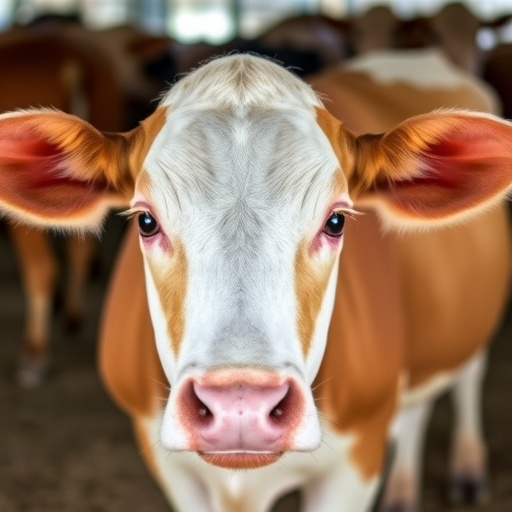
In early 2024, a baffling outbreak of H5N1 avian influenza emerged among dairy cattle in the Texas Panhandle, presenting a new and unexpected clinical manifestation of the virus. Unlike the typical respiratory illness caused by H5N1 in other mammals, affected cows exhibited severe necrotizing mastitis, an inflammatory condition predominantly targeting the mammary glands. This atypical tissue tropism challenged existing paradigms and delayed the accurate diagnosis, as initial veterinary investigations focused mainly on bacterial pathogens common to mastitis. The revelation that H5N1 was the etiological agent marked a critical moment in understanding how influenza viruses can adapt to novel hosts and tissues.
The study, recently published in Science Advances by researchers at the University of Pittsburgh School of Public Health, provides pioneering mechanistic insights into this unusual manifestation. The research team, led by Dr. Suresh Kuchipudi, elucidated the molecular basis for the H5N1 virus’s propensity to infect bovine mammary tissue rather than respiratory organs. This phenomenon, now observed in over 100 avian and mammalian species globally, underscores the remarkable plasticity of the H5N1 virus and its ability to exploit unique receptor architectures in different host species.
Traditionally, H5N1 and related influenza viruses target sialic acid glycan receptors present in the respiratory tract, facilitating viral entry primarily via respiratory epithelial cells. However, in bovines, the absence of clinical respiratory disease despite the presence of these glycans suggested a more nuanced receptor interaction paradigm. Kuchipudi’s group hypothesized that not just the presence but the precise molecular subtype and distribution of influenza receptors could dictate tissue tropism. Their investigation focused on delineating the receptor landscape across bovine tissues using cutting-edge glycomic methods combined with binding assays and ultra-high-resolution microscopy.
The team employed glycomics—a comprehensive approach to cataloging glycan structures—collaborating with expert Dr. Lauren E. Pepi from Harvard Medical School. They identified that among various glycan receptors, only a particular subclass known as N-linked sialic acid receptors demonstrated a high affinity for the H5N1 virus. Crucially, these receptors were found to be prevalent and densely expressed in the mammary epithelial cells of the udder but conspicuously scarce in bovine airway tissues. This spatial receptor distribution offers a molecular explanation for the virus’s unusual targeting of the mammary gland, enabling productive viral replication and resulting clinical mastitis.
The discovery sheds light on the critical role of receptor architecture in species-specific influenza virus infection. Prior reports indicated the presence of flu-related glycans in bovine respiratory tissues, but those receptors did not support significant viral binding or replication. The differential receptor expression patterns in respiratory versus mammary tissues effectively reprogrammed the virus’s tissue tropism. This specialization allows H5N1 to hijack the bovine mammary environment as a niche, explaining why infected cattle shed the virus in milk rather than displaying respiratory symptoms.
Beyond animal health, this finding carries important public health implications. The intense viral shedding into milk poses a risk to farm workers exposed to raw milk and raises concerns regarding zoonotic transmission routes. Dr. Kuchipudi points out that while pasteurization effectively neutralizes the virus, the common practice of feeding raw milk to domestic pets, notably cats, can facilitate cross-species transmission. Indeed, previous studies documented feline fatalities linked to H5N1 infection. This highlights the hidden dangers of viral reservoirs in dairy cattle and underscores the need for enhanced surveillance and biosecurity protocols within agricultural settings.
Methodologically, the study stands out for its innovative multimodal approach. The integration of high-precision receptor mapping with functional binding experiments allowed researchers to move beyond conventional histochemical staining. This enabled a granular understanding of the receptor types mediating viral entry, paving the way for predictive models of viral host and tissue susceptibility. By decoding the receptor landscape at this molecular scale, the research team demonstrated an unprecedented ability to identify viral tropism determinants, which could serve as early warning indicators for emergent influenza strains.
Looking forward, these insights form the foundation for a new paradigm in influenza research and surveillance. Scientists can now preemptively screen various animal species—not just for the presence of virus-compatible receptors but for specific tissue vulnerabilities within those hosts. This capability is transformative for anticipating how H5N1 and related viruses might manifest clinically, whether through respiratory symptoms, mastitis-like conditions, or neurological involvement, as previously seen in felines. Such proactive screening could revolutionize public health responses, affording precious time to deploy targeted interventions and prevent widespread outbreaks.
The implications of receptor-based viral tropism extend beyond livestock to potential future zoonoses affecting humans. Understanding the molecular basis of host adaptation provides critical clues into viral evolution and spillover risk. This knowledge also informs vaccine development and therapeutic strategies by highlighting tissue-specific pathways of viral entry and replication. As zoonotic influenza viruses continue to adapt, harnessing receptor glycomics will be vital for staying ahead of viral evolution and protecting both animal and human health.
The study was a collaborative effort involving multiple institutions and experts, including contributors from Pennsylvania State University, Harvard University, and North Dakota State University. Their combined expertise spanned infectious diseases, glycomics, virology, and veterinary medicine, enabling a comprehensive and multidisciplinary approach. Supported by the U.S. Department of Agriculture’s National Institute of Food and Agriculture and Pitt Public Health, this research exemplifies how fundamental science can directly inform and improve agricultural biosecurity and zoonotic disease preparedness.
Ultimately, this investigation marks a significant milestone in understanding influenza virus host adaptation. By revealing the receptor basis for the bovine-specific tissue tropism of H5N1, the study not only clarifies an enigmatic veterinary health issue but also establishes a versatile scientific framework for future viral threat assessment. As influenza viruses continue to evolve in complex ecological contexts, such mechanistic insights will be indispensable tools to foresee their next unexpected moves and mitigate their impact on global health.
Cite Scienmag News
William Thompson. (June 19, 2026). How H5N1 Bird Flu Went Undetected for Weeks in Dairy Cattle. Scienmag. https://scienmag.com/how-h5n1-bird-flu-went-undetected-for-weeks-in-dairy-cattle/
William Thompson. "How H5N1 Bird Flu Went Undetected for Weeks in Dairy Cattle." Scienmag, 19 June 2026, https://scienmag.com/how-h5n1-bird-flu-went-undetected-for-weeks-in-dairy-cattle/. Accessed 4 September 2026.
William Thompson. "How H5N1 Bird Flu Went Undetected for Weeks in Dairy Cattle." Scienmag. June 19, 2026. https://scienmag.com/how-h5n1-bird-flu-went-undetected-for-weeks-in-dairy-cattle/


