


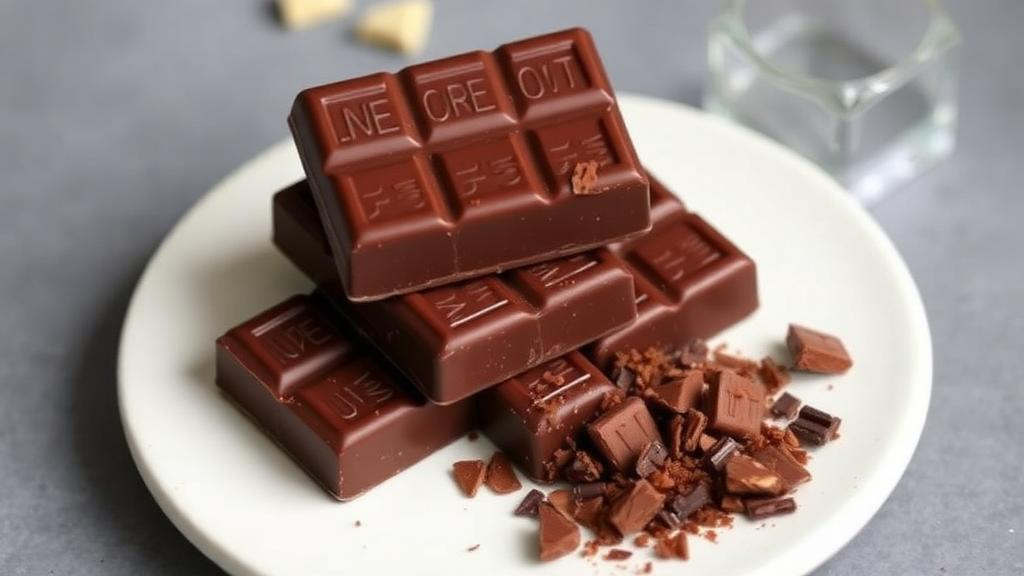
Chocolate has long occupied a paradoxical place in nutrition science: a food beloved across cultures, yet one whose sugar and fat content places it squarely in the crosshairs of public health campaigns against obesity, diabetes, and cardiovascular disease. A new randomized, double-blind, crossover trial published in Food Science & Nutrition now suggests that the story may be more complicated—and more hopeful—than a simple tally of grams of sugar. Researchers report that chocolate manufactured with a processing step known as extrusion cooking produced measurably smaller rises in blood insulin and triglycerides than a compositionally identical chocolate made without that step, hinting that how a food is engineered may matter as much as what it contains.
The trial, conducted with 18 healthy Japanese men aged 20 to 60, was designed to answer a deceptively simple question: could the physical structure imparted by extrusion processing change the way the body handles the sugars and fats in chocolate? Extrusion cooking is an industrial workhorse technique in which ingredients are continuously mixed, kneaded, heated, and pressurized as they pass through a screw-driven barrel. It is prized for its versatility, low cost, and speed, and it is already used to produce countless snacks and breakfast cereals. Previous research had shown that extrusion can gelatinize starch and alter how lipids are extracted from cereal matrices, but no study had yet examined whether the technique could reshape the digestive fate of sugar in a confectionery product.
To find out, the team prepared two chocolates that were, on paper, twins. Both contained 33.55 percent sugar, 6.6 percent cocoa mass, skim milk powder, cocoa butter equivalent, and lecithin, with the balance made up of whole milk powder. The only difference lay in the pre-treatment: in the extruded version, the sugar, cocoa mass, and a portion of the whole milk powder were first run through a laboratory-scale twin-screw extruder, with barrel zones ranging from 20 to 95 degrees Celsius, a screw speed of 200 revolutions per minute, and a controlled moisture environment, before being ground and incorporated into the final chocolate. Nutrient analysis confirmed that protein, fat, cholesterol, sucrose, lactose, starch, and dietary fiber contents were essentially indistinguishable between the two samples, meaning any differences in the body’s response could be attributed to processing rather than composition.
Each participant consumed 76 grams of chocolate—20 small pieces—within five minutes after a 12-hour fast, on two separate study days separated by a washout period of at least one week. Blood samples were drawn at seven time points over three hours, and levels of glucose, insulin, and triglycerides were measured using enzymatic assays and chemiluminescence immunoassay. Participants also completed visual analog scale questionnaires rating their hunger, fullness, and desire to eat at intervals throughout the session. The crossover design meant that every man served as his own control, neutralizing the individual metabolic variation that often clouds nutrition studies.
The results were striking in their specificity. Fasting baseline values for glucose, insulin, and triglycerides were statistically identical before each treatment, yet the postprandial trajectories diverged. Blood glucose rose less steeply after the extruded chocolate: at 45 minutes, the increment was 17.8 milligrams per deciliter above baseline for the extruded sample compared with 25.1 for the conventional one. Insulin told an even clearer story. At 30 minutes, insulin levels were significantly lower after the extruded chocolate, and the incremental area under the insulin curve—a measure of total hormone exposure over time—was significantly reduced at every checkpoint from 30 through 120 minutes, with p-values ranging from 0.006 to 0.040. Serum triglycerides, which climbed steadily for the full three hours after either chocolate, were significantly lower at 30 and 45 minutes following the extruded version.
Why would an invisible processing change ripple through metabolism this way? The researchers turned to an in vitro model of the early digestive tract to find out. They incubated melted samples of both chocolates in a simulated gastric dissolving solution, adapted from a standardized digestion protocol and held at body temperature, then measured how much sucrose and lactose leached into the surrounding fluid over 5, 15, and 30 minutes. Sucrose was quantified as a sucrose equivalent—the combined molarity of sucrose and the glucose released as it hydrolyzed—using high-performance liquid chromatography with a refractive index detector and an amino column. The answer was consistent: the extruded chocolate released less sugar into solution at every time point, with the sucrose equivalent significantly lower at 5 and 15 minutes. Slower dissolution, the authors reason, likely translates into slower digestion and a gentler glycemic rise in the gut.
This mechanism fits neatly into a broader body of evidence on food structure and bioavailability. Carbohydrate bioavailability is known to depend not only on the chemical identity of nutrients but on their physical form—the size of voids within the food matrix, the viscosity of the digestive fluid, and the barriers that form between nutrients and digestive enzymes. Prior work has shown that extrusion can create dense networks that bind water and increase viscosity, slowing the release of glucose, and that food structuring generally strengthens barrier properties within a matrix. In pharmaceutical science, the opposite goal—accelerating dissolution to improve drug bioavailability—is a major research enterprise, underscoring just how powerful dissolution kinetics can be. The chocolate study suggests confectionery manufacturers could deliberately exploit the same physics in reverse, slowing sugar release without altering taste or ingredient lists.
There was also a satiety dividend. Questionnaire data showed that eating chocolate of either kind reduced hunger and the desire to eat, but fullness scores at 120 minutes were significantly higher after the extruded chocolate. The authors note that delayed sugar absorption is known to prolong satiety, and that insulin itself contributes to satiety signaling through leptin secretion, though the precise mechanism linking the blunted metabolic response to sustained fullness remains unresolved. They frame the finding in terms of food well-being—an emerging paradigm that moves beyond restraint and restriction toward enjoying palatable foods engineered to support health. Because the extruded chocolate tasted and weighed the same as its conventional counterpart, consumers would not need to sacrifice pleasure to blunt the metabolic cost of an indulgence.
The study is not without caveats, and the authors are candid about them. All participants were men, most of them middle-aged, so the findings cannot yet be generalized to women or to younger or older populations. The acute metabolic differences, while statistically significant, were modest in absolute terms, and their cumulative effect on people who eat chocolate regularly remains to be tested in longer-term trials. The researchers also did not measure GLP-1, the gut hormone central to current debates about appetite and metabolism, although their in vitro dissolution work provides a plausible mechanistic bridge. Funding and authorship disclosures note that most of the research team are employees of Morinaga & Co. Ltd., which supplied the research expenses and test samples, a common arrangement in food industry science that readers should weigh alongside the study’s rigorous crossover design and registered protocol.
Even with those limitations, the trial makes a genuinely novel contribution: it is, to the authors’ knowledge, the first human evidence that extrusion processing can alter the postprandial metabolic response to sugar in a real food. The implications stretch well beyond chocolate. If the same structuring principles can be applied to other sugar-rich products—baked goods, cereals, confections—food engineers may gain a new lever for managing glycemic and lipidemic responses at the population level, one that requires no reformulation, no sweetener substitution, and no change in portion size. In an era when glucose spikes are increasingly linked to endothelial damage, oxidative stress, and cardiovascular risk, the idea that a factory screw press could quietly soften the metabolic impact of a candy bar is the kind of counterintuitive finding that could reshape how we think about processed food—not as the enemy of health, but as a tool for it.
Subject of Research: Effects of extrusion cooking on postprandial glucose, insulin, and triglyceride responses to chocolate in healthy men
Article Title: Chocolate Processed by Extrusion Cooking Affects Glucose and Lipid Metabolism in Humans: A Randomized, Double‐Blind, Crossover Trial
Article References: Kinta, Y., Maruki‐Uchida, H., Umehara, M., Ito, R., Shiga, R., Yasumoto, Y., Mori, S., & Koikeda, T. (2026). Chocolate Processed by Extrusion Cooking Affects Glucose and Lipid Metabolism in Humans: A Randomized, Double‐Blind, Crossover Trial. Food Science & Nutrition, 14(10), Article e72409. https://doi.org/10.1002/fsn3.72409
Image Credits: AI Generated
DOI: 10.1002/fsn3.72409
Keywords: extrusion cooking, chocolate, postprandial metabolism, blood glucose, insulin, triglycerides, food processing, sugar dissolution, randomized crossover trial, food well-being, glycemic response, food structure
Cite Scienmag News
Daisy Hatcher. (October 3, 2026). How Extrusion Cooking Could Make Chocolate gentler on Blood Sugar. Scienmag. https://scienmag.com/how-extrusion-cooking-could-make-chocolate-gentler-on-blood-sugar/
Daisy Hatcher. "How Extrusion Cooking Could Make Chocolate gentler on Blood Sugar." Scienmag, 3 October 2026, https://scienmag.com/how-extrusion-cooking-could-make-chocolate-gentler-on-blood-sugar/. Accessed 4 October 2026.
Daisy Hatcher. "How Extrusion Cooking Could Make Chocolate gentler on Blood Sugar." Scienmag. October 3, 2026. https://scienmag.com/how-extrusion-cooking-could-make-chocolate-gentler-on-blood-sugar/


