


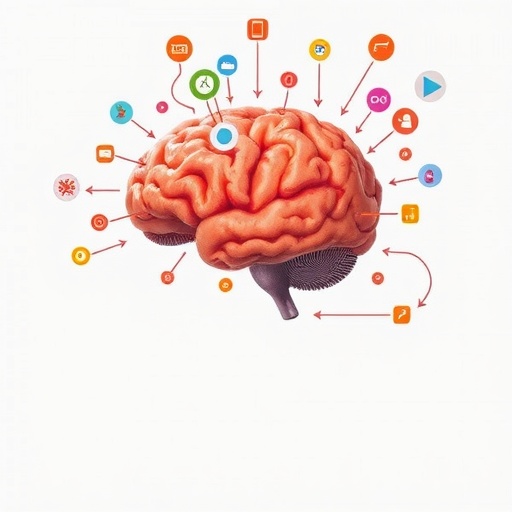
In a groundbreaking advancement for cognitive neuroscience, a research team led by Scott Fairhall at the University of Trento has unveiled new insights into how the human brain encodes and recalls semantic knowledge—facts and information about the world that are impersonal and detached from individual experience. While past research has extensively mapped brain circuits involved in autobiographical memory, the neural underpinnings of learning and memorizing factual knowledge have remained elusive. By deploying functional magnetic resonance imaging (fMRI) and a novel experimental paradigm, Fairhall and colleagues have begun to illuminate the cerebral architecture that supports semantic learning, distinguishing it from autobiographical memory systems.
The study engaged 29 volunteers in a controlled learning task where participants were introduced to 120 novel facts about three fictional civilizations inspired by the imaginative realms of high fantasy, reminiscent of worlds like Game of Thrones. This unique design ensured that the information was entirely new and devoid of personal relevance, isolating pure semantic acquisition. Participants’ neural activity was captured during the learning process, and nearly two days later, they were re-assessed on how well they could recall these facts, enabling the researchers to correlate brain activity patterns with memory performance.
One of the study’s most striking findings was the identification of specific brain regions whose activity patterns correlated with successful encoding of semantic information. Notably, activity in the precuneus and lateral anterior temporal lobe (ATL) emerged as critical predictors of which facts were eventually remembered. These regions exhibited what the researchers termed “semantic representational strength,” essentially a measure of how robustly semantic content about places and people was encoded. The stronger the neural representation in these areas during learning, the higher the probability that the information would be recalled later.
The precuneus, a hub in the medial parietal cortex, has traditionally been implicated in episodic memory and self-referential processing, but its role in semantic learning broadens its functional significance considerably. Meanwhile, the lateral ATL, long considered a core semantic hub involved in processing conceptual and categorical knowledge, shows dynamic engagement during the acquisition of new factual information, highlighting its pivotal role in semantic integration. This dual involvement underscores a network of brain regions specialized not merely in storing semantic knowledge but actively shaping the encoding process.
Importantly, the study demonstrates that the mechanisms supporting factual learning via semantic networks are partially distinct from those governing autobiographical memory, which relies heavily on medial temporal lobe structures like the hippocampus. This dissociation challenges the traditional view that memory systems are functionally monolithic and suggests parallel, nuanced pathways for different memory modalities. Such differentiation could explain why semantic memories often persist even when episodic memory is compromised, as observed in various neurological conditions.
The use of fictitious civilizations in this study cleverly controlled for pre-existing semantic associations, eliminating confounding variables and enabling the isolation of pure semantic learning processes. This methodological innovation allowed a fine-grained analysis of semantic representational strength without interference from prior knowledge or emotional salience. The experimental design thus offers a powerful template for future research probing the brain’s capacity to acquire abstract, impersonal knowledge.
The implications of these findings extend beyond theoretical neuroscience and into practical domains such as education and rehabilitation. Understanding how semantic knowledge is neurally encoded can inform strategies to enhance learning efficacy, particularly in individuals with memory impairments or developmental disorders. By targeting the precuneus and lateral ATL, interventions such as neurostimulation or cognitive training might be developed to bolster factual learning and improve semantic memory retention.
Moreover, these discoveries contribute to a broader understanding of cognition by elucidating how the brain compartmentalizes learning processes. The identification of brain areas that show predictive activity during learning invites a reconceptualization of memory systems as dynamically interactive yet functionally specialized modules. This insight aligns with emerging frameworks that highlight the brain’s capacity for parallel processing and the flexible allocation of neural resources depending on task demands.
Technological advances in fMRI acquisition and analysis were crucial for the resolution of these findings. By employing sophisticated multivariate pattern analysis techniques, the researchers could detect subtle variations in neural representational strength that traditional univariate approaches might overlook. This methodological rigor adds robustness to the conclusions and sets a new standard for investigating the neural correlates of semantic learning.
This pioneering study opens avenues for future investigations to explore how semantic representational strength develops over longer time scales and in more ecologically valid learning contexts. It also prompts questions about how individual differences—such as age, cognitive ability, and educational background—influence the neural encoding of factual knowledge. Further research may unravel how these regions interact with other brain networks, including attentional and executive systems, to optimize learning outcomes.
Finally, the recognition that semantic and episodic memories are supported by distinct but overlapping neural mechanisms could spur novel approaches in artificial intelligence and machine learning. Insights into how the human brain differentially processes and stores factual versus experiential information may inspire architectures that mimic this specialization, potentially improving knowledge acquisition and retrieval in artificial systems.
Collectively, Fairhall and colleagues’ study represents a landmark contribution to cognitive neuroscience, revealing that the strength of semantic representations in the precuneus and lateral ATL not only reflects but predicts successful factual learning. This discovery enriches our understanding of memory organization and underscores the sophistication of the brain’s learning machinery, fundamentally transforming how we conceptualize knowledge acquisition.
—
Cite Scienmag News
Cassandra Pierce. (October 20, 2025). How Do Humans Acquire New Knowledge? Scienmag. https://scienmag.com/how-do-humans-acquire-new-knowledge/
Cassandra Pierce. "How Do Humans Acquire New Knowledge?" Scienmag, 20 October 2025, https://scienmag.com/how-do-humans-acquire-new-knowledge/. Accessed 4 September 2026.
Cassandra Pierce. "How Do Humans Acquire New Knowledge?" Scienmag. October 20, 2025. https://scienmag.com/how-do-humans-acquire-new-knowledge/


