


In a groundbreaking new study published in the prestigious journal Science, researchers from McMaster University and Institut Pasteur have unraveled how a single gene within the notorious bacterium Yersinia pestis—the etiological agent behind the bubonic plague—has played a pivotal role in modulating the virulence and epidemiological patterns of plague pandemics spanning over a millennium. This gene, known as pla, has undergone evolutionary adjustments that directly influenced the pathogen’s ability to evade immune defenses, manipulate host mortality rates, and consequently, its persistence in human populations. This revelation not only sheds light on the complex evolutionary arms race between pathogen and host but also provides crucial insights into the mechanisms that dictated the dramatic shifts in plague pandemics, including the devastating Black Death and its ultimate decline.
The bubonic plague remains indelibly etched in human history as one of the deadliest pandemics, with the Black Death alone wiping out between 30 to 50 percent of Europe’s, Western Asia’s, and Africa’s population in the 14th century. However, the bacterium responsible had already instigated earlier waves during the Plague of Justinian in the mid-6th century and continues to cause fatalities in pockets of the world even today, notably in Madagascar and the Democratic Republic of Congo. Despite modern medical advancements, the persistence of Y. pestis underscores the need to understand the pathogen’s evolutionary trajectory, specifically how alterations in its genetic repertoire impact virulence and transmission dynamics.
At the heart of this study lies the pla gene, a high-copy genetic element found in Y. pestis that encodes a plasminogen activator protease critical for subverting the host immune response. This protease facilitates dissemination by enabling the bacterium to silently bypass initial immune detection, migrating from the site of flea bites to the lymph nodes and systemic circulation. Intriguingly, the researchers’ comprehensive genetic analyses—encompassing hundreds of samples from ancient and contemporary plague victims—demonstrated that the copy number of the pla gene diminished in later outbreaks of both the first and second pandemic waves. This decrease correlated with an approximate 20% reduction in virulence and a concomitant extension of infection duration, implying that infected hosts lived longer despite eventually succumbing to disease.
To validate these genetic findings, experimental infection models using mice were employed. Here, Y. pestis strains harboring a high copy number of pla induced rapid and lethal infection courses, while strains with reduced pla copy numbers caused less aggressive disease, prolonging host survival. This nuanced modulation likely provided evolutionary advantages, facilitating wider dissemination as infected rodent hosts remained alive longer, thus serving as efficient vectors amplifying the pathogen’s reach. Such alterations occurred independently but mirrored between ancient pandemic strains and samples from the ongoing third pandemic, revealing a conserved pattern of virulence attenuation shaped by host-pathogen dynamics over centuries.
The evolutionary timing of these shifts is particularly notable. For both the Justinian and Black Death pandemics, reductions in pla copy number emerged roughly a century after the initial outbreaks. This timeline suggests an adaptive response to changing host ecology, especially the density and behaviors of rodent reservoirs like black rats which acted as primary amplification hosts. Because Y. pestis relies heavily on rat populations to maintain transmission cycles, fluctuations in rodent numbers and contact rates with humans would exert selective pressures on the bacterium, favoring strains that optimize survival without rapidly annihilating their hosts.
Crucially, the study highlights that while attenuated pla gene copy strains facilitated prolonged epidemics by sustaining transmission, these variants eventually went extinct themselves. This zero-sum game likely reflects further ecological shifts or host-pathogen coevolution, possibly due to altered rodent population dynamics, improved human immunity, environmental changes, or competition with more virulent strains. Complementing historical genomic data with modern bacterial isolates, researchers identified only a handful of contemporary Y. pestis samples exhibiting pla depletion, underscoring the rarity—and perhaps fragility—of this evolutionary state.
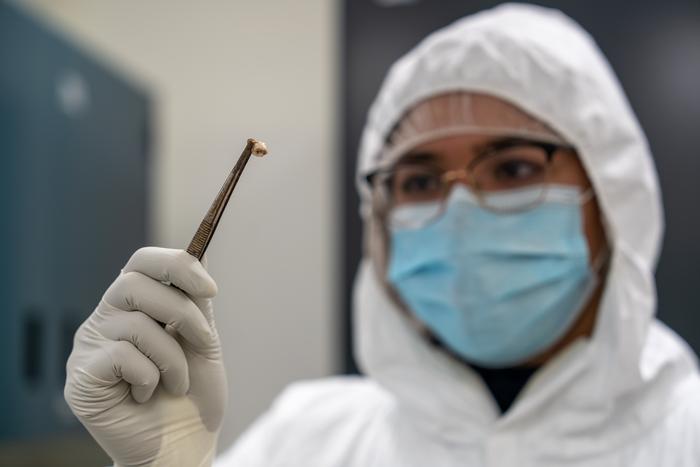
This investigation was made possible by access to unparalleled collections of ancient DNA and modern bacterial isolates. The McMaster Ancient DNA Centre’s repository allowed genetic screening of human tissue samples from past pandemics, while the Institut Pasteur’s expansive Y. pestis strain archive enriched the comparative analysis with living pathogens. Together, these datasets facilitated a unique cross-temporal lens into pathogen evolution that, until now, was largely speculative.
From a broader perspective, this research illuminates the intricate balancing act pathogens perform between killing their hosts too swiftly and maintaining infection chains over time. The pla gene’s modulation in Y. pestis exemplifies an evolutionary strategy where virulence is attenuated to maximize transmission efficacy within fluctuating ecological landscapes. Such insights hold immense value beyond historical curiosity; they provide a framework to understand emerging infectious diseases, anticipate pathogen adaptation, and potentially guide targeted interventions or surveillance strategies.
Despite these advances, the study underscores that the majority of circulating Y. pestis strains today remain highly virulent, resembling those responsible for prior massive mortalities. This resilience serves as a poignant reminder of the threat this ancient pathogen continues to pose, particularly in regions lacking comprehensive public health infrastructure. Therefore, ongoing monitoring of genetic variations such as pla in contemporary outbreaks remains essential for anticipating shifts in plague dynamics and preventing future epidemics.
In conclusion, the attenuation of virulence mediated by changes in the pla gene across plague pandemics exemplifies evolutionary plasticity enabling the pathogen to balance survival and transmission. The convergence of ancient DNA analysis, modern microbiology, and advanced statistical methods has unlocked a new understanding of how pandemic trajectories are shaped by microbial genetics intricately tied to host and environmental factors. This study marks a seminal step in dissecting the molecular underpinnings of pandemic evolution and underscores the enduring legacy of Yersinia pestis in human history and health.
News Publication Date: 29-May-2025
Web References: https://photos.app.goo.gl/3dwJBEFXePeLDKTj6
References: DOI: 10.1126/science.adt3880
Cite Scienmag News
Gavin Prescott. (May 29, 2025). How a Single Gene Evolution Enabled the Plague’s Deadly Reign—and Its Eventual Decline. Scienmag. https://scienmag.com/how-a-single-gene-evolution-enabled-the-plagues-deadly-reign-and-its-eventual-decline/
Gavin Prescott. "How a Single Gene Evolution Enabled the Plague’s Deadly Reign—and Its Eventual Decline." Scienmag, 29 May 2025, https://scienmag.com/how-a-single-gene-evolution-enabled-the-plagues-deadly-reign-and-its-eventual-decline/. Accessed 4 September 2026.
Gavin Prescott. "How a Single Gene Evolution Enabled the Plague’s Deadly Reign—and Its Eventual Decline." Scienmag. May 29, 2025. https://scienmag.com/how-a-single-gene-evolution-enabled-the-plagues-deadly-reign-and-its-eventual-decline/


