

Friday, October 23, 2026
Science
No Result
View All Result
  • Login
  • HOME
  • SCIENCE NEWS
  • CONTACT US
  • HOME
  • SCIENCE NEWS
  • CONTACT US
No Result
View All Result
Scienmag
No Result
View All Result
Home Science News Biology

Host–virus genetic interactions mask heritable fitness variation in flies

October 23, 2026
in Biology
Kristina Jarvis
By Kristina Jarvis Scienmag Editorial Profile - Infectious Disease Medicine
Reading Time: 2 mins read
0
Host–virus genetic interactions mask heritable fitness variation in flies

Host–virus genetic interactions mask heritable fitness variation in flies

65
SHARES
587
VIEWS
Share on FacebookShare on Twitter
ADVERTISEMENT

Host–parasite coevolution is expected to drive strong selection for resistance in hosts and infectivity in pathogens, a process that should steadily erode genetic variation in these traits. Yet natural populations often retain extensive genetic variation in resistance and infectivity. A new study combining evolutionary modelling with large-scale infection experiments offers an explanation: much of this variation is hidden inside host–virus interactions, where it is effectively invisible to directional selection.

Researchers, including Aleksei Belyi, Yiyang Du, Alastair J. Wilson, Ben Longdon and Francis M. Jiggins, studied the fruit fly Drosophila melanogaster and its vertically transmitted sigma virus. Their coevolutionary simulations showed that coevolution typically erodes additive genetic variance in host and pathogen fitness — the component of variation that responds predictably to selection — and instead concentrates variance in genotype-by-genotype interaction terms.

The experimental work bore this out. Across 90 host–virus genotype combinations, the key fitness-related traits of transmission, viral load and virulence were governed overwhelmingly by specific host–virus pairings rather than by the average effects of host or virus genotypes on their own. In other words, no host resistance allele and no viral genotype consistently conferred higher fitness across all genetic backgrounds.

Interactions also tended to be sex-specific, further restricting the amount of heritable fitness variation available to selection. Because the genetic variance sits in the interaction term rather than in additive differences among hosts or viruses, it remains ‘cryptic’ — masked from the directional selection that would otherwise deplete it. Negative frequency-dependent selection arising from these genotype-by-genotype interactions can help maintain this variation by preventing any single genotype from holding a permanent advantage.

The authors conclude that coevolution can substantially mask heritable variation by making fitness context-dependent. This cryptic reservoir may be revealed when ecological or evolutionary conditions shift, or when coevolution itself changes the direction of selection. The findings highlight the need to account for genotype-specific interactions when forecasting how populations will evolve in response to pathogens.

Subject of Research: Host–virus genotype interactions concealing additive genetic variation in a Drosophila–sigma virus system

Article Title: Host–virus interactions dominate fitness and conceal additive genetic variation

Article References: Belyi, A., Du, Y., Wilson, A. J., Longdon, B., & Jiggins, F. M. (2026). Host–virus interactions dominate fitness and conceal additive genetic variation. PLOS Biology, 24(10), e3003836. https://doi.org/10.1371/journal.pbio.3003836

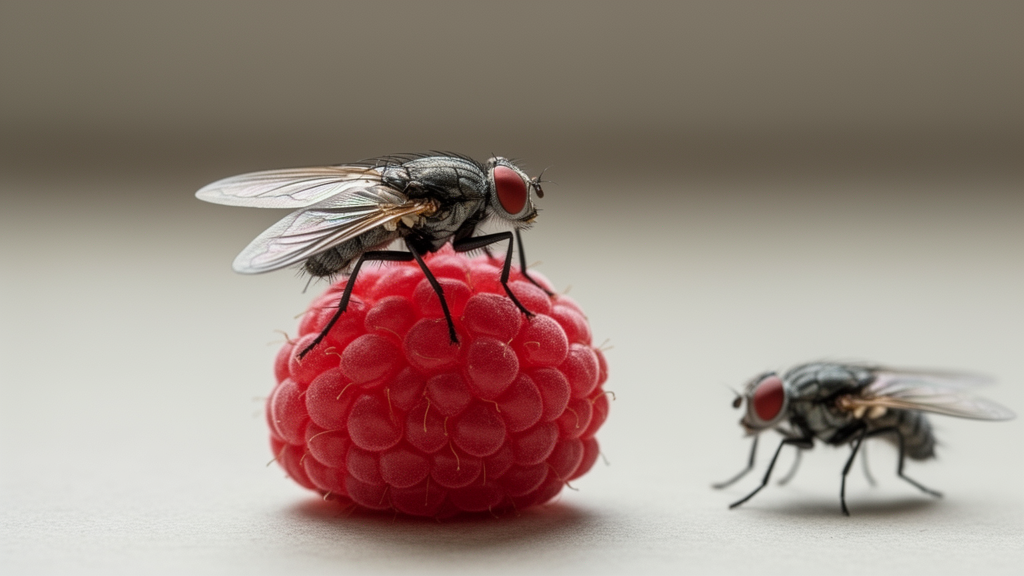
Image Credits: AI Generated

DOI: 10.1371/journal.pbio.3003836

Keywords: Drosophila melanogaster, sigma virus, host-pathogen coevolution, genotype-by-genotype interactions, additive genetic variance, cryptic genetic variation, virulence, viral load, vertical transmission, negative frequency-dependent selection, evolutionary genetics, Host

Cite Scienmag News

Kristina Jarvis. (October 23, 2026). Host–virus genetic interactions mask heritable fitness variation in flies. Scienmag. https://scienmag.com/host-virus-genetic-interactions-mask-heritable-fitness-variation-in-flies/

Kristina Jarvis. "Host–virus genetic interactions mask heritable fitness variation in flies." Scienmag, 23 October 2026, https://scienmag.com/host-virus-genetic-interactions-mask-heritable-fitness-variation-in-flies/. Accessed 23 October 2026.

Kristina Jarvis. "Host–virus genetic interactions mask heritable fitness variation in flies." Scienmag. October 23, 2026. https://scienmag.com/host-virus-genetic-interactions-mask-heritable-fitness-variation-in-flies/


Tags: additive genetic variancecoevolutionary dynamics in Drosophilacryptic genetic variationDrosophila melanogasterevolutionary geneticsevolutionary modeling of host-pathogen coevolutiongenetic variation masking in host resistancegenotype-by-genotype interactionsgenotype-by-genotype interactions in host-pathogen systemshidden genetic variation in resistancehosthost-pathogen coevolutionhost-virus genetic interactionsimpact of coevolution on genetic varianceinheritance of fitness traits inlarge-scale infection experiments in host–virus studiesnegative frequency-dependent selectionsex-specific host-virus interactionssigma virusvertical transmissionvertically transmitted sigma virus in Drosophilaviral infectivity and virulence in fruit fliesviral loadvirulence
Share26Tweet16
Previous Post

Screening Young Hearts: How ECGs and AI Could Curb Sudden Cardiac Death

Next Post

Machine Learning Maps Energy and Digital Poverty in Philippines’ Poorest Luzon Region

Related Posts

BRCA Mutations Shape Immune Landscapes in Ovarian Cancer, Spatial Study Finds
Biology

BRCA Mutations Shape Immune Landscapes in Ovarian Cancer, Spatial Study Finds

October 23, 2026
Nasal Bacteria Feed or Starve Staphylococcus aureus Depending on Amino Acid Supply
Biology

Nasal Bacteria Feed or Starve Staphylococcus aureus Depending on Amino Acid Supply

October 23, 2026
Century-old archived tissue samples still yield measurable human DNA
Biology

Century-old archived tissue samples still yield measurable human DNA

October 23, 2026
Segmentation choices reshape spatial transcriptomics results, benchmark finds
Biology

Segmentation choices reshape spatial transcriptomics results, benchmark finds

October 23, 2026
Deep-sea protected areas in the Pacific mining zone are barely connected, model shows
Biology

Deep-sea protected areas in the Pacific mining zone are barely connected, model shows

October 23, 2026
PELICAN Tool Improves Gene Recall in Bacteriophage Genome Annotation
Biology

PELICAN Tool Improves Gene Recall in Bacteriophage Genome Annotation

October 23, 2026
Next Post
Machine Learning Maps Energy and Digital Poverty in Philippines’ Poorest Luzon Region

Machine Learning Maps Energy and Digital Poverty in Philippines' Poorest Luzon Region

  • Mothers who receive childcare support from maternal grandparents show more optimized

    Mothers who receive childcare support from maternal grandparents show more parental warmth, finds NTU Singapore study

    27656 shares
    Share 11059 Tweet 6912
  • University of Seville Breaks 120-Year-Old Mystery, Revises a Key Einstein Concept

    1061 shares
    Share 424 Tweet 265
  • Bee body mass, pathogens and local climate influence heat tolerance

    682 shares
    Share 273 Tweet 171
  • Researchers record first-ever images and data of a shark experiencing a boat strike

    546 shares
    Share 218 Tweet 137
  • Groundbreaking Clinical Trial Reveals Lubiprostone Enhances Kidney Function

    531 shares
    Share 212 Tweet 133
Science

Embark on a thrilling journey of discovery with Scienmag.com—your ultimate source for cutting-edge breakthroughs. Immerse yourself in a world where curiosity knows no limits and tomorrow’s possibilities become today’s reality!

RECENT NEWS

  • Machine Learning Maps Energy and Digital Poverty in Philippines’ Poorest Luzon Region
  • Host–virus genetic interactions mask heritable fitness variation in flies
  • Screening Young Hearts: How ECGs and AI Could Curb Sudden Cardiac Death
  • BRCA Mutations Shape Immune Landscapes in Ovarian Cancer, Spatial Study Finds

Categories

  • Agriculture
  • Anthropology
  • Archaeology
  • Athmospheric
  • Biology
  • Biotechnology
  • Blog
  • Bussines
  • Cancer
  • Chemistry
  • Climate
  • Earth Science
  • Editorial Policy
  • Marine
  • Mathematics
  • Medicine
  • Pediatry
  • Policy
  • Psychology & Psychiatry
  • Science Education
  • Science News
  • Social Science
  • Space
  • Technology and Engineering

Subscribe to Blog via Email

Enter your email address to subscribe to this blog and receive notifications of new posts by email.

Join 5,151 other subscribers

© 2025 Scienmag - Science Magazine

Welcome Back!

Login to your account below

Forgotten Password?

Retrieve your password

Please enter your username or email address to reset your password.

Log In
No Result
View All Result
  • HOME
  • SCIENCE NEWS
  • CONTACT US

© 2025 Scienmag - Science Magazine

Discover more from Science

Subscribe now to keep reading and get access to the full archive.

Continue reading