


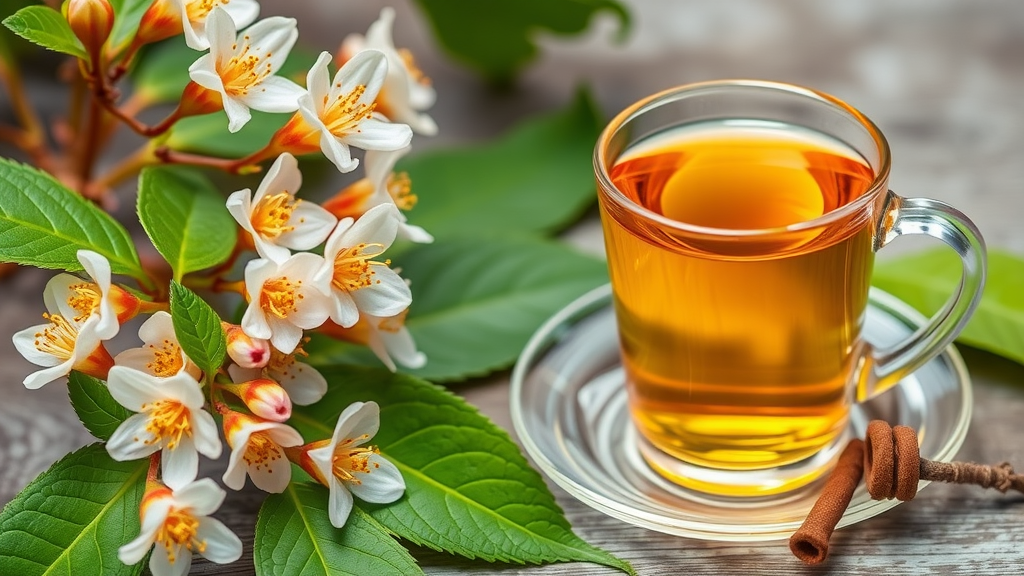
Honeysuckle flower buds, known in traditional Chinese medicine as Lonicerae Japonicae Flos, have been brewed into teas and decoctions for centuries to clear heat and detoxify the body. A comprehensive review published in Food Science & Nutrition now argues that this ancient remedy deserves serious attention from modern gut researchers, assembling decades of pharmacological evidence that its rich cocktail of plant chemicals can suppress intestinal inflammation, rebalance the gut microbiota, and even slow the growth of colorectal cancer cells in laboratory models. The review, which synthesizes studies published between 1969 and 2026, positions the flower as a leading candidate among so-called medicine–food homologous ingredients: substances that are simultaneously drugs and dietary components.
The clinical backdrop is sobering. Ulcerative colitis, a chronic inflammatory disease of the colon, now affects an estimated five million people worldwide, with incidence climbing steadily and peaking in two age bands, between 15 and 30 and again between 50 and 70 years. Its most feared complication is colitis-associated colorectal cancer, a malignancy that emerges through a cascade of chronic inflammation, persistent oxidative stress, immune dysregulation, and cumulative DNA damage in the intestinal epithelium. Colorectal cancer overall is already the third most diagnosed cancer and the second leading cause of cancer death globally, and projections suggest deaths from colon and rectal cancers will rise by roughly 60 and 71.5 percent respectively by 2035. Conventional treatments, from mesalazine and corticosteroids to biologics such as infliximab, help many patients but carry toxicity, drug resistance, and high costs, fueling the search for safer adjunctive agents.
That is where the honeysuckle flower enters. The review catalogs its principal bioactive constituents across five chemical families: volatile oils such as linalool, geraniol, and eugenol; flavonoids including luteolin, quercetin, kaempferol, and apigenin; phenolic acids dominated by chlorogenic acid; triterpenoid saponins such as loniceroside A and B; and high-molecular-weight polysaccharides built from glucose, galactose, and mannose. Chlorogenic acid, an ester of caffeic and quinic acid produced via the shikimate pathway, is the most abundant and is the compound the Chinese Pharmacopeia uses as a quality benchmark, mandating at least 1.5 percent on a dry-weight basis along with a total phenolic acid content of 3.8 percent. Structural features matter: the phenolic hydroxyl groups donate hydrogen atoms to neutralize free radicals, while carboxyl groups participate in acid–base interactions with target proteins, underpinning the molecule’s antioxidant and anti-inflammatory versatility.
The mechanistic core of the review concerns how these compounds tame ulcerative colitis. Despite their chemical diversity, the constituents converge on remarkably similar pathways. Geraniol, administered orally in mouse models, reduced the pro-inflammatory cytokines TNF-α, IL-1β, and IL-6 by modulating nuclear factor kappa B, or NF-κB, a master transcription factor that switches on broad programs of inflammation-related genes. Luteolin suppressed the inhibitor of κB kinase α/β, blocking NF-κB signaling and preventing macrophage activation and chemotactic migration, while simultaneously raising levels of the anti-inflammatory cytokine IL-10 and restoring the colonic barrier damaged by dextran sulfate sodium, a standard chemical inducer of experimental colitis. Chlorogenic acid, meanwhile, dampens both the NF-κB and MAPK cascades, including the ERK, p38, and JNK branches, reducing inflammatory mediators, oxidative stress, and apoptosis in injured mucosa.
Oxidative stress and barrier integrity form a second line of defense. In colitic mice, luteolin and chlorogenic acid both increased the activities of the antioxidant enzymes superoxide dismutase and glutathione peroxidase while lowering malondialdehyde, a marker of lipid peroxidation, helping epithelial cells withstand reactive oxygen species. Quercetin improved tight junction integrity in an aryl hydrocarbon receptor–dependent manner, and kaempferol raised expression of the junctional proteins zonula occludens-1, occludin, and claudin-1, physically sealing the gaps through which bacteria and endotoxins translocate into the gut wall. On the immune side, luteolin shifted macrophages from a pro-inflammatory M1 phenotype toward the reparative M2 state through an AMPK–PPARγ pathway, quercetin inhibited the cGAS–STING pathway in intestinal macrophages, and chlorogenic acid restored the Th1/Th2 lymphocyte balance while making dendritic cells more tolerogenic.
Perhaps the most striking findings involve the gut microbiota. The volatile oils disrupt the membranes of pathogens such as Escherichia coli and Salmonella, while luteolin enriched beneficial commensals including Roseburia and butyrate-producing bacteria, whose short-chain fatty acid outputs nourish the colonic epithelium and dampen inflammation. Chlorogenic acid boosted Bifidobacterium, Lactobacillus, and Akkermansia while suppressing harmful species, and honeysuckle polysaccharides acted as prebiotics at doses of 150 milligrams per kilogram in mice, promoting probiotic growth, stimulating secretory IgA secretion, and upregulating tight junction proteins. The review frames this as a feedback loop: a healthier microbial community produces more anti-inflammatory metabolites, which in turn reinforce the mucosal barrier and push the disease toward remission.
Against colorectal cancer itself, the constituents act on several fronts. Chlorogenic acid downregulated the anti-apoptotic protein Bcl-2, activated caspase-3 and caspase-9, elevated p53 and p21, and induced G1-phase cell cycle arrest in HT-29 colon cancer spheroids at high concentrations. Kaempferol triggered apoptosis in HT-29 cells through both mitochondrial and death receptor pathways, promoting cytochrome C release and PARP cleavage, and in a lung metastasis model it curbed migration by downregulating a circular RNA that activates the JMJD2C/β-catenin pathway. Luteolin reduced Cyclin D1 and CDK4 to slow proliferation and suppressed the matrix metalloproteinases MMP-2 and MMP-9, enzymes that degrade the extracellular matrix and enable invasion, while upregulating E-cadherin to counter epithelial–mesenchymal transition. Quercetin and apigenin induced G2/M and G0/G1 arrest respectively and modulated the PI3K/Akt, Wnt/β-catenin, and JAK/STAT pathways that drive tumor progression.
Even the tumor microenvironment may be within reach. Honeysuckle extracts and a constituent microRNA called miRNA2911 suppressed murine colorectal tumor growth by downregulating TGF-β1 and enhancing T cell infiltration into tumors, hinting at an immunomodulatory mechanism. A phenolic acid derivative, caffeic acid phenethyl ester, inhibited NLRP3 inflammasome activation and protected mice from chemically induced colitis-associated cancer. The review also notes that shifting tumor cell metabolism away from excessive glycolysis toward oxidative phosphorylation can reduce lactate, ease the acidic tumor milieu, and improve infiltration of CD8-positive and CD4-positive T cells, a metabolic angle that polyphenol-rich plants may exploit.
The authors are candid about the caveats. Most evidence comes from cell cultures and animal models using doses far above what dietary consumption delivers, such as 2000 micromolar chlorogenic acid in vitro, so bioavailability, pharmacokinetics, and physiologically relevant exposures remain uncertain. Chemical composition varies with geography, harvest season, and processing, complicating standardization, and no large-scale clinical trials have yet established dosing guidelines for ulcerative colitis or colorectal cancer. Still, the translational pathway is taking shape: microencapsulation, nanoemulsions, and liposomal delivery could protect the heat- and light-sensitive compounds and improve intestinal absorption, while coformulation with probiotics may amplify microbiota-mediated benefits. Already consumed daily as honeysuckle tea across East Asia, the flower may be less a folk curiosity than a functional food ingredient in waiting, one whose centuries of empirical use are finally being translated into molecular language.
Subject of Research: Bioactive constituents of Lonicerae Japonicae Flos and their modulation of gut health, ulcerative colitis, and colorectal cancer
Article Title: Lonicerae Japonicae Flos as a Dietary Natural Product: Bioactive Constituents, Gut Health Modulation, and Therapeutic Potential in Ulcerative Colitis and Colorectal Cancer
Article References: Huang, X., Zhang, L., Shi, Z., Zhu, N., Liu, Y., & Zhou, Y. (2026). Lonicerae Japonicae Flos as a Dietary Natural Product: Bioactive Constituents, Gut Health Modulation, and Therapeutic Potential in Ulcerative Colitis and Colorectal Cancer. Food Science & Nutrition, 14(9), Article e72366. https://doi.org/10.1002/fsn3.72366
Image Credits: AI Generated
DOI: 10.1002/fsn3.72366
Keywords: honeysuckle, Lonicerae Japonicae Flos, ulcerative colitis, colorectal cancer, chlorogenic acid, luteolin, gut microbiota, NF-κB, flavonoids, traditional Chinese medicine, functional foods, intestinal barrier
Cite Scienmag News
Nathaniel Bowman. (September 26, 2026). Honeysuckle’s Hidden Chemistry: How a Classic Herbal Tea May Calm Gut Inflammation and Fight Colon Cancer. Scienmag. https://scienmag.com/honeysuckles-hidden-chemistry-how-a-classic-herbal-tea-may-calm-gut-inflammation-and-fight-colon-cancer/
Nathaniel Bowman. "Honeysuckle’s Hidden Chemistry: How a Classic Herbal Tea May Calm Gut Inflammation and Fight Colon Cancer." Scienmag, 26 September 2026, https://scienmag.com/honeysuckles-hidden-chemistry-how-a-classic-herbal-tea-may-calm-gut-inflammation-and-fight-colon-cancer/. Accessed 4 October 2026.
Nathaniel Bowman. "Honeysuckle’s Hidden Chemistry: How a Classic Herbal Tea May Calm Gut Inflammation and Fight Colon Cancer." Scienmag. September 26, 2026. https://scienmag.com/honeysuckles-hidden-chemistry-how-a-classic-herbal-tea-may-calm-gut-inflammation-and-fight-colon-cancer/


