


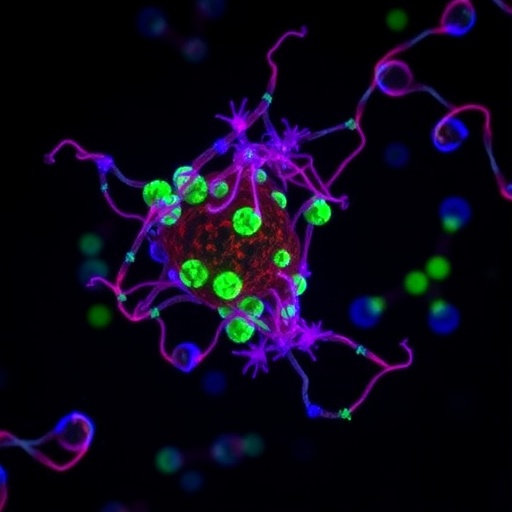
In a groundbreaking study published in Cell Death Discovery, researchers have unveiled a novel metabolic mechanism that underpins resistance to ferroptosis in hepatocellular carcinoma (HCC). This insight not only deepens our understanding of the metabolic intricacies within liver cancer cells but may also open new avenues for therapeutic intervention against this particularly aggressive malignancy. The team led by Zhou, Li, and Wang focused on the role of hepatocyte nuclear factor 4 alpha (HNF4α) in activating methionine metabolism, a biochemical pathway that appears critical for cancer cells to evade ferroptosis, a form of regulated cell death driven by iron-dependent lipid peroxidation.
Hepatocellular carcinoma, the predominant form of primary liver cancer, continues to pose substantial challenges in oncology due to its poor prognosis and limited treatment options. One promising therapeutic strategy that has emerged over recent years is the induction of ferroptosis, a unique form of cell death distinguished from apoptosis and necrosis by its iron-dependence and lipid peroxidation signatures. However, cancer cells have evolved multiple resistance mechanisms to avoid ferroptosis, complicating therapeutic efforts. The current research sheds light on one such mechanism, centered around metabolic adaptations involving methionine metabolism.
Methionine is not merely an essential amino acid; it is a pivotal player in cellular methylation processes, redox homeostasis, and polyamine synthesis, all of which are crucial for cell survival and proliferation. The study reveals that HNF4α modulates methionine metabolism, thereby enhancing the capacity of HCC cells to withstand the oxidative stress that triggers ferroptosis. The activation of methionine pathways appears to bolster antioxidant defenses, buffering cells against lipid peroxidation and preventing the lethal cascade characteristic of ferroptosis.
Through a series of sophisticated molecular biology techniques, the authors demonstrated that HNF4α upregulates key enzymes involved in methionine metabolism. These enzymes facilitate the conversion of methionine into protective metabolites such as glutathione, a major cellular antioxidant. The increased glutathione synthesis enhances the scavenging of reactive oxygen species (ROS) and peroxidized lipids, effectively shielding cancer cells from ferroptotic death. This metabolic reprogramming not only confers resistance but also challenges current attempts to sensitize HCC to ferroptosis-inducing therapies.
Furthermore, the study investigated the implications of silencing HNF4α expression in HCC cell lines. Remarkably, knockdown of HNF4α led to a pronounced decrease in methionine metabolism-related enzyme levels, accompanied by heightened susceptibility to ferroptosis. These findings were substantiated by in vivo tumor models, where HNF4α inhibition reduced tumor growth and increased ferroptotic markers, underscoring the therapeutic potential of targeting this axis.
The interplay between transcriptional regulation and metabolic adaptation highlights the complexity of cancer cell survival strategies. HNF4α, traditionally recognized for its role in liver development and function, has now been implicated as a master regulator of metabolic pathways that dictate ferroptosis sensitivity. This dual functionality positions HNF4α as a critical node intersecting oncogenic signaling and metabolic resilience, offering a potentially exploitable vulnerability.
Importantly, the activation of methionine metabolism through HNF4α may also impact other metabolic circuits, including transmethylation and transsulfuration pathways. These interconnected networks are vital for maintaining redox balance and cellular integrity under stress conditions. The study suggests that disrupting methionine metabolism could create metabolic bottlenecks, sensitizing HCC cells not only to ferroptosis but perhaps to other stress-related vulnerabilities as well.
The clinical ramifications of these findings are profound. Current therapeutic landscapes for HCC rely heavily on surgical resection, locoregional therapies, and systemic agents such as checkpoint inhibitors and kinase inhibitors. The identification of metabolic adaptations conferring ferroptosis resistance necessitates the development of combination strategies that can concurrently target metabolic enzymes and ferroptotic pathways, thereby circumventing resistance mechanisms.
Moreover, the study advances the possibility of using HNF4α expression or methionine metabolic activity as biomarkers to predict the responsiveness of HCC patients to ferroptosis-inducing agents. Personalized therapy regimens tailored to the metabolic profile of tumors could significantly enhance efficacy and reduce unintended toxicity, a critical consideration in liver cancer management.
The mechanistic insights afforded by this research also open prospects for the design of innovative small-molecule inhibitors aimed at selectively modulating methionine metabolism enzymes. Such pharmacological interventions could restore ferroptosis sensitivity and promote tumor cell death, either as stand-alone treatments or as adjuvants enhancing existing therapeutic modalities.
Beyond the scope of hepatocellular carcinoma, these findings underscore the broader significance of metabolic reprogramming in cancer biology. The capacity of tumors to adapt their metabolism to environmental and therapeutic pressures is a hallmark of malignancy, and disarming these adaptive networks remains a grand challenge. This study exemplifies how deep molecular investigations can reveal critical nodes amenable to intervention.
In summary, the activation of methionine metabolism mediated by HNF4α emerges as a key axis conferring ferroptosis resistance in HCC. By orchestrating metabolic pathways that bolster antioxidant defenses, HNF4α enables cancer cells to survive lethal oxidative insults. Targeting this metabolic adaptation holds promise for overcoming therapeutic resistance and improving outcomes for patients afflicted with liver cancer. As research continues to unravel the metabolic underpinnings of tumor survival, such discoveries propel the field toward more effective and precise cancer therapies.
This work not only expands the conceptual framework of ferroptosis resistance but also lays the groundwork for future clinical translation. The challenge remains to harness these mechanistic insights into practical interventions that can be brought to the bedside. Given the lethality of HCC and the current gaps in treatment efficacy, targeting the HNF4α-methionine metabolism axis represents a beacon of hope for novel, metabolically informed therapeutic strategies.
With the ongoing advances in cancer metabolism research and ferroptosis biology, it is plausible to envision a future where metabolic vulnerabilities are routinely exploited to eradicate resilient tumor cells. The contribution of Zhou, Li, Wang, and colleagues marks a significant milestone on this challenging yet promising journey, illuminating the path toward metabolic therapy as a cornerstone of cancer treatment.
Cite Scienmag News
Daisy Hatcher. (May 26, 2026). HNF4α Boosts Methionine Metabolism to Resist Ferroptosis. Scienmag. https://scienmag.com/hnf4%ce%b1-boosts-methionine-metabolism-to-resist-ferroptosis/
Daisy Hatcher. "HNF4α Boosts Methionine Metabolism to Resist Ferroptosis." Scienmag, 26 May 2026, https://scienmag.com/hnf4%ce%b1-boosts-methionine-metabolism-to-resist-ferroptosis/. Accessed 4 September 2026.
Daisy Hatcher. "HNF4α Boosts Methionine Metabolism to Resist Ferroptosis." Scienmag. May 26, 2026. https://scienmag.com/hnf4%ce%b1-boosts-methionine-metabolism-to-resist-ferroptosis/


