


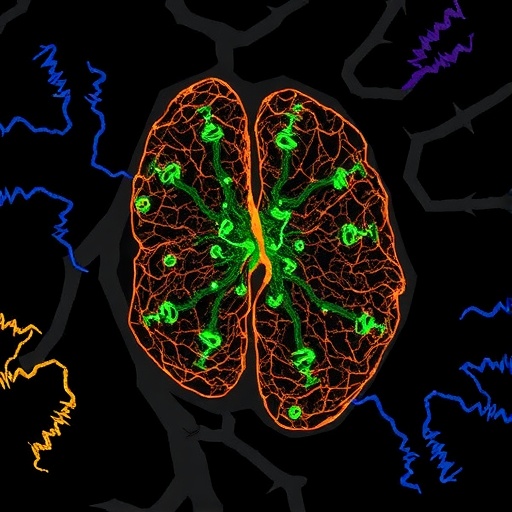
In a groundbreaking study poised to redefine therapeutic approaches to spinal cord injuries, researchers have uncovered a previously unknown interaction between two critical proteins—Heme Oxygenase 1 (HMOX1) and Bcl-2 nineteen kilodalton interacting protein 3 (BNIP3)—that intricately modulates neuronal ferroptosis, a specialized form of cell death. This work, published in the prestigious journal Cell Death Discovery, unravels the cellular machinery driving damage following spinal cord ischemia-reperfusion injury (SCIRI), revealing a mitophagy-dependent mechanism that may pave the way for innovative neuroprotective strategies.
Spinal cord ischemia-reperfusion injury represents a devastating clinical challenge, often resulting in irreversible neurological deficits due to the abrupt lack of oxygen and subsequent restoration of blood flow. The event triggers a cascade of oxidative stress and cell death pathways, with ferroptosis emerging as a critical mediator. Unlike apoptosis or necrosis, ferroptosis is characterized by iron-dependent lipid peroxidation leading to catastrophic neuronal demise. However, the molecular regulators orchestrating this pathway, particularly in the context of SCIRI, have remained elusive—until now.
The research team from a leading neurobiology institute conducted a meticulous investigation into the role of HMOX1, an enzyme well-known for its cytoprotective function through heme degradation and antioxidant production. Their data demonstrate that HMOX1 does not act in isolation but physically interacts with BNIP3, a protein implicated in mitochondrial quality control and programmed cell death. This interaction appears to be a decisive factor in modulating the balance between protective mitophagy and destructive ferroptosis in affected neurons.
Mitophagy, the selective autophagic clearance of damaged mitochondria, is an essential cellular survival mechanism following ischemic insult. The study provides compelling evidence that the HMOX1-BNIP3 complex induces mitophagy, which in turn mitigates the accumulation of dysfunctional mitochondria that could otherwise precipitate excessive reactive oxygen species (ROS) production and trigger ferroptotic cascades. Through sophisticated in vivo and in vitro models of SCIRI, the researchers showed that enhancing this protein interaction promoted neuronal survival by scavenging mitochondria damaged during reperfusion injury.
Mechanistically, the study elucidates how HMOX1-dependent modulation of BNIP3 expression augments the mitophagic flux, effectively curbing ROS overload and lipid peroxidation processes integral to ferroptosis. Blocking either HMOX1 or BNIP3 expression resulted in reduced mitophagy, exacerbated oxidative damage, and heightened ferroptotic cell death, highlighting the therapeutic potential of this pathway. These insights deepen our understanding of the fine-tuned molecular crosstalk that dictates neuronal fate post-injury.
The team’s use of advanced molecular biology techniques, including co-immunoprecipitation, confocal microscopy, and ferroptosis-specific assays, authenticated the physical and functional partnerships between HMOX1 and BNIP3. Moreover, they deployed pharmacological agents to modulate these pathways, demonstrating that targeted enhancement of HMOX1-BNIP3 activity could serve as a viable neuroprotective intervention. This discovery aligns with the broader landscape of precision medicine, aiming to inhibit ferroptosis selectively while preserving essential cellular processes.
Intriguingly, the findings shed light on the dualistic nature of HMOX1, which has typically been associated with antioxidative defense but now emerges as a pivotal regulator of mitochondrial dynamics via BNIP3. This dual role underscores the complexity of intracellular signaling in response to ischemic stress and opens new avenues for exploring how mitochondrial health intersects with cell death regulation, particularly in neurons that are highly susceptible to oxidative insults.
The modulation of neuronal ferroptosis through mitophagy mediated by HMOX1-BNIP3 interaction offers a fresh perspective on how spinal cord repair mechanisms can be amplified. It challenges existing paradigms which mostly focus on broad antioxidative therapies, suggesting that more precise targeting of protein interactions and organelle quality control may yield superior clinical outcomes following spinal cord injury.
Importantly, these findings have broader implications beyond SCIRI. Ferroptosis is increasingly implicated in a variety of neurodegenerative diseases and acute brain injuries. Understanding how mitophagy dynamically regulates ferroptotic pathways could inspire new treatments across a spectrum of neurological conditions where mitochondrial dysfunction and oxidative stress are central hallmarks.
Furthermore, the study prompts a reevaluation of current pharmacologic strategies that have overlooked the interplay between iron metabolism, mitochondrial turnover, and regulated cell death. Targeting the HMOX1-BNIP3 axis might offer a novel mechanistic foothold to design better therapies that concurrently promote mitochondrial health and prevent ferroptosis, ultimately preserving neuronal function.
These discoveries also underscore the importance of mitophagy as a protective cellular mechanism. By removing damaged mitochondria, mitophagy reduces the intracellular iron pool that catalyzes lipid peroxidation, the defining step in ferroptosis. Therefore, enhancing mitophagy via HMOX1-BNIP3 not only stabilizes mitochondrial populations but also lowers the threshold for ferroptotic induction, positioning this pathway at the nexus of neuroprotection.
The research also emphasizes temporal dynamics, revealing that the peak interaction and resultant mitophagy activation occur during the critical window following reperfusion. Timing therapeutic interventions to coincide with this window may maximize efficacy, a finding that could guide clinical protocols for managing spinal cord trauma patients.
Translating these findings into clinical practice will require further investigation to develop modulators or gene therapies capable of enhancing the HMOX1-BNIP3 axis in humans. The safety profile must be carefully evaluated to avoid unwanted effects, as perturbations in mitophagy and ferroptosis could have diverse consequences depending on cell type and injury context.
In conclusion, this seminal study from Duan et al. offers a transformative insight into the molecular underpinnings of neuronal ferroptosis after spinal cord ischemia-reperfusion injury. By illuminating how HMOX1 collaborates with BNIP3 to activate mitophagy and curb ferroptosis, the research charts a promising course towards novel therapies that harness intrinsic cellular processes to foster neural resilience and repair. This advancement signals a new chapter in neurotrauma research, blending molecular precision with therapeutic innovation.
As the field progresses, these revelations will likely catalyze a paradigm shift in addressing the vast unmet needs of spinal cord injury patients, whose recovery has long been hindered by limited treatment options. Harnessing the mitophagy-ferroptosis axis may soon become a cornerstone of regenerative neurology, transforming dire prognoses into hopeful futures.
Cite Scienmag News
Ophelia Keating. (November 17, 2025). HMOX1 and BNIP3 Regulate Neuronal Ferroptosis Post-Injury. Scienmag. https://scienmag.com/hmox1-and-bnip3-regulate-neuronal-ferroptosis-post-injury/
Ophelia Keating. "HMOX1 and BNIP3 Regulate Neuronal Ferroptosis Post-Injury." Scienmag, 17 November 2025, https://scienmag.com/hmox1-and-bnip3-regulate-neuronal-ferroptosis-post-injury/. Accessed 4 September 2026.
Ophelia Keating. "HMOX1 and BNIP3 Regulate Neuronal Ferroptosis Post-Injury." Scienmag. November 17, 2025. https://scienmag.com/hmox1-and-bnip3-regulate-neuronal-ferroptosis-post-injury/


