


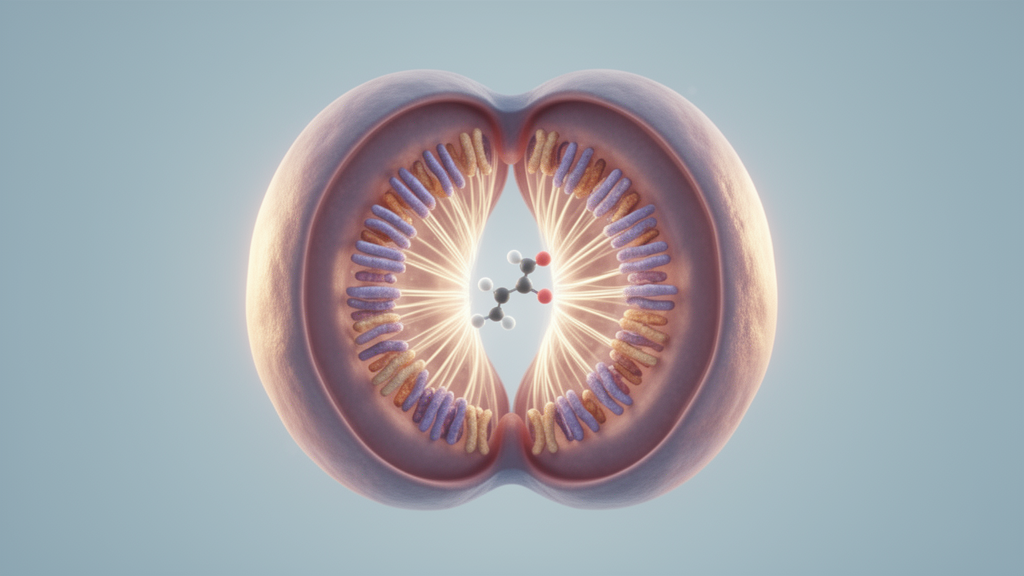
Scientists at the University of Gothenburg have identified a previously unknown human protein that plays a crucial role in how cells divide, and the discovery is drawing attention because the protein was hiding in plain sight. It is encoded by an RNA molecule long classified as non-protein-coding, meaning researchers assumed it could never serve as a template for building a protein. The finding adds a striking new entry to what biologists call the hidden proteome: the growing collection of proteins encoded by stretches of the genome that were once dismissed as genetic dark matter.
The protein has been named MSEP, and it is produced from an RNA molecule called ARHGEF17-AS1. According to the two new studies, published in the journal Cell Reports, both the RNA molecule and the protein it encodes help maintain the mitotic spindle, the cellular machinery that pulls chromosomes apart when a cell divides. When this structure fails, chromosomes can be distributed unevenly between daughter cells, a hallmark of many diseases, including cancer. The fact that a single genetic locus produces two functional molecules, each supporting the same structure through different routes, makes this a rare and intriguing example of what researchers describe as a bifunctional locus.
Sagar Mahale, a researcher at Sahlgrenska Academy at the University of Gothenburg and first author of both studies, emphasized the surprise embedded in the result. What is particularly interesting, he noted, is that the RNA molecule and the protein do not perform the same job. They act through different pathways in the cell, but both help maintain the same essential structure when the cell divides. That distinction matters because it means the two products of the same gene cannot simply substitute for one another; each contributes something the other does not.
To disentangle these overlapping roles, the team designed experiments that targeted the RNA and the protein separately in cultured cells. By reducing the RNA molecule directly in one set of experiments and disrupting MSEP production in another, the researchers could observe which cellular defects followed from losing the RNA alone, which followed from losing the protein alone, and which required the loss of both. This separation is technically demanding, because many conventional methods that silence a gene remove both its RNA and any protein it encodes at the same time, blurring the very distinction the researchers wanted to study.
The results showed that both products converge on mitotic spindle integrity. The spindle is built from microtubules, dynamic protein filaments that attach to chromosomes and generate the forces needed to separate them into the two emerging daughter cells. Its assembly and stability depend on a large cast of regulatory proteins, motor enzymes, and structural components, and even small disruptions can lead to missegregated chromosomes. The Gothenburg findings indicate that ARHGEF17-AS1 contributes to spindle organization through its own RNA-based functions, while MSEP supports the same organization as a protein, each acting through distinct molecular pathways.
The discovery fits into a broader shift in genetics. For decades, the central dogma of molecular biology encouraged researchers to divide the genome neatly into genes that encode proteins and everything else. Large-scale sequencing projects, however, revealed that a substantial fraction of the genome is transcribed into RNA even though most of those transcripts were assumed to be non-coding. Improvements in sequencing accuracy, ribosome profiling, and mass spectrometry have now made it possible to detect small or unusual proteins translated from transcripts once labeled as noise. These hidden proteins, sometimes called microproteins or alternative open reading frame products, are increasingly being shown to carry out real biological functions rather than serving as evolutionary leftovers.
What makes the MSEP case especially compelling is the dual functionality of its source locus. The ARHGEF17-AS1 transcript not only carries the code for a protein but also performs an independent role in the cell, contributing to spindle integrity on its own. This arrangement, in which one genetic location yields both a coding and a non-coding function, expands the classical definition of a gene and raises questions about how many other transcripts currently annotated as non-coding may harbor similar hidden products with meaningful roles.
The cancer connection emerged naturally from the biology. Because cancer cells depend on successful, repeated division to proliferate, any factor that supports the mitotic spindle is a potential vulnerability. When the researchers examined cancer cell lines, they found that MSEP levels were higher in the cancer cells than in normal cell lines. When they reduced the amount of ARHGEF17-AS1 RNA or disrupted MSEP production in cultured cervical cancer cells, the cells showed reduced growth and proliferation. In other words, interfering with either product of the bifunctional locus slowed the cancer cells down, suggesting that rapidly dividing cells may be unusually reliant on this hidden protein and its RNA.
Chandrasekhar Kanduri, a professor at Sahlgrenska Academy at the University of Gothenburg and senior author of both studies, cautioned against jumping to clinical conclusions. The findings, he noted, raise the question of whether certain tumors are particularly dependent on MSEP to continue dividing, but it is too early to say whether the protein could become a target for future treatments. That restraint reflects the standard caution of early-stage cell biology: what happens in a culture dish does not always translate to living tissue, and therapeutic exploitation of a newly discovered protein requires years of validation work.
Indeed, the researchers themselves stress that the findings are based on studies of cultured cells, and further research is needed to determine the roles of the RNA molecule and MSEP in tumors and other tissues. The next steps will likely involve examining patient tumor samples to see whether MSEP expression correlates with aggressive disease, testing the protein’s function in animal models, and working out the precise molecular mechanisms by which the RNA and the protein each stabilize the spindle. If those efforts confirm the cultured-cell results, the work could open a new line of cancer research focused not on well-known oncogenes but on the hidden proteome, the layer of small, overlooked proteins that modern technology is only now bringing into view. For now, the discovery stands as a reminder that the genome still holds surprises, and that some of the most important players in fundamental cell biology have been waiting, unannotated, in transcripts everyone had already catalogued and set aside.
Subject of Research: Discovery of the hidden protein MSEP, encoded by the non-coding RNA ARHGEF17-AS1, and its role in mitotic spindle organization and cell division
Article Title: Hidden protein helps cells divide correctly
Article References: Hidden protein helps cells divide correctly. (n.d.). Original publication
Image Credits: AI Generated
DOI: Not provided
Keywords: MSEP, ARHGEF17-AS1, hidden proteome, non-coding RNA, mitotic spindle, cell division, cancer research, University of Gothenburg, Cell Reports, bifunctional locus, cervical cancer, protein discovery
Cite Scienmag News
Drew Townsend. (October 18, 2026). Hidden Protein Helps Cells Divide Correctly. Scienmag. https://scienmag.com/hidden-protein-helps-cells-divide-correctly/
Drew Townsend. "Hidden Protein Helps Cells Divide Correctly." Scienmag, 18 October 2026, https://scienmag.com/hidden-protein-helps-cells-divide-correctly/. Accessed 18 October 2026.
Drew Townsend. "Hidden Protein Helps Cells Divide Correctly." Scienmag. October 18, 2026. https://scienmag.com/hidden-protein-helps-cells-divide-correctly/


