


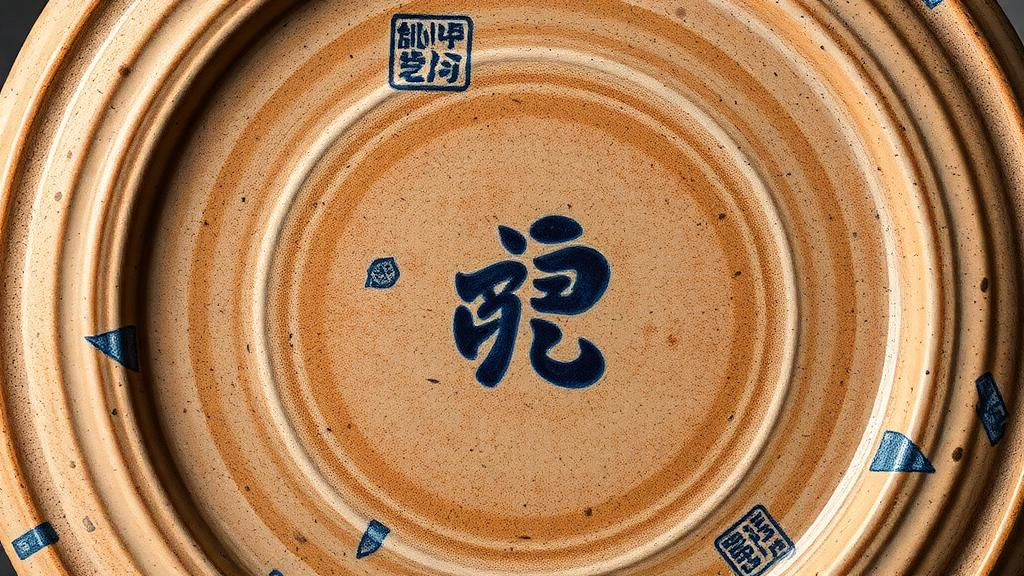
For centuries, the striking black-and-white ceramics of China’s Cizhou kilns have captivated collectors and historians alike, their bold painted designs standing out against pale slip-coated bodies. Yet a deceptively simple question has lingered beneath the surface of this celebrated tradition: when a Cizhou potter painted a design, did the pigment go on before or after the glaze? The answer matters enormously, because the position of the pigment within the ceramic structure encodes the entire working sequence of the workshop, from the preparation of the body to the final firing. A new study published in npj Heritage Science has now brought laboratory-grade analytical chemistry to bear on this question, examining nine Ming and Qing dynasty sherds from the Pengcheng region and the Guantai kiln site, and the results offer the clearest picture yet of how these iconic wares were actually made.
The research team, led by Xinyi Zhao of Shaanxi University of Science and Technology together with colleagues in China and France, including Philippe Sciau of the French National Centre for Scientific Research, assembled a suite of complementary analytical techniques to interrogate the sherds. Colorimetry quantified the visual appearance of the black and white regions. Optical microscopy revealed the layered structure of the ceramics at magnification. X-ray fluorescence spectroscopy mapped the elemental composition, while X-ray diffraction and Raman spectroscopy identified the crystalline phases present. Scanning electron microscopy coupled with energy-dispersive X-ray spectroscopy, or SEM-EDS, provided the crucial cross-sectional views that showed exactly where the iron-rich pigment sat within the glaze. Finally, and perhaps most tellingly, the team conducted replication experiments, making controlled ceramic samples using both underglaze and overglaze application methods to see which technique reproduced the microscopic signatures found in the ancient sherds.
The analytical findings converge on a clear identification of the pigment itself. Hematite, the iron oxide mineral responsible for the deep red of rust and the rich black of many historical ceramics, emerged as the main crystalline phase in the black-painted regions of the sherds. This confirms that Cizhou potters were working with iron-rich pigments, a choice consistent with the geology of northern China and with the long tradition of iron-based decoration in Chinese stoneware. But identifying hematite was only the beginning. The deeper question concerned the distribution of iron within the glaze structure, because the vertical position of the iron-rich material turns out to be a diagnostic fingerprint of when the pigment was applied relative to glazing.
That fingerprint revealed a striking contrast within the sample set. In sherds where the pigment had been applied under the glaze, the iron-rich material was concentrated near the interface between the engobe, the white slip layer coating the body, and the glaze above it. In other words, the painter had decorated the slip-covered vessel first, and the glaze had then been applied over the dried design, sealing the pigment deep within the structure. In sherds where the pigment had been applied after glazing, a completely different profile appeared: the iron formed a shallow band positioned just beneath a thin glassy cover near the glaze surface. This near-surface distribution arises because pigment applied on top of a glazed surface only partially dissolves and diffuses into the glass during firing, leaving most of the iron close to where it was painted.
The replication experiments provided the decisive confirmation. When the researchers made controlled replicas using underglaze application, the resulting samples showed iron concentrated at the engobe-glaze interface, matching the deep-pigment sherds. When they applied pigment over the glaze, the replicas developed the shallow, near-surface iron band seen in the other sherds. The correspondence between ancient artifacts and modern reproductions means that the pigment position in the Ming and Qing sherds can be interpreted with confidence as a record of the original workshop sequence. Application order, the study concludes, is the primary factor controlling where the pigment ends up in the finished ceramic, although the firing process itself can modify the detailed profile, smoothing boundaries and driving some diffusion of iron into the surrounding glass.
The black appearance of the painted decoration, the team found, is not simply a matter of pigment chemistry alone. It is associated both with the iron-rich layers and with the microstructure of the glaze surrounding them. The density and distribution of hematite particles, together with the way light interacts with the glassy matrix, jointly determine whether a painted area reads as jet black, brownish, or something in between. This interplay between composition and microstructure helps explain why Cizhou wares achieve their characteristic tonal depth, and why subtle variations in firing conditions could produce visible differences in the final appearance of pieces made in the same workshop with the same pigment.
The significance of this work extends well beyond the nine sherds examined. Cizhou kilns, centered in northern China and active over many centuries, produced some of the most influential painted ceramics in Chinese history, and their black-and-white wares were widely imitated across Asia. Attribution of undated or unprovenanced pieces to particular kiln sites, periods, or production methods often rests on stylistic judgment alone, which can be subjective and contested. A physical, measurable criterion, such as the depth profile of iron within the glaze, offers an independent line of evidence. Museums and collectors could in principle use similar analytical protocols to distinguish underglaze from overglaze decoration in pieces where the working sequence is unknown, adding a scientific dimension to connoisseurship.
The authors are careful to frame the scope of their conclusions. The findings apply to the investigated samples and do not, by themselves, establish that any particular application sequence was prevalent across Cizhou production as a whole. Nine sherds, however well analyzed, cannot capture the full diversity of a tradition that spanned multiple kiln sites, dynasties, and workshop practices. The Ming and Qing periods saw considerable evolution in Cizhou techniques, and it remains possible that different workshops, or the same workshops at different times, employed both underglaze and overglaze methods depending on the piece, the design, or the intended market. Broader sampling across more sites and date ranges will be needed to map how decoration practices changed over time and geography.
Methodologically, the study demonstrates the power of combining multiple techniques with experimental replication, an approach increasingly favored in heritage science. Spectroscopy alone can identify what a material is, but only cross-sectional imaging can show where it sits, and only replication can test whether a proposed manufacturing sequence actually produces the observed result. By closing that loop, the researchers transformed a set of analytical observations into a functional reconstruction of craft practice. The work also benefited from an international collaboration between Shaanxi University of Science and Technology and the CNRS laboratory CEMES in Toulouse, supported by funding from the National Natural Science Foundation of China and partner institutions, reflecting the growing globalization of research into ceramic technology.
For anyone who has held a Cizhou pillow or vase and wondered at the confident brushwork of its painted flowers and figures, the study offers a quiet revelation: the pigment’s position within the glaze is a fossilized record of the painter’s hand and the workshop’s order of operations. Each sherd carries within it a microscopic stratigraphy that, once decoded, tells whether the artist worked on raw slip awaiting glaze or on an already glassy surface. As analytical instruments become more accessible and databases of reference profiles grow, such reconstructions of ancient craft sequences are likely to become routine tools in ceramic studies, illuminating not just what historical potters made, but how, step by step, they made it.
Subject of Research: Decoration sequence and pigment position in Ming and Qing Cizhou kiln black-and-white ceramics
Article Title: Decoration sequence and pigment position in Ming Qing Cizhou kiln black and white ceramics
Article References: Decoration sequence and pigment position in Ming Qing Cizhou kiln black and white ceramics. (n.d.). https://doi.org/10.1038/s40494-026-03046-w
Image Credits: AI Generated
DOI: 10.1038/s40494-026-03046-w
Keywords: Cizhou kilns, Ming dynasty, Qing dynasty, hematite pigment, underglaze decoration, ceramic glaze, heritage science, Raman spectroscopy, SEM-EDS, X-ray diffraction, replication experiments, Chinese ceramics
Cite Scienmag News
Courtney Benton. (October 12, 2026). Hidden Pigment Layers Reveal How Ming and Qing Potters Painted Cizhou Ceramics. Scienmag. https://scienmag.com/hidden-pigment-layers-reveal-how-ming-and-qing-potters-painted-cizhou-ceramics/
Courtney Benton. "Hidden Pigment Layers Reveal How Ming and Qing Potters Painted Cizhou Ceramics." Scienmag, 12 October 2026, https://scienmag.com/hidden-pigment-layers-reveal-how-ming-and-qing-potters-painted-cizhou-ceramics/. Accessed 12 October 2026.
Courtney Benton. "Hidden Pigment Layers Reveal How Ming and Qing Potters Painted Cizhou Ceramics." Scienmag. October 12, 2026. https://scienmag.com/hidden-pigment-layers-reveal-how-ming-and-qing-potters-painted-cizhou-ceramics/


