


…
The description of Rhodophaea madaricola adds a notable chapter to the ongoing documentation of Crete’s unique insect fauna. The island’s position at the crossroads of Europe, Asia and Africa, combined with its prolonged isolation following geological events more than five million years ago, has produced conditions in which lineages arriving on the island could diverge undisturbed from their continental relatives. For moths, which often have restricted dispersal abilities at the level of local populations, mountain barriers such as the White Mountains surrounding the Omalos Plateau can act as effective isolating mechanisms. The discovery of a new pyralid species at elevations above 1000 metres fits a broader pattern in which Mediterranean mountain systems function as refugia and centres of endemism, harbouring relict populations that have persisted through climatic oscillations of the Pleistocene.
The genus Rhodophaea belongs to the tribe Phycitini within the subfamily Phycitinae, a group of snout moths that is notoriously difficult to classify using external features alone. Many phycitine species are visually similar, with cryptic wing patterns dominated by shades of brown, grey and ochre, and reliable identification frequently requires examination of genitalia structures. This morphological conservatism explains why integrative approaches combining dissection with molecular data have become standard practice in modern pyralid taxonomy. The 658 base-pair segment of the mitochondrial cytochrome c oxidase subunit 1 gene used in this study has become the de facto standard barcode region for animals, offering a balance between sufficient variability to distinguish closely related species and enough conserved structure to align sequences across broad taxonomic distances.
The comparison between R. madaricola and R. formosa illustrates both the strengths and the limitations of DNA barcoding. R. formosa is a widespread Western Palaearctic species, recorded across much of Europe, and its presence as the only known Rhodophaea representative in the region made it the natural reference point for evaluating the Cretan material. Differences in male and female genitalia, corroborated by barcode divergence, provided the decisive evidence that the Cretan population represents a distinct lineage rather than an isolated island population of the widespread species. Such cases are increasingly common as barcoding libraries expand: geographically separated populations that once would have been assumed conspecific on the basis of superficial similarity are frequently revealed to be deeply divergent lineages deserving species status.
The methodological framework employed in the study reflects the current state of the art in lepidopteran systematics. The use of ultraviolet-emitting LED lamps for collecting, a technique that has gained popularity for its efficiency and portability, allowed the fieldworkers to sample the nocturnal moth fauna of the Omalos area effectively. The photographic documentation of genitalia preparations, achieved through focus stacking of more than a hundred images per slide, produces composite images with depth of field far exceeding what a single optical plane can deliver. This level of detail is essential for phycitine taxonomy, where subtle differences in the shape of the valvae, the gnathos, or the signa of the female genitalia can be the only reliable morphological characters separating species.
The molecular analysis undertaken by the authors went well beyond a simple species comparison. By assembling a dataset of 1404 CO1 sequences representing twelve genera suspected to be allied to Rhodophaea, the study addressed a long-standing problem in Phycitini classification: the delimitation of genera based on morphology has often been inconsistent, and molecular data frequently reveal that traditionally recognised genera do not correspond to monophyletic groups. The inclusion of genera such as Sciota, Nephopterix, Pyla and Salebriaria reflects the historical confusion surrounding these taxa, many of which were described from scattered type material in the nineteenth and early twentieth centuries without reference to their closest relatives.
The finding that the monophyly of Rhodophaea as currently circumscribed is uncertain carries significant taxonomic implications. If the genus as defined by morphological characters does not correspond to a natural group descended from a common ancestor, then the placement of R. madaricola within it, and indeed the validity of the genus itself, may require revision as more comprehensive datasets become available. The transfer of Nephopterix shantungella to Sciota, formalised as a new combination in this paper, exemplifies how molecular evidence can prompt reassignment of species between genera even when morphological support for the move is subtle. Such changes, while sometimes disruptive to established checklists, ultimately produce classifications that better reflect evolutionary history.
The analytical pipeline used to explore these relationships deserves comment. Maximum likelihood and neighbour-joining analyses were conducted on a final alignment of 760 unique sequences, with substitution models selected independently for each codon position. Partitioning by codon position is standard practice in phylogenetic analyses of protein-coding mitochondrial genes because the three positions experience markedly different rates and patterns of substitution: third positions evolve fastest and carry most of the phylogenetic signal at shallow depths, while first and second positions are more conserved and contribute signal at deeper levels. The choice of the Tamura-Nei, Hasegawa-Kishino-Yano and general time-reversible models for the respective partitions reflects the outcome of formal model testing using information criteria, ensuring that the tree reconstruction was based on assumptions appropriate to the data.
The use of Barcode Index Numbers to filter the dataset is also noteworthy. BINs are algorithmically assigned clusters of barcodes that broadly correspond to species, and restricting analyses to sequences associated with BINs free of flags for misidentification, contamination or stop codons helps to reduce noise. Contaminated or mislabelled sequences are a persistent problem in large barcode datasets, and their inclusion can distort tree topology and inflate estimates of divergence. By excluding such records, the authors increased confidence that the patterns observed in their trees reflect genuine biological relationships rather than artefacts of data quality.
Bootstrap support values, generated through 1000 replicates in both the maximum likelihood and neighbour-joining analyses, provide a measure of confidence in individual nodes of the resulting trees. While high bootstrap values indicate robust support for a grouping under the resampling scheme, low values signal uncertainty that may reflect insufficient data, conflicting signal, or genuinely rapid evolutionary radiations. In groups like the Phycitini, where adaptive radiations may have produced bursts of speciation over short geological intervals, poorly resolved nodes are common and often require additional data sources, such as nuclear genes or genomic-scale datasets, to resolve conclusively.
The type series of R. madaricola spans more than two decades of collecting, with the earliest specimens taken in 2000 and the most recent in 2025. This temporal spread is valuable for several reasons. It demonstrates that the species has maintained a persistent population on the Omalos Plateau across at least twenty-five years, rather than representing a transient vagrant or a recently established colony. It also provides material from different seasons, with records spanning May through early August, offering preliminary insight into the flight period. The concentration of records in June suggests a summer flight typical of many mountain-inhabiting phycitines, although additional sampling across the season and across years would be needed to characterise voltinism and phenology with confidence.
The restricted known distribution of the new species, currently confined to the Omalos area of the Chania Province at elevations between roughly 1040 and 1225 metres, raises questions about its conservation status. Mediterranean mountain ecosystems face multiple pressures, including climate change, altered land use, and increasing recreational activity. Species with narrow elevational ranges and limited dispersal capacity may be particularly vulnerable to warming-driven habitat shifts, as upward migration is ultimately constrained by the summit height of the mountain. The White Mountains reach approximately 2450 metres, providing some elevational headroom, but the ecological requirements of R. madaricola remain unknown, including its larval host plant, which for most phycitines involves herbaceous or woody plants whose phenology is tightly linked to seasonal conditions.
The broader significance of this discovery lies in what it suggests about the state of knowledge of Cretan Lepidoptera. Despite the island’s fame as a biodiversity hotspot, its moth fauna has been surveyed only sporadically over the past two centuries. Recent comprehensive efforts, particularly those integrating morphology with DNA barcoding, have revealed that the island harbours considerably more diversity than historical checklists indicate. Each new species description contributes not only to taxonomy but also to biogeographic understanding, as patterns of endemism across the Mediterranean islands inform models of colonisation, extinction and diversification. The case of R. madaricola demonstrates that even well-studied groups in well-visited regions continue to yield surprises when modern methods are applied to material collected in underexplored habitats.
Finally, the study exemplifies the value of collaboration between amateur and professional lepidopterists. The specimens that formed the basis of the description were collected during fieldwork by a team whose expertise spans photography, dissection, molecular analysis and taxonomy. The integration of high-quality imaging, rigorous molecular methodology and careful morphological comparison sets a standard for future descriptions of microlepidoptera, particularly in regions where the fauna remains incompletely documented. As barcode libraries continue to grow and as genomic tools become more accessible, the pace of discovery in groups such as the Phycitini is likely to accelerate, revealing further hidden diversity in the mountains of Crete and across the Mediterranean basin.
Subject of Research: Rhodophaea madaricola sp. nov. from the mountains of the Greek island Crete, with comments on Rhodophaea Guenée, 1845 and related genera ( Lepidoptera , Pyralidae )
Article Title: Rhodophaea madaricola sp. nov. from the mountains of the Greek island Crete, with comments on Rhodophaea Guenée, 1845 and related genera ( Lepidoptera , Pyralidae )
Article References: Slagsvold, P. K., Berggren, K., Voith, R. J., Johannessen, O. D., & Aarvik, L. (2026). Rhodophaea madaricola sp. nov. from the mountains of the Greek island Crete, with comments on Rhodophaea Guenée, 1845 and related genera (Lepidoptera, Pyralidae). Nota Lepidopterologica, 49, 171-193. https://doi.org/10.3897/nl.49.206374
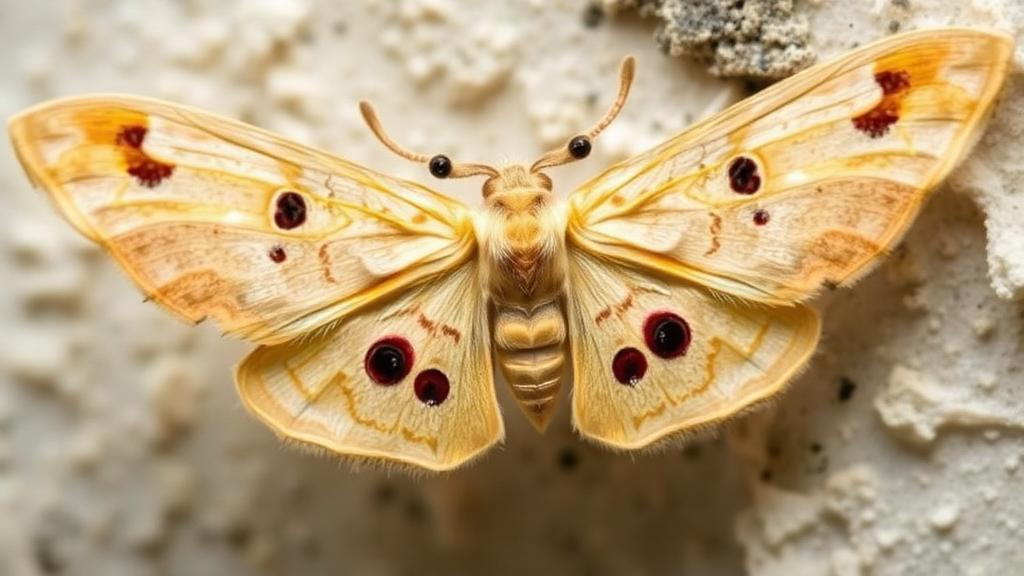
Image Credits: AI Generated
DOI: 10.3897/nl.49.206374
Keywords: Rhodophaea, madaricola, mountains, Greek, island, Crete, comments, Guen, related, genera, Lepidoptera, Pyralidae
Cite Scienmag News
Gavin Prescott. (October 15, 2026). Hidden moth of the White Mountains: new Pyralidae species Rhodophaea madaricola sp. nov. from Crete. Scienmag. https://scienmag.com/hidden-moth-of-the-white-mountains-new-pyralidae-species-rhodophaea-madaricola-sp-nov-from-crete/
Gavin Prescott. "Hidden moth of the White Mountains: new Pyralidae species Rhodophaea madaricola sp. nov. from Crete." Scienmag, 15 October 2026, https://scienmag.com/hidden-moth-of-the-white-mountains-new-pyralidae-species-rhodophaea-madaricola-sp-nov-from-crete/. Accessed 15 October 2026.
Gavin Prescott. "Hidden moth of the White Mountains: new Pyralidae species Rhodophaea madaricola sp. nov. from Crete." Scienmag. October 15, 2026. https://scienmag.com/hidden-moth-of-the-white-mountains-new-pyralidae-species-rhodophaea-madaricola-sp-nov-from-crete/


