


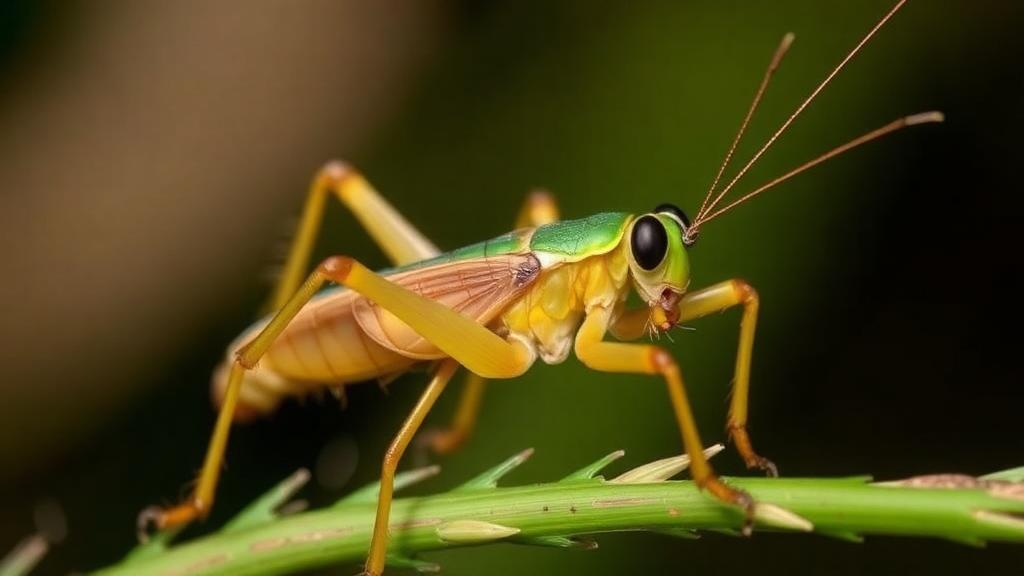
Deep in the mountains of northeastern Türkiye, a small green bush cricket is quietly teaching scientists a lesson about how fast new species can begin to form. Isophya autumnalis, an endemic plump bush cricket first described in 1962 from the Zigana Mountains near Trabzon, was long thought to exist only at its type locality. New fieldwork has now uncovered several additional populations scattered along a roughly north-to-south line through the provinces of Trabzon and Gümüşhane, and a detailed comparison of their bodies, songs, and surface chemistry shows that these isolated groups are far from identical. The findings, published in the Journal of Orthoptera Research, offer a rare close-up view of the earliest stages of divergence in a species with almost no ability to move between habitat patches.
The research team set out to answer a deceptively simple question: when populations of the same species are separated by mountains, valleys, and different climates, which of their traits change first? For species with short wings and limited mobility, gene exchange between local populations is largely restricted to narrow contact zones, so selection for pre-mating isolation mechanisms can be strong. This makes such species ideal natural laboratories for studying allopatric divergence, the process by which geographically separated populations accumulate differences that may eventually prevent them from interbreeding altogether. Isophya autumnalis, a typical mountain species whose northern population lives in alpine zones on Zigana Mountain, fits this profile perfectly.
To characterize the environments occupied by the five sampled localities, the researchers turned to satellite remote sensing. Using Sentinel-2B imagery downloaded from the European Space Agency data portal, they calculated the normalized difference vegetation index (NDVI), a measure of green vegetation cover, and the normalized difference moisture index (NDMI), which monitors vegetation water content and drought stress. Both indices range from -1 to 1, with values near zero indicating barren ground and high positive values indicating lush, well-watered canopy. Short-wave infrared band measurements and temperature and humidity data from NASA’s POWER database completed the environmental picture. The results showed that Zigana had very low mean values for all three vegetation indices, while the Vauk and Pöske localities had the highest, confirming that the populations experience markedly different climatic and vegetational conditions despite living within a few tens of kilometers of one another.
During field studies in June and July 2018, the team collected 60 last-stage nymphs of both sexes from each of the five locations and reared them to adulthood under standardized laboratory conditions, feeding them nettle, dandelion, lettuce, and apple slices. Standardizing food, temperature, and age was critical, because differences in body size among wild-caught adults could otherwise reflect nutrition rather than genetics. Once the males began calling on their second or third day as adults, their two-syllable songs were recorded in an isolated room with an ultrasonic condenser microphone at a sampling rate of 96 kilohertz, under identical temperature conditions of 25 to 27 degrees Celsius. All specimens were then frozen at minus 80 degrees Celsius at exactly eight days of age for chemical and morphological analysis.
The morphometric results revealed a striking geographic pattern. Males from the Zigana and Krom Valley populations were significantly larger, as measured by hind femur length, than males from the southern populations, while among females only the Zigana population stood out as larger. Principal component analysis of twelve morphological measurements confirmed that the Zigana population was significantly distinct from all the others in both sexes. The traits contributing most to this separation included interocular distance, hind femur length, epiproct width, and lateral pronotum length. Because bush crickets cannot fly or jump long distances, the authors argue that this sensitivity to specific environmental conditions is exactly what one would expect: populations living on north-facing slopes with typical Black Sea high-mountain climates experience different selective pressures than those in drier southern habitats.
Sexual size dimorphism, estimated from hind femur length as the best single predictor of body size in bush crickets, showed a decreasing trend from north to south, with females generally the larger sex. Although this trend was not statistically significant across the sampled populations, the overall pattern of female-biased size aligns with a broad analysis of more than 1,500 Orthoptera species. The authors note that larger female size is usually an evolved response to intraspecific competition focused on reproductive success, since bigger females carry more eggs. Meanwhile, males of Isophya species are the more mobile sex, spending energy searching for females that respond bioacoustically, and male body size can shape reproductive strategies, including the transfer of larger spermatophores to larger females.
The bioacoustic analysis produced some of the study’s most compelling evidence for local divergence. The male calling song of Isophya autumnalis typically exhibits a crescendo structure that transitions to a decrescendo slightly past the midpoint of each syllable, sometimes ending with an after-click impulse. Principal component analysis of twelve temporal song variables showed that the first component, explaining 32.29 percent of the variance, differed significantly across all populations except the Vauk and Pöske Mountain pair. The most influential variables were the number of impulses and crescendos in the first syllable, the duration of the first syllable, and the interval between the two syllables. Because ambient temperature is known to affect calling song duration, repetition rate, and impulse number in tettigoniids, the distinct temperature and humidity regimes of the sampled localities provide a plausible mechanism for at least some of these acoustic differences.
The stridulatory organ, the sound-producing file of teeth on the male’s upper left wing, told a parallel story. Scanning electron microscope images revealed that stridulatory organ length was positively correlated with tooth number, and that the Krom Valley population had significantly fewer teeth than all others except Pöske Dağı. The average tooth count across all populations was 156, ranging from 128 to 185. Principal component analysis of the stridulatory measurements, which explained 80 percent of the variance in the first two components, again singled out the Zigana population as significantly different from all the rest. These structural differences in the very apparatus used to produce species-specific songs suggest that both the signal and the instrument generating it are diverging among partially isolated local populations.
Cuticular hydrocarbons, the waxy chemical coatings that protect insects from dehydration and often serve as sexual signal molecules, provided a more nuanced picture. Gas chromatography-mass spectrometry identified four hydrocarbon classes in the species: straight-chain alkanes, monomethyl alkanes, dimethyl alkanes, and alkadienes. The most abundant compounds included hexatriacontane, tritriacontane, hentriacontane, nonacosane, and 3,11-dimethylnonacosane. Males and females showed clear sexual dimorphism in their profiles, with certain alkanes found exclusively in one sex and males carrying a higher proportion of branched monomethyl alkanes. Notably, the Vauk Mountain population exhibited a unique hydrocarbon profile compared with all other localities, a divergence the authors attribute to that locality’s distinct temperature, relative humidity, and precipitation regime. Consistent with the researchers’ hypothesis, hydrocarbon profiles proved less variable across populations than morphological or acoustic traits, likely because Isophya species are not eusocial and rely primarily on male calling songs rather than pheromonal communication for mate finding.
Taken together, the study reveals a high degree of uniformity in some characters alongside noteworthy intraspecific variation in others, particularly the male stridulatory organ and bioacoustic parameters, with the Vauk population standing out chemically. The authors emphasize that this variability did not follow a single consistent pattern across all traits, underscoring that different characters evolve at different rates under different selective pressures. As habitats of narrow-range endemic species such as Isophya autumnalis face growing threats from fragmentation, degradation, and outright elimination, understanding which traits vary among local populations becomes crucial for conservation planning. Each isolated population on a Turkish mountaintop may carry a unique combination of morphology, song, and chemistry, and losing any one of them could mean losing a chapter in the ongoing story of how new species begin.
Subject of Research: Intraspecific variation in morphology, bioacoustics, and cuticular hydrocarbon profiles among allopatric populations of the endemic bush cricket Isophya autumnalis in northeastern Türkiye
Article Title: Diversity in body size, bioacoustic traits, and cuticular hydrocarbon profiles in Isophya autumnalis populations
Article References: Kıran Özdemir, E., Sevgili, H., & Bağdatlı, E. (2024). Diversity in body size, bioacoustic traits, and cuticular hydrocarbon profiles in Isophya autumnalis populations. Journal of Orthoptera Research, 33(2), 233-248. https://doi.org/10.3897/jor.33.118937
Image Credits: AI Generated
Keywords: Isophya autumnalis, bush cricket, Orthoptera, allopatric speciation, bioacoustics, cuticular hydrocarbons, sexual size dimorphism, stridulatory organ, Anatolia, endemic species, remote sensing, conservation
Cite Scienmag News
Bethany Barker. (October 18, 2026). Hidden Diversity in a Turkish Mountain Bush Cricket Revealed by Song, Size, and Chemistry. Scienmag. https://scienmag.com/hidden-diversity-in-a-turkish-mountain-bush-cricket-revealed-by-song-size-and-chemistry/
Bethany Barker. "Hidden Diversity in a Turkish Mountain Bush Cricket Revealed by Song, Size, and Chemistry." Scienmag, 18 October 2026, https://scienmag.com/hidden-diversity-in-a-turkish-mountain-bush-cricket-revealed-by-song-size-and-chemistry/. Accessed 18 October 2026.
Bethany Barker. "Hidden Diversity in a Turkish Mountain Bush Cricket Revealed by Song, Size, and Chemistry." Scienmag. October 18, 2026. https://scienmag.com/hidden-diversity-in-a-turkish-mountain-bush-cricket-revealed-by-song-size-and-chemistry/


