


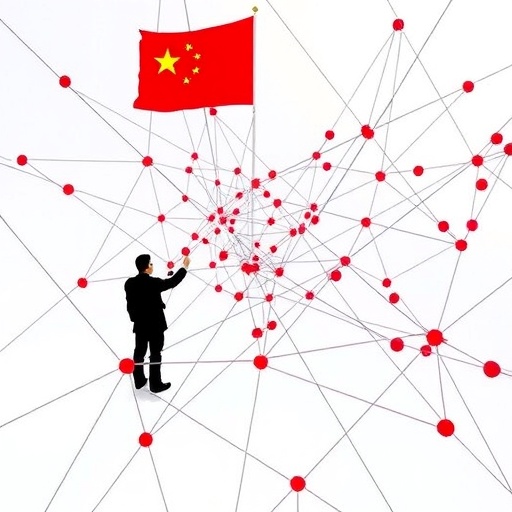
In contemporary China, the vast movement of migrant workers from rural to urban areas has created both opportunity and social complexity. Despite their contribution to China’s meteoric economic growth, these migrant workers often find themselves socially isolated, akin to living on “isolated islands” within bustling metropolises. The latest study by Wang, Aziz, and Zhao, published in BMC Psychology, systematically explores how heterogeneous social networks—those composed of diverse social ties—can profoundly reshape the social integration landscape for Chinese migrant workers. Their findings unravel the psychological, sociological, and network science mechanisms that underpin effective social integration in an environment often resistant to outsiders.
At the heart of this research is the need to understand how isolated individuals navigate the dense, often fragmented, social architectures of modern cities. Migrant workers, who frequently come from rural backgrounds vastly different from urban dwellers, face challenges including cultural dissonance, limited social capital, and exclusion from meaningful social interactions. The “isolated islands” metaphor reflects their marginalization not just geographically but socially and psychologically within heterogeneous urban populations. The researchers interrogate how bridging social capital—the connections linking diverse groups—can transform these isolated pockets into vibrant, interconnected social ecosystems.
Central to this investigation is the concept of heterogeneous social networks, networks characterized by diversity in terms of socioeconomic status, cultural backgrounds, professional environments, and even generational cohorts. Unlike homogeneous networks, which are typically insular and self-reinforcing, heterogeneous networks expose individuals to a rich variety of social resources and perspectives. This diversity fosters not only personal development but also accelerates social integration by enabling access to support systems, job opportunities, and culturally relevant information.
Employing advanced network analysis methodologies, Wang and colleagues mapped the social ties of several cohorts of Chinese migrant workers residing in megacities such as Beijing, Shanghai, and Guangzhou. Their mixed-method approach incorporated quantitative data from social network surveys and qualitative insights from in-depth interviews. They measured network heterogeneity through indices capturing tie diversity, embeddedness in multiple social spheres, and frequency of interaction across social divides. The results revealed that migrant workers embedded in more heterogeneous networks experienced significantly higher levels of psychological well-being and perceived social acceptance.
A key theoretical framework invoked by the authors is Granovetter’s “strength of weak ties” hypothesis, which posits that acquaintances (weak ties) rather than close friends (strong ties) often serve as bridges between disparate social groups. For migrant workers, weak ties to local urban residents, employers, and community organizations provide essential conduits for information flow, skill acquisition, and social support. The study empirically validates this theory in a novel cultural context, demonstrating that weak ties in heterogeneous networks facilitate faster and more sustainable social integration.
The integration process is not merely about accumulating social contacts but about navigating and negotiating social identities across cultural boundaries. Migrant workers often grapple with dual identities—retaining rural traditions while adapting to urban norms. The network heterogeneity fosters identity negotiation by exposing individuals to multiple social scripts, thereby promoting hybridity and fluidity in self-presentation. This dynamic interplay is critical in overcoming stigmatization and prejudice often directed at migrants, which reinforces their social isolation.
Importantly, the research highlights the role of digital social networks as complementary platforms for building heterogeneous ties. Online communities centered around work, hobbies, and regional affiliations enable migrant workers to transcend physical limitations and cultivate diverse social connections. The ubiquity of smartphones and social media apps among migrant populations creates unprecedented opportunities for bridging social capital formation. The authors discuss how online-offline hybrid network approaches enhance integration outcomes by providing resilience against the volatility of urban social environments.
The economic implications of enhanced social integration through heterogeneous networks are profound. Migrant workers with broader and more diverse social ties tend to access better job opportunities, receive informal training and mentorship, and enjoy greater labor market mobility. The findings suggest that heterogeneous networks function as critical social infrastructure supporting human capital development, thereby contributing to urban economic dynamism and social cohesion. Policies fostering community centers, inclusive urban planning, and support for digital literacy among migrants could amplify these positive effects.
Another significant contribution of the study lies in its policy recommendations grounded in empirical evidence. Wang and colleagues advocate for interventions that strategically cultivate heterogeneous social networks. Such interventions might include mixed housing projects promoting socioeconomically diverse communities, vocational training programs connecting migrants and locals, and community events that celebrate cultural diversity. These efforts, by facilitating frequent positive interactions across boundaries, reduce social distance, and help dissolve the “isolated islands” phenomenon.
Methodologically, the study advances the field by integrating psychological measures of social integration, such as perceived belonging and mental health indicators, with rigorous network analytics. This interdisciplinary approach bridges gaps between psychological research on social identity and sociological investigations of social structures. Their analytical pipeline, incorporating longitudinal data collection and network dynamics modeling, allows for capturing the evolution of integration processes over time—information crucial for designing timely and adaptive social policies.
The research also grapples with challenges related to social network interventions, including ethical considerations around privacy, informed consent, and potential stigmatization from being targeted as isolated individuals. The authors thoughtfully discuss strategies for participatory research involving migrant communities in co-designing network-enhancing programs. Inclusion and empowerment during intervention design emerge as prerequisites for ethical and effective implementations, underscoring the complex human dimensions intertwined with technological and policy tools.
In a broader context, the study’s insights extend beyond China, offering valuable lessons for global migration and urbanization challenges. Rapid urban growth worldwide is producing similar patterns of social isolation among migrants that hinder sustainable urban development. The cross-disciplinary framework combining network science, cultural psychology, and urban studies presents a replicable model for assessing and addressing migrant integration challenges in various socio-political settings.
The implications for mental health are equally significant, as social isolation is a well-documented risk factor for depression, anxiety, and other psychological disorders. By fostering inclusive heterogeneous networks, urban planners and public health practitioners can mitigate these risks, promoting not only social integration but also overall well-being among vulnerable migrant populations. This holistic approach aligns with emerging paradigms emphasizing social determinants of health and community-based mental health strategies.
Looking forward, Wang, Aziz, and Zhao identify promising avenues for future research, including the exploration of specific network configurations that optimize integration outcomes and the role of technological innovations such as artificial intelligence in dynamically supporting social network development. They also call for deeper investigations into intersectional factors—gender, age, ethnicity—that modulate the effectiveness of heterogeneous social networks.
The study exemplifies the power of combining empirical rigor with socially relevant inquiry, shining a light on processes that enable migrant workers to transcend “isolated islands” and become integrated agents within the complex social tapestries of modern Chinese cities. Its findings encourage a shift towards viewing social networks not merely as casual social phenomena but as critical levers for social change, health, and economic vitality.
Ultimately, this research challenges urban policymakers, community leaders, and scholars to rethink the architecture of social inclusion in rapidly urbanizing societies. By bridging disconnected social realms with intentional, heterogeneous networks, the invisible walls isolating migrant workers can be dismantled. The resulting social ecosystems promise a more equitable, connected, and resilient urban future where all inhabitants thrive.
Cite Scienmag News
Glenn Wilkins. (October 15, 2025). Heterogeneous Networks Boost Integration of Chinese Migrants. Scienmag. https://scienmag.com/heterogeneous-networks-boost-integration-of-chinese-migrants/
Glenn Wilkins. "Heterogeneous Networks Boost Integration of Chinese Migrants." Scienmag, 15 October 2025, https://scienmag.com/heterogeneous-networks-boost-integration-of-chinese-migrants/. Accessed 4 September 2026.
Glenn Wilkins. "Heterogeneous Networks Boost Integration of Chinese Migrants." Scienmag. October 15, 2025. https://scienmag.com/heterogeneous-networks-boost-integration-of-chinese-migrants/


