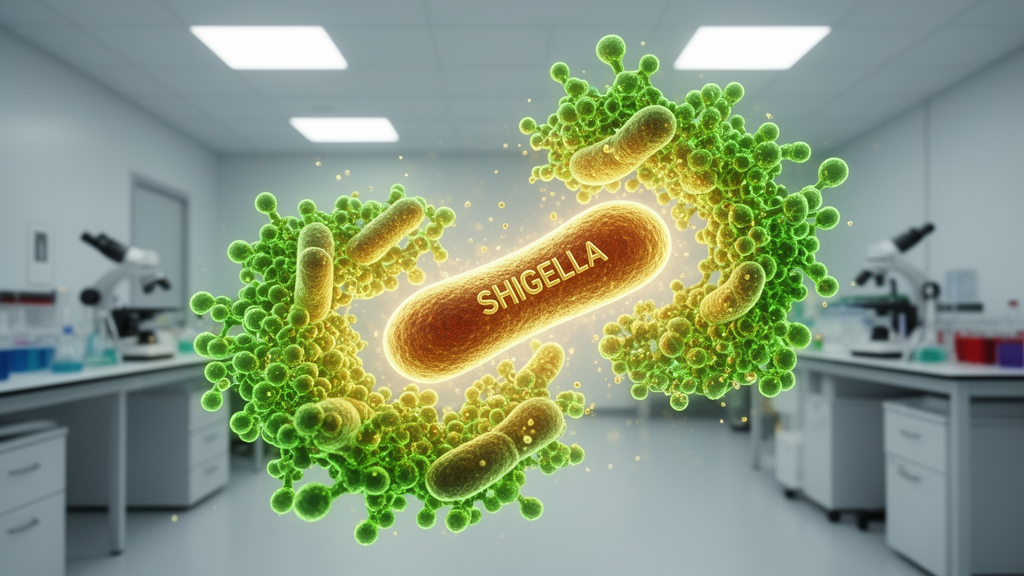
Research on traditional Chinese medicine for bacillary dysentery has entered a phase of explosive growth, yet the field still lacks the rigorous clinical trials and Shigella-specific animal models needed to turn herbal promise into medical practice. That is the central picture emerging from a bibliometric analysis published in Frontiers in Medicine, in which researchers at Changchun University of Chinese Medicine mapped the entire international literature on traditional Chinese medicine (TCM) against Shigella infection from 1991 to 2026. The team screened records from the Web of Science Core Collection, Scopus, and PubMed following PRISMA 2020 guidelines and, after deduplication and quality control, included 155 publications in the final corpus.
The growth statistics are striking. Only two articles appeared before 2000, rising to 12 in 2001–2010, 44 in 2011–2020, and 97 between 2021 and 2026. More than 60 percent of all publications in the field appeared after 2021. Fitting cumulative publications from 1991 to 2025 to Price’s law produced an exponential curve with an R² of 0.9847, corresponding to an average annual growth rate of 16.9 percent. Because the search was performed on July 2, 2026, the 2026 figures represent only a partial year, and the trend analysis rests on complete annual data through 2025.
The authors argue that this acceleration is closely tied to the global crisis of antimicrobial resistance in Shigella. The World Health Organization’s 2024 priority pathogens list categorizes fluoroquinolone-resistant Shigella as Priority 2 (HIGH), alongside MRSA and vancomycin-resistant enterococci. In Europe, the ECDC has reported more than 2,300 cases of multidrug-resistant and extensively drug-resistant Shigella across 14 countries since 2023, involving seven distinct genetic clusters. United States surveillance data indicate that roughly 66 percent of Shigella isolates carry ciprofloxacin resistance markers and 32 percent carry azithromycin resistance markers. In Shanghai’s Pudong district, the multidrug resistance rate among isolates reached 98.18 percent, with azithromycin resistance climbing from 12.5 percent to 60 percent over the study period. No licensed Shigella vaccine exists, which gives natural products renewed strategic appeal as a reservoir of compounds that bypass established resistance mechanisms.
The disease burden itself remains substantial. According to the 2023 Global Burden of Disease study, Shigella is the second leading cause of diarrheal mortality worldwide, accounting for 9.3 percent of all-age diarrhea deaths and 24.0 percent of deaths among children under five. An estimated 80 to 165 million people are infected annually. In China, where bacillary dysentery is a Class B notifiable disease, reported incidence has fallen from 33.72 per 100,000 in 2005 to 2.63 per 100,000 in 2023, but roughly 37,000 cases are still officially reported each year, with S. flexneri serotype 2a responsible for 50 to 70 percent of isolates.
Geographically, the literature is heavily concentrated. China produced 102 of the 155 publications, or 65.8 percent, and accumulated 1,710 total citations, far ahead of India with nine publications, the United States with seven, and Iran, Indonesia, and Pakistan with five each. International collaboration is thin: 137 publications, or 88.4 percent, were single-country products, and only 18 involved multiple countries. All seven United States publications were internationally co-authored, and the strongest bilateral links were China–United States, China–Canada, and Pakistan–United States. Within China, the most productive institutions were Chengdu University of Traditional Chinese Medicine with eight papers, the Chinese Academy of Sciences with six, and Nanjing University of Chinese Medicine with four. The most prolific author, Peng Cheng, published only three papers, and the authors conclude that a stable core of high-output institutions and coordinating research centers has not yet formed.
Keyword co-occurrence analysis partitioned the field into three thematic clusters. The first covers phytochemistry and antibacterial activity, with core nodes including herbal medicine, antibacterial activity, Shigella flexneri, medicinal plants, and minimum inhibitory concentration. The second captures the clinical application of Chinese herbal medicine, including classical formulas such as Baitouweng Decoction and Gegen Qinlian Decoction, both documented in Zhang Zhongjing’s Treatise on Cold Damage nearly 1,800 years ago. The third, and now dominant, cluster centers on gut microbiota and microecological regulation. Gut microbiota was the most frequent author keyword with 32 occurrences, followed by intestinal microbiota with 14 and herbal medicine with 12. Berberine, baicalin, paeoniflorin, and andrographolide emerged as the most extensively studied active compounds.
Burst detection using the Kleinberg algorithm identified 44 keywords with strong citation bursts and revealed a clear temporal shift in the field’s focus. Early bursts from 2001 to 2013 were dominated by in vitro antibacterial screening terms such as plant extract, Escherichia coli, and Bacillus subtilis. Mid-period bursts from 2005 to 2021 featured minimum inhibitory concentration, Shigella flexneri, antimicrobial activity, and phytochemistry, marking a progression from crude extract screening to compound-level characterization. The most recent bursts, from 2022 to 2026, shifted sharply toward gut microbiota, intestinal microbiota, 16S rRNA sequencing, short-chain fatty acids, inflammation, and oxidative stress, along with taxon-based terms such as Lactobacillus, Firmicutes, and Bacteroidetes. The reference co-citation network reinforced this picture, converging on methodological papers for 16S rRNA sequencing and microbiome bioinformatics as the field’s knowledge base.
A separate co-occurrence analysis of inflammation-related terms extracted from titles and abstracts organized 35 terms into five clusters spanning antibacterial activity, gut microbiota regulation, inflammation and immune regulation, protein and molecular mechanism, and intestinal barrier integrity. Lipopolysaccharide, or LPS, served as the key bridging node, linking the microbiota–inflammation module with the antibacterial activity module and indicating that the LPS-driven inflammatory cascade is the central mechanism connecting microecological imbalance to intestinal inflammation. The authors caution, however, that specific pathways such as TLR4/NF-κB and the NLRP3 inflammasome were not detected as burst or co-occurrence terms; they are mechanistic directions inferred from recent experimental studies rather than findings of the bibliometric analysis itself.
The substantive studies behind these clusters reveal both progress and persistent gaps. On the clinical side, the corpus contains only one randomized controlled trial: a double-blind, placebo-controlled study of rhubarb syrup in 150 children with suspected Shigella dysentery, which found that the herbal adjunct significantly shortened fever, diarrhea, and abdominal pain when added to standard antibiotics, with no reported adverse effects. In vivo combination work showed that tetracycline paired with Curcuma xanthorrhiza or Sonchus arvensis extracts significantly reduced fecal bacterial counts in S. flexneri-infected rats compared with the antibiotic alone. On the microbiota side, compounds and formulas including sulforaphene LFS-01, ginger extract, Senecio scandens extract, protopine, and honeysuckle-derived MIR2911 repeatedly reduced the Escherichia–Shigella taxon, expanded beneficial taxa such as Lactobacillus, restored tight junction proteins, and elevated secretory IgA in animal models. But critically, most of these mechanistic studies used chemical-colitis models such as dextran sulfate sodium-induced colitis or generalized dysbiosis models rather than live Shigella infection, so they reproduce intestinal inflammation without capturing Shigella invasion, type III secretion, or the infectious dysentery phenotype.
The study’s authors outline three priorities for the future. First, the material basis of classical formulas remains underdetermined, and future work should combine constituent quantification, pharmacokinetic characterization, and dose-ranging designs so that formula efficacy can be linked to specific chemical entities rather than whole extracts. Second, mechanistic models should return from surrogate colitis to Shigella-specific infection systems. Third, clinical translation requires adequately powered trials with microbiologically confirmed shigellosis, standardized preparations, and prespecified safety and resistance outcomes, since sub-inhibitory concentrations of plant extracts could themselves exert selection pressure and promote resistance. The analysis also carries methodological limitations: only English-language publications in three databases were included, potentially missing records in Chinese databases such as CNKI, the corpus of 155 papers is small compared with related fields, and clustering and threshold choices involved subjective judgment. Even so, the mapping makes clear that a field once defined by crude antibacterial screening is now converging on microbiota modulation and barrier repair as its scientific frontier, while its evidentiary foundation still awaits the clinical and infection-model rigor that will determine whether traditional remedies can genuinely help against drug-resistant Shigella.
Subject of Research: Bibliometric mapping of traditional Chinese medicine research on bacillary dysentery and Shigella infection
Article Title: A bibliometric and visualization analysis of traditional Chinese medicine for bacillary dysentery (Shigella infection): research hotspots and future trends
Article References: Wang, Y., Sun, C., Dong, S., Yuan, S., Chen, Q., & Su, Y. (2026). A bibliometric and visualization analysis of traditional Chinese medicine for bacillary dysentery (Shigella infection): research hotspots and future trends. Frontiers in Medicine, 13, Article 1991857. https://doi.org/10.3389/fmed.2026.1991857
Image Credits: AI Generated
DOI: 10.3389/fmed.2026.1991857
Keywords: Shigella, bacillary dysentery, traditional Chinese medicine, bibliometrics, antimicrobial resistance, gut microbiota, berberine, 16S rRNA, intestinal barrier, herbal medicine, inflammation, research trends
Cite Scienmag News
Kristina Jarvis. (October 24, 2026). Herbal medicine research against Shigella surges, but hard evidence lags behind. Scienmag. https://scienmag.com/herbal-medicine-research-against-shigella-surges-but-hard-evidence-lags-behind/
Kristina Jarvis. "Herbal medicine research against Shigella surges, but hard evidence lags behind." Scienmag, 24 October 2026, https://scienmag.com/herbal-medicine-research-against-shigella-surges-but-hard-evidence-lags-behind/. Accessed 24 October 2026.
Kristina Jarvis. "Herbal medicine research against Shigella surges, but hard evidence lags behind." Scienmag. October 24, 2026. https://scienmag.com/herbal-medicine-research-against-shigella-surges-but-hard-evidence-lags-behind/