


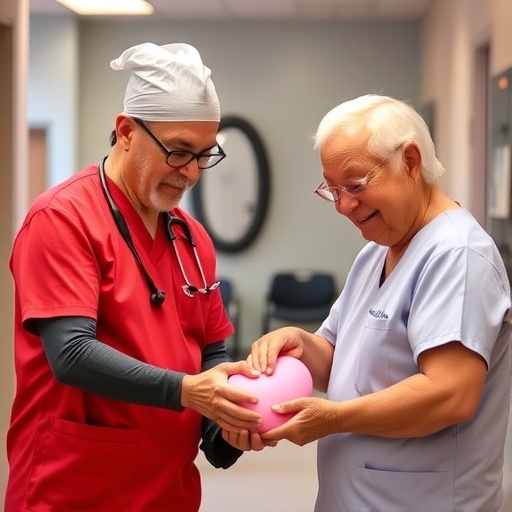
The Marcus Foundation has awarded $28.7 million to Chuck Murry, MD, PhD, director of the USC Stem Cell Center, to support a clinical trial testing a stem cell-based therapy intended to regenerate heart muscle damaged by a severe heart attack. The award, the largest the foundation has given to the University of Southern California and one of its largest contributions to academic medicine, will fund both the planned human study and a parallel research program examining how the immune system responds to transplanted cardiac cells.
The trial is scheduled to begin in 2027 at Keck Hospital of USC in partnership with the USC Cardiac and Vascular Institute. A second clinical site will be established at the University of Washington, where elements of the technology were originally developed. The first phase will enroll approximately 18 patients who have experienced extensive myocardial infarction, the medical term for a heart attack that destroys part of the heart’s muscular wall.
Patients in the study will receive stem-cell-derived heart muscle cells delivered into regions damaged by the infarction. The primary goals will be to evaluate safety and determine whether the procedure is feasible in people with severe cardiac injury. Investigators will also monitor early biological signals, including whether the transplanted cells remain active, integrate with the injured tissue and produce measurable changes in cardiac performance during recovery and long-term follow-up.
A heart attack occurs when blood flow through a coronary artery is blocked, depriving cardiac muscle of oxygen. Within minutes, cells in the affected region begin to die, and the resulting scar tissue lacks the contractile properties of healthy myocardium. Unlike tissues such as skin or blood, adult human heart muscle has only a limited capacity for self-repair. As a result, a large infarction can weaken the heart’s pumping function, increase the risk of heart failure and leave survivors unable to perform ordinary activities without fatigue or breathlessness.
Current cardiovascular treatments can reopen blocked arteries, limit further injury and help the remaining heart muscle work more efficiently. They cannot, however, routinely replace the cardiomyocytes that have already been lost. Murry’s research program is aimed at addressing that biological gap by producing replacement heart muscle cells in the laboratory and delivering them directly to damaged tissue. The strategy represents a shift from supporting a failing heart to attempting to rebuild part of its contractile apparatus.
The transplanted cells are being developed as a form of cellular therapy, in which living cells act as the therapeutic agent rather than serving merely as a vehicle for a drug. According to Murry, the cells are intended to become active within the injured heart, contribute to repair and synchronize with surrounding muscle. Achieving that outcome requires more than placing new cells into scarred tissue: the cells must survive, connect functionally with the host myocardium and avoid creating dangerous electrical disturbances or abnormal rhythms. The initial trial is therefore designed principally to establish safety before testing therapeutic effectiveness in larger patient groups.
The foundation’s funding will also support research into the immune response triggered by cell transplantation. Even cells created from stem cells can be recognized as foreign by the recipient’s immune system, potentially leading to inflammation or destruction of the transplanted population. Patients who receive cellular grafts may consequently require immunosuppressive drugs, which can increase susceptibility to infection and produce other long-term complications. Researchers will study how immune cells interact with the implanted cardiac cells and investigate methods that could reduce or eventually eliminate the need for chronic immunosuppression.
The work builds on approximately three decades of research by Murry and his collaborators to move regenerative cardiology from laboratory experiments toward clinical treatment. The program includes gene-edited cellular technology, intended to improve the compatibility or performance of therapeutic cells in the human body. The precise effectiveness of the approach will not be known until it is tested in patients, and the small 2027 cohort will not be large enough to determine whether the therapy improves survival or prevents heart failure. Those questions would require subsequent trials involving substantially more participants and longer observation.
The Marcus Foundation described the project as a potential turning point for regenerative medicine, while USC leaders said the investment could create a platform for developing additional cellular therapies. The immediate scientific challenge is to determine whether transplanted heart muscle cells can be delivered safely and function meaningfully within severely damaged human hearts. If the trial meets its safety and feasibility objectives, it could provide the clinical evidence needed to advance a new generation of treatments for myocardial infarction—therapies designed not only to help patients live with damaged cardiac tissue, but to restore some of the function that conventional medicine cannot yet replace.
Web References: The Marcus Foundation: https://marcusfoundation.org/; USC Stem Cell Center: https://stemcell.keck.usc.edu/; Chuck Murry Lab: https://murrylab.usc.edu/charles-chuck-murry-md-phd/; USC Cardiac and Vascular Institute: https://www.keckmedicine.org/services/cardiovascular/; Keck School of Medicine of USC: https://keck.usc.edu/
Cite Scienmag News
Ophelia Keating. (August 11, 2026). Heart Health Advances with $28.7 Million Gift from Marcus Foundation. Scienmag. https://scienmag.com/heart-health-advances-with-28-7-million-gift-from-marcus-foundation/
Ophelia Keating. "Heart Health Advances with $28.7 Million Gift from Marcus Foundation." Scienmag, 11 August 2026, https://scienmag.com/heart-health-advances-with-28-7-million-gift-from-marcus-foundation/. Accessed 4 September 2026.
Ophelia Keating. "Heart Health Advances with $28.7 Million Gift from Marcus Foundation." Scienmag. August 11, 2026. https://scienmag.com/heart-health-advances-with-28-7-million-gift-from-marcus-foundation/


