


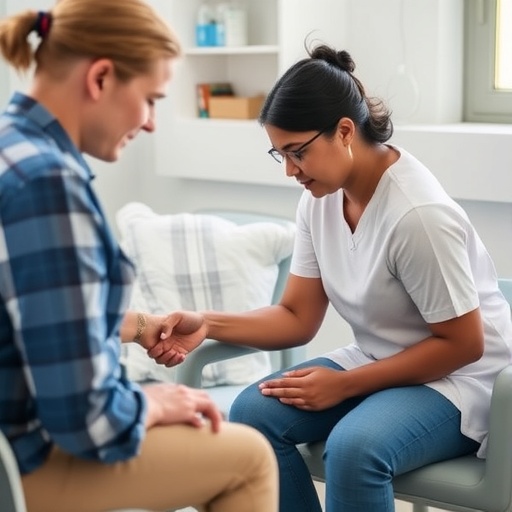
In a groundbreaking study published in BMC Health Services Research, researchers explore the essential role of peer support in post-rehabilitation care for individuals with acquired brain injuries. As healthcare systems globally strive to provide holistic and empathetic care, the perspectives of healthcare professionals emerge as vital insights into the effectiveness of peer support mechanisms. This qualitative research shines light on the nuanced experiences of professionals who navigate the complex landscape of brain injury recovery, revealing their beliefs, challenges, and hopes related to integrating peer support into clinical practices.
Acquired brain injuries can drastically alter the lives of both patients and their families. The aftermath of such injuries often leaves individuals feeling isolated and misunderstood. However, emerging literature suggests that peer support can bridge this daunting gap. By fostering connections between individuals who share similar experiences, peer support systems can provide emotional and psychological reinforcement. The study by Voorn et al. seeks to elucidate the potential benefits and barriers of implementing such systems within rehabilitation contexts, emphasizing the necessity for a multifaceted approach to recovery.
Through interviews with a diverse array of healthcare professionals, the study captures their perceptions of peer support and its viability in post-rehabilitation settings. One prominent theme that arose from the interviews was the recognition of shared experiences as a powerful catalyst for healing. Healthcare professionals noted that when individuals recovering from brain injuries connect with peers who have faced similar challenges, it promotes a sense of belonging and validation. This communal bonding acts not only as a therapeutic tool but also as a source of inspiration, encouraging patients to navigate their recovery journey with renewed optimism.
While the enthusiasm for peer support is palpable, the study does not shy away from addressing the inherent challenges. Healthcare professionals highlighted concerns regarding training and facilitating effective peer support programs. Without proper guidance, there is a risk of misinformation or emotional unsuitability among peer supporters. Training programs designed to prepare peers for their roles can mitigate this risk, ensuring they provide valuable support while maintaining boundaries consistent with professional ethics.
The study also emphasizes the need for further research into the optimal models of peer support. Not all approaches may be equally effective, and it is essential to identify what works best for different patient demographics and injury types. The voices of healthcare professionals serve as a roadmap, urging the exploration of personalized peer support strategies that take into account the unique psychological and emotional needs of individuals recovering from brain injuries.
In a society increasingly aware of the mental health needs of individuals, the integration of peer support into healthcare systems may also stem from a broader cultural shift towards valuing lived experiences. As healthcare professionals navigate this evolving landscape, their perspectives offer an invaluable insight into how to effectively implement peer support interventions in ways that resonate with patients and enhance their recovery experience.
One striking revelation from the interviews was the call for collaboration among healthcare professionals, patients, and peer supporters. By fostering a collaborative environment, healthcare teams can cultivate a culture that prioritizes shared learning and growth. Such collaboration is pivotal not only in recognizing the therapeutic value of peer support but also in dismantling the traditional hierarchies that often exist within healthcare settings.
To truly harness the potential of peer support, healthcare professionals assert that organizational backing is crucial. Institutional policies should endorse and facilitate peer support programs, ensuring that they are integrated seamlessly into existing rehabilitation structures. By establishing frameworks that recognize the role of peer supporters as co-facilitators of recovery, healthcare systems can enhance their service delivery and improve overall patient outcomes.
Moreover, when discussing the intersections of mental health and physical rehabilitation, healthcare professionals revealed that peer support can play a significant role in addressing the mental health challenges frequently accompanying brain injuries. Depression, anxiety, and feelings of isolation are common following such injuries; however, peer supporters can offer heartfelt insights and coping strategies that can alleviate these burdens. Generating a platform where these discussions can occur openly can empower patients and help them feel more equipped to face their challenges.
The implications of the study extend beyond the immediate context of brain injury recovery. It serves as a case study and a model for other healthcare disciplines seeking to understand the power of peer connections in treatment. The insights gleaned from the perspectives of healthcare professionals in this qualitative study could pave the way for innovative approaches in pain management, addiction recovery, and various mental health services.
As peer support grows in prominence, it is vital that the ongoing education of healthcare professionals incorporates the significance of these systems. Emphasizing the value of lived experience in professional training can equip healthcare workers with the tools they need to advocate for and implement these vital support structures effectively. Engaging health professionals in discussions about the potential of peer support can stimulate more profound reflections on their practice, promoting a patient-centered approach that extends beyond clinical guidelines.
Ultimately, the landmark research by Voorn et al. is a clarion call for the healthcare community. The voices of healthcare professionals resonate as champions for change, urging systemic adaptations to enhance the care provided to those recovering from acquired brain injuries. It is a reminder that every recovery journey is unique, and the narratives shared between peers can offer powerful tools in overcoming adversity.
Peer support in post-rehabilitation care is not merely an adjunct to medical treatment; it is an essential component of a holistic approach that prioritizes human connection, understanding, and shared healing. As the findings of this qualitative study ripple through the healthcare community, they carry the potential to transform the landscape of rehabilitation, ultimately fostering a more compassionate and supportive environment for all individuals facing the challenges of recovery.
Voorn, M.J.J., Verlinden, J.M.W.F., Sep, S.J.S. et al. Healthcare professionals’ perspectives on peer support in post-rehabilitation care for individuals with acquired brain injury: a qualitative study. BMC Health Serv Res (2025). https://doi.org/10.1186/s12913-025-13910-3
Cite Scienmag News
Cassandra Pierce. (December 25, 2025). Healthcare Insights on Peer Support in Brain Injury Care. Scienmag. https://scienmag.com/healthcare-insights-on-peer-support-in-brain-injury-care/
Cassandra Pierce. "Healthcare Insights on Peer Support in Brain Injury Care." Scienmag, 25 December 2025, https://scienmag.com/healthcare-insights-on-peer-support-in-brain-injury-care/. Accessed 5 September 2026.
Cassandra Pierce. "Healthcare Insights on Peer Support in Brain Injury Care." Scienmag. December 25, 2025. https://scienmag.com/healthcare-insights-on-peer-support-in-brain-injury-care/


