


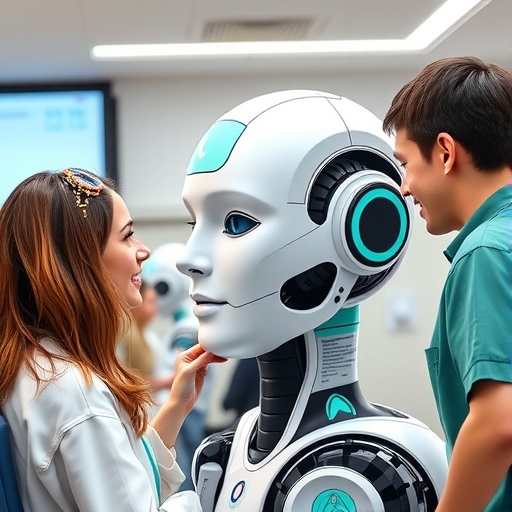
In a rapidly advancing technological landscape, the integration of artificial intelligence (AI) into various domains of healthcare is not just a trend; it is a transformative phenomenon reshaping the fabric of medical education and clinical practice. As healthcare continues to evolve, the attitudes of upcoming health professionals—particularly students in health sciences—toward AI can serve as a bellwether for the future of clinical decision-making and ethical frameworks in medicine. A recent study delves into these attitudes, unearthing vital predictors of ethical awareness, clinical decision-making, and perceptions surrounding public health.
The study, titled “Health sciences students’ attitudes toward artificial intelligence: predictors of ethical awareness, clinical decision-making, and public health perceptions,” offers a comprehensive cross-sectional examination of this pertinent issue. Researchers C. Unal and S. Şahin explored how future healthcare providers conceptualize AI, its capabilities, and its implications for ethical practice. Their work responds to crucial questions about how students prepare to leverage AI’s potential while grappling with moral responsibilities that accompany these technologies.
Understanding the current landscape of AI forms the foundation of the study. AI systems are being designed to enhance diagnostic accuracy, improve patient outcomes, and streamline healthcare delivery. Nevertheless, the advancement of these intelligent systems does not come without significant ethical dilemmas. How should clinicians ensure that AI tools align with human rights and patient dignity? What role do biases in AI algorithms have in shaping healthcare practices and potential disparities? Future healthcare professionals must grapple with these questions, and this study illuminates how prepared they feel in addressing them.
One of the pivotal aspects studied is ethical awareness among health sciences students. Ethical awareness refers to the ability to recognize and respond appropriately to ethical issues and dilemmas in clinical scenarios that may involve AI technologies. By evaluating students’ understanding of potential ethical challenges, the researchers aim to ascertain whether educational institutions are effectively preparing health scenarios for the reality of AI integration. An understanding of both the benefits and challenges presented by AI systems is crucial for fostering a workforce equipped to navigate this new terrain.
Another critical area of exploration is clinical decision-making. As AI tools increasingly assist in diagnostics and treatment planning, the role of human judgment in healthcare remains paramount. The study investigates how students perceive the balance between relying on AI and maintaining their clinical skills. Effective healthcare is a blend of evidence-based protocols and the physician’s intuition—a duality that future clinicians must embrace to ensure patient-centered care.
Public health perceptions among health sciences students are also a focal point. The utilization of AI in public health can potentially enhance epidemic tracking, improve health education, and increase healthcare accessibility. However, students’ attitudes towards these aspects provide insight into how they envision the future of healthcare delivery in broader communities. Understanding their perspectives is fundamental to addressing the current gaps in knowledge and attitudes toward technology in health practices.
Interestingly, the study draws attention to various predictive factors influencing students’ attitudes toward AI. These may include personal experiences with technology, background in programming or data analytics, exposure to AI-related curricula, and societal attitudes toward AI in healthcare. By identifying these predictors, educators can adopt strategies to enhance students’ readiness to incorporate AI into their future practices.
In gathering data, the methodology utilized provides a robust assessment of students’ attitudes. Employing surveys enables a broad reach, while qualitative methods can yield deeper insights into students’ perceptions and experiences. The combination of quantitative and qualitative research methods can reveal hidden complexities in how future healthcare professionals view AI, ethics, and their roles in patient care.
The findings emerge as a clarion call for medical educators to rethink curricula, fostering an environment that not only incorporates technological advancements but emphasizes ethical considerations and the development of critical thinking skills. Courses may need to adapt, infusing AI education with lessons on ethical dilemmas, cultural competencies, and the social implications of healthcare technologies.
Furthermore, as the integration of AI becomes commonplace, the continual updating of curricula to reflect these rapid changes will be essential. Professional development opportunities for faculty to stay informed about AI advancements and their respective ethical consequences can enhance the educational framework, ensuring that students receive a well-rounded education.
With students’ perceptions of AI directly impacting future healthcare systems, the implications of this study are manifold. As future healthcare providers, their attitudes will shape public health strategies, influence clinical practices, and determine the role of technology in improving patient care. A workforce empowered with ethical awareness and informed decision-making skills is vital to navigating the complex interplay between AI and healthcare.
In conclusion, the insights gleamed from the study led by C. Unal and S. Şahin should guide stakeholders in healthcare education and policy. As AI continues to redefine healthcare landscapes, grounding the next generation of health professionals in ethical considerations related to technology adoption will be paramount. Emphasizing ethical awareness, critical thinking, and informed decision-making in AI will not only benefit future practitioners but also the patients and communities they serve.
As we stand on the brink of this new era in healthcare shaped by technology, it is essential to foster a generation of health professionals who are equally adept at leveraging technological innovations while upholding ethical standards and prioritizing patient welfare. The full impact of AI on the healthcare industry is yet to unfold, and the attitudes of health sciences students offer a significant glimpse into its potential trajectory.
Cite Scienmag News
Courtney Benton. (January 31, 2026). Health Students’ Views on AI: Ethics and Decision-Making. Scienmag. https://scienmag.com/health-students-views-on-ai-ethics-and-decision-making/
Courtney Benton. "Health Students’ Views on AI: Ethics and Decision-Making." Scienmag, 31 January 2026, https://scienmag.com/health-students-views-on-ai-ethics-and-decision-making/. Accessed 4 September 2026.
Courtney Benton. "Health Students’ Views on AI: Ethics and Decision-Making." Scienmag. January 31, 2026. https://scienmag.com/health-students-views-on-ai-ethics-and-decision-making/


