
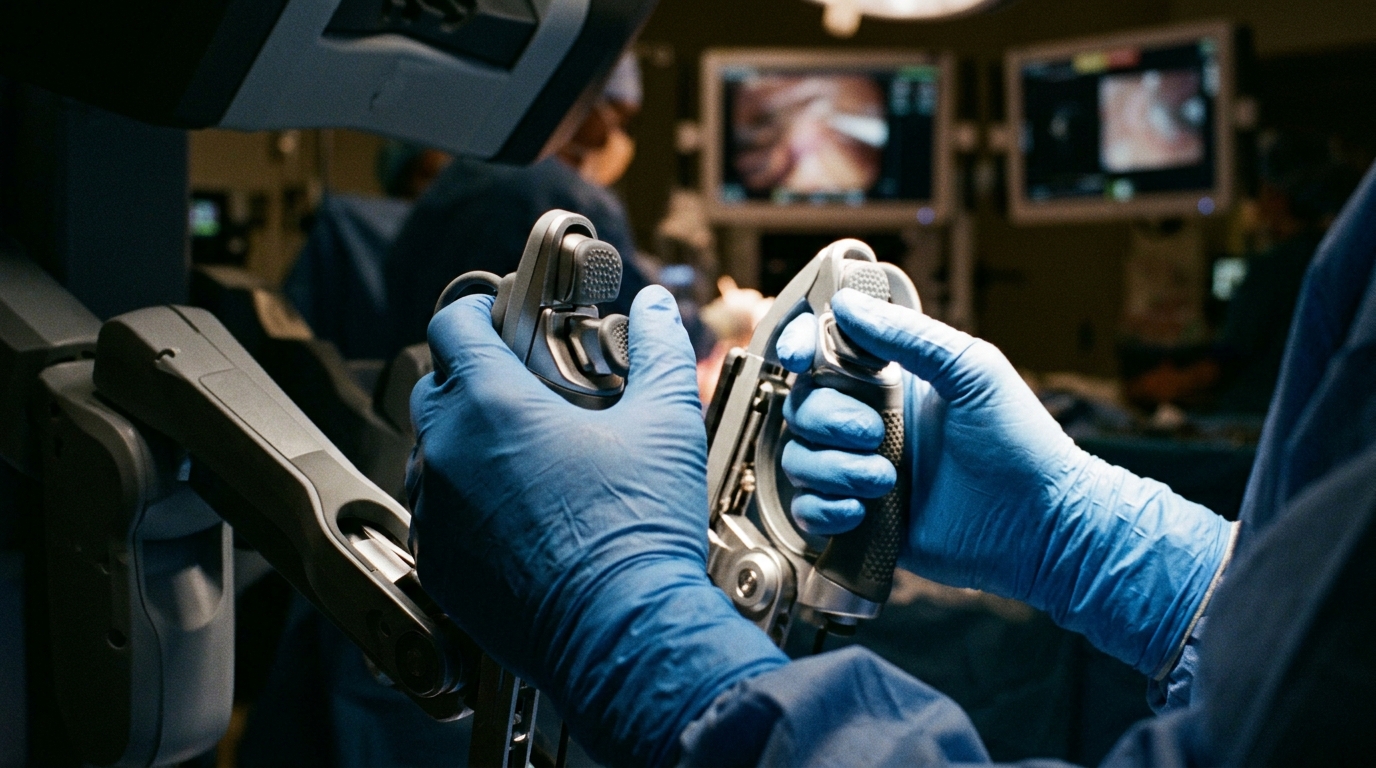
Published in the International Journal of Computer Assisted Radiology and Surgery, the study investigated how different levels of human oversight influence performance and trust when a robot-assisted laparoscopic surgery system transitions from autonomous operation to manual control. The findings highlight a critical trade-off in the design of autonomous surgical cockpits: while physical coupling with the robot provides immediate tactile cues that accelerate the detection of system failures, it simultaneously increases the subjective physical workload for the operator.
The study focused on the integration of task-level autonomy, designated as Level 2 or L2, into teleoperation systems for robot-assisted laparoscopic surgery. In this mode, the robotic system controls all degrees of freedom to execute a predefined task, such as moving a surgical instrument along a specific path. Regulatory standards, including the European Union’s AI Act, emphasize the requirement for human oversight starting from this level of autonomy. Operators must be able to monitor the system and take over full control at any moment, particularly during unforeseen events such as system failures. The research aimed to determine whether the type of oversight, specifically visual versus visuo-haptic guidance, impacts the surgeon’s ability to manage these transitions effectively.
Visuo-haptic guidance involves the operator holding the input device while the robot operates autonomously, providing both visual observation of the task and physical feedback through the handle. In contrast, visual guidance requires the operator to monitor the system solely through a 3D display without physical contact with the input device. The researchers hypothesized that the continuous physical coupling in the visuo-haptic condition would serve as an implicit takeover request during a system failure. The sudden cessation of guidance forces would provide an immediate tactile cue, potentially allowing the operator to notice the failure faster than visual monitoring alone. Furthermore, the study predicted that this continuous engagement would lead to higher subjective ratings of perceived control and trust in the teleoperation system.
To test these hypotheses, the team conducted a within-participants experiment using a hardware-in-the-loop simulator of the DLR MiroSurge research platform. The simulator featured two kinematically simulated seven-degree-of-freedom robotic arms, one carrying a stereoscopic endoscope and the other equipped with a surgical instrument. Participants controlled the instrument’s pose via a haptic input device that provided force and torque feedback. The experimental task was a standardized ring transfer, where the system autonomously picked up a ring from one of ten pegs and placed it on a predefined peg on the opposite side. This task, adapted from surgical training curricula, allowed for the assessment of autonomy levels with non-expert users due to its relative simplicity.
Thirty-four students with no prior expertise in robot-assisted laparoscopy participated in the study. The participants were required to be right-handed and possess stereoscopic vision to ensure they could physically operate the haptic device and view the 3D monitor layout. Each participant completed two experimental blocks, one with visual guidance and one with visuo-haptic guidance, in a counterbalanced order. Each block consisted of six sets of five trials, with one experimental trial in each set involving a system failure that required the participant to take over control. The system would stop mid-transport without notification, and the participant had to detect the stop, press a mouse button, and then complete the transfer in shared control mode.
The results confirmed the first hypothesis, showing that participants noticed system failures significantly faster with visuo-haptic guidance compared to visual guidance. The absolute reduction in detection time was approximately 200 milliseconds. While this margin may appear small in the context of an isolated surgical task, the researchers noted that from a human-factors perspective, it serves as a proof of concept. It demonstrates that continuous physical coupling provides immediate tactile cues that successfully accelerate human cognitive processing during automation failures. However, contrary to the second and third hypotheses, visuo-haptic guidance did not lead to faster task completion times or reduced path deviations during the subsequent manual control phase.
Subjective workload measurements revealed a clear cost associated with the haptic condition. Participants rated the visuo-haptic guidance as significantly more physically demanding and reported higher effort levels compared to the visual guidance condition. The effect on mental demand was marginal, with a slightly higher rating for the visuo-haptic condition, while temporal demand, performance, and frustration showed no significant differences. This suggests that while haptic feedback keeps the user physically engaged and aware, it imposes a higher subjective effort without necessarily enhancing manual motor performance after the takeover. The findings indicate that once control is handed over, the level of guidance prior to the takeover event may not play a critical role in the actual execution of the task.
Trust in the teleoperation system was measured using the performance trust scale of the MDMT trust questionnaire. The analysis revealed a significant main effect of guidance, with participants reporting significantly higher trust in the system when visuo-haptic guidance was used compared to visual guidance. The mean trust score for the visuo-haptic condition was 5.80, whereas it was 5.28 for the visual condition. Interestingly, no significant difference in trust was observed before and after experiencing system failures. This suggests that the higher trust associated with visuo-haptic guidance was established before the actual physical interaction, likely due to the predictability of the system’s behavior as described in the introductory materials.
Perceived control was also significantly higher in the visuo-haptic condition. A paired t-test indicated that participants felt a stronger sense of control over the system when they were physically coupled to the input device. This aligns with the hypothesis that purely visual guidance places the operator in a passive supervisory role, potentially creating a sense of detachment, whereas visuo-haptic guidance maintains a physical connection between the surgeon’s hands and the robotic instruments. The study found that this continuous physical engagement resulted in higher subjective ratings of perceived control, reinforcing the idea that haptic feedback can mitigate the psychological distance often associated with autonomous systems.
The researchers acknowledged several limitations in their study. First, the experiment did not include a control condition without any guidance, leaving it unclear how performance and trust would be affected if the operator were not even visually monitoring the system. Second, the participants were non-expert students unfamiliar with laparoscopic surgery, meaning the results regarding workload and trust may differ for experienced surgeons. The authors emphasized the need for future research to validate these findings with expert users on clinically more relevant tasks, such as dissection or suturing, to ensure clinical transferability. Additionally, the study did not test environments where the system explicitly signals uncertainty, which could further influence the operator’s response to failures.
From an engineering perspective, the insights suggest potential avenues for designing future automated surgical cockpits. The findings imply that haptic guidance could serve as a method to maintain user engagement and reduce the cognitive detachment associated with passive visual monitoring. However, to balance the observed physical workload, future interfaces might explore adaptive or intermittent haptic frameworks. For instance, a system could remain haptically passive during routine automated sequences to prevent unnecessary user fatigue, while dynamically introducing active haptic cues only during high-uncertainty phases or critical takeover transitions. This approach could leverage the benefits of haptic feedback for trust and failure detection while minimizing the associated physical demand.
The study contributes to the broader understanding of human-robot interaction in surgical settings, where the integration of autonomy requires careful consideration of the operator’s cognitive and physical state. By identifying the specific trade-offs of visuo-haptic guidance, the research provides a foundation for developing systems that support effective human oversight without overwhelming the operator.
Subject of Research: The impact of visuo-haptic guidance on operator performance and trust in autonomous surgical robotic systems
Article Title: Exploring performance and trust in autonomous surgical robotic systems: the role of visuo-haptic guidance
Article References: Papenmeier, F., Hagmann, K., Blossey, L., Bauer, A. S., Potinteu, A. E., Kirst, A., Leidner, D., Huff, M., & Klodmann, J. (2026). Exploring performance and trust in autonomous surgical robotic systems: the role of visuo-haptic guidance. International Journal of Computer Assisted Radiology and Surgery. https://doi.org/10.1007/s11548-026-03781-2
Image Credits: AI Generated
DOI: 10.1007/s11548-026-03781-2
Keywords: surgical robotics, haptic feedback, autonomous systems, human-robot interaction, laparoscopic surgery, operator trust, teleoperation, workload, Exploring, performance, trust, autonomous
Cite Scienmag News
Ophelia Keating. (November 8, 2026). Haptic Feedback Boosts Trust in Surgical Robots. Scienmag. https://scienmag.com/haptic-feedback-boosts-trust-in-surgical-robots/
Ophelia Keating. "Haptic Feedback Boosts Trust in Surgical Robots." Scienmag, 8 November 2026, https://scienmag.com/haptic-feedback-boosts-trust-in-surgical-robots/. Accessed 10 November 2026.
Ophelia Keating. "Haptic Feedback Boosts Trust in Surgical Robots." Scienmag. November 8, 2026. https://scienmag.com/haptic-feedback-boosts-trust-in-surgical-robots/