


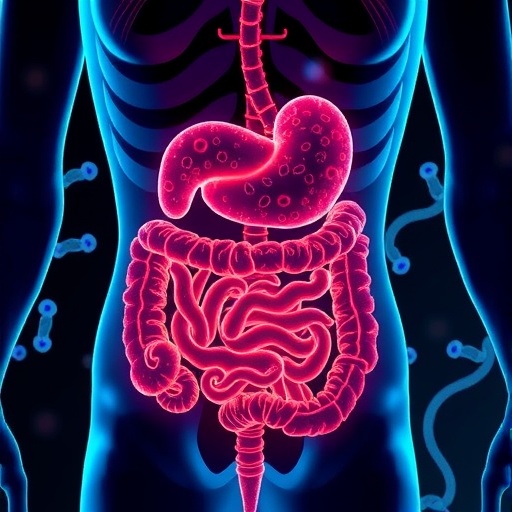
In an unprecedented exploration into the dynamic interplay between microbiota and host physiology, a groundbreaking study has illuminated the pivotal role of microbial enzymes in modulating gut motility through reactivation of host androgens. Published in Nature Neuroscience in 2026, this research uncovers how microbial metabolism intricately directs enteric neuronal circuits, reshaping our understanding of the gut-brain axis with profound implications for human health and disease.
The study embarks from the well-documented influence of androgens—steroid hormones traditionally associated with male traits—on various physiological systems. While systemic androgen effects have been explored, this investigation probes deeper into localized reactivation mechanisms within the gut environment, where microbial communities reside densely. Researchers reveal that resident gut microbes possess enzymatic functions capable of converting androgen precursors back into their active forms, effectively reawakening hormonal signaling within the enteric nervous system.
Employing a sophisticated combination of metabolomic profiling, genetic manipulation, and electrophysiological techniques, the team identified key bacterial taxa responsible for this enzymatic reactivation. Notably, these microbial metabolic activities were found to significantly enhance the bioavailability of active androgens in the gut lumen, directly influencing neuronal excitability and, consequently, gut motility patterns. This discovery bridges a vital gap between microbiome functionality and neuroendocrine regulation that had remained elusive until now.
Central to the findings is the concept that androgen reactivation by microbial enzymes fine-tunes enteric neuronal output, orchestrating peristaltic reflexes and smooth muscle contractions essential for intestinal transit. Through targeted in vivo experiments, the researchers demonstrated that disruption of this microbial androgen metabolism altered gut motility, resulting in either hypo- or hypermotility phenotypes. These effects were reversible upon restoration of the microbial enzymatic activity, suggesting a highly dynamic and plastic system governed by host-microbiome feedback loops.
Beyond the immediate mechanistic insights, this study challenges conventional paradigms by positioning gut microbes as active endocrine modulators rather than passive inhabitants. The realization that microbial metabolism can recalibrate host hormonal circuits highlights novel avenues for therapeutic intervention in gastrointestinal disorders characterized by dysmotility, such as irritable bowel syndrome and chronic constipation. Modulating microbial androgen reactivation could become a precision medicine strategy tailored to restore normal gut function.
Intriguingly, the researchers also unveiled sexually dimorphic responses in the interplay between microbial androgen reactivation and enteric neuron function. Male and female mice exhibited distinct motility patterns contingent upon variations in microbial enzymatic profiles and host androgen sensitivity, underscoring the importance of considering sex as a biological variable in gut-neuroendocrine research. This facet deepens our appreciation of individualized host-microbe interactions shaping health outcomes.
At the molecular level, the study elaborates on how microbial enzymes such as hydroxysteroid dehydrogenases catalyze reversible conversions between inactive androgen conjugates and their active counterparts. These enzymatic reactions take place in close proximity to enteric neurons, facilitating paracrine signaling that modulates neuronal firing rates and neurotransmitter release. This finely tuned mechanism enables the microbiome to exert sophisticated control over gut motility beyond mere metabolite production.
Furthermore, the research integrates advanced imaging modalities to visualize neuronal activity in real-time, correlating enhanced androgen availability with increased calcium fluxes and action potential frequency within enteric ganglia. This real-time functional evidence solidifies the link between microbial metabolic activity and neurophysiological outputs, offering a multi-dimensional perspective of gut regulatory networks. The convergence of metabolic and neuronal data lends robust credibility to the proposed model.
From an evolutionary standpoint, the elucidation of microbial androgen reactivation mechanisms hints at a co-evolved symbiotic relationship where microbes contribute to optimizing host intestinal function. This evolutionary insight expands the framework of mutualism, suggesting that microbiota-derived modulation of hormone signaling constitutes an adaptive advantage for maintaining digestive efficiency. Such findings provide fertile ground for evolutionary biology and microbiome research intersections.
The translational potential of these discoveries is immense. By identifying specific microbial enzyme targets, pharmaceutical development can aim to design modulators or probiotics that enhance or inhibit androgen reactivation within the gut, thereby controlling motility disorders. Moreover, these microbial pathways might influence systemic endocrine functions given the interconnectivity between enteric neurons and central nervous system circuits, opening exciting possibilities for neurogastroenterology.
Intricately, the study also discusses the feedback mechanisms wherein host androgens modulate microbial community composition and metabolic activity, establishing a bidirectional communication loop. This dynamic feedback ensures homeostasis by synchronizing microbial function with host hormonal status, representing an elegant biological system integrating metabolic, neuronal, and microbial domains. Such complexity underscores the need for holistic approaches in future gut-brain axis investigations.
Given the widespread prevalence of gut motility disorders, the identification of microbial androgen reactivation as a key regulatory mechanism invites renewed scrutiny of microbiome-targeted therapies. Dietary interventions, antibiotics, and microbiota transplants could inadvertently perturb these enzymatic activities, altering gut function. Therefore, medical practices may need to incorporate microbiome endocrine considerations to optimize patient outcomes and minimize adverse effects.
In conclusion, this seminal study redefines the microbial contribution to host physiology by unveiling a novel enzymatic process through which gut bacteria reactivate androgens, orchestrating enteric neuronal regulation of motility. This intricate biochemical crosstalk exemplifies the emerging frontier of microbiome-endocrine interactions with vast implications for biology, medicine, and therapeutics. As we unravel these complex dialogues, the prospect of leveraging microbial endocrinology to modulate health becomes an exciting reality.
The transformative insights gained here invite a paradigm shift: the gut microbiome is not merely a metabolic organ but an endocrine entity capable of recalibrating host neurophysiological processes. This revelation paves the way for integrative research endeavors bridging microbiology, endocrinology, neuroscience, and clinical medicine, ultimately advancing personalized healthcare in gastrointestinal and systemic diseases. Such interdisciplinary synergy heralds a new epoch of microbiome-informed biomedical breakthroughs.
As the field advances, further studies will doubtless explore how microbial androgen reactivation interfaces with other hormonal axes and systemic immunity, deepening our comprehension of host-microbiome symbiosis. The interplay between microbial enzymatic activities and host signaling cascades likely extends beyond gut motility, influencing metabolism, mood, and behavior. The future of human health hinges upon decoding these microbial endocrine networks and harnessing their potential.
Cite Scienmag News
Morgan Morrow. (June 2, 2026). Gut Microbiome Reactivates Androgens to Control Motility. Scienmag. https://scienmag.com/gut-microbiome-reactivates-androgens-to-control-motility/
Morgan Morrow. "Gut Microbiome Reactivates Androgens to Control Motility." Scienmag, 2 June 2026, https://scienmag.com/gut-microbiome-reactivates-androgens-to-control-motility/. Accessed 5 September 2026.
Morgan Morrow. "Gut Microbiome Reactivates Androgens to Control Motility." Scienmag. June 2, 2026. https://scienmag.com/gut-microbiome-reactivates-androgens-to-control-motility/


