


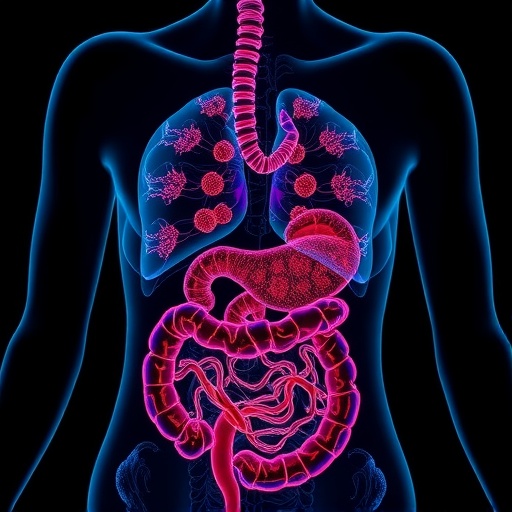
In a groundbreaking prospective case-control study, researchers led by Kwa, M. and colleagues have unveiled the intricate relationship between the gut microbiome and sex hormones in postmenopausal women diagnosed with hormone receptor-positive breast cancer. This research is of considerable significance, as it explores the potential underlying mechanisms that may contribute to breast cancer risk and progression, particularly within a demographic that is increasingly affected by this illness. The findings have considerable implications for diagnostic strategies and therapeutic interventions, potentially paving the way for personalized treatment approaches.
The gut microbiome, comprising trillions of microorganisms, plays a pivotal role in human health and disease. Researchers have long understood that the microbiome influences metabolic processes, immune responses, and inflammation. However, its connection to sex hormones—especially in postmenopausal women—has remained largely unexplored. This study aims to bridge that gap, providing a comprehensive analysis of the gut microbiome’s impact on hormonal fluctuations and their combined effects on breast cancer.
Postmenopausal women are particularly vulnerable to hormone receptor-positive breast cancer, which predominantly relies on estrogen for tumor growth. Past research has indicated that fluctuations in the microbiome can cause variations in hormone levels, suggesting an interactive cycle where gut health and cancer propensity may be linked. The team hypothesized that the microbiome composition differs significantly between healthy postmenopausal women and their counterparts with hormone receptor-positive breast cancer, potentially influencing disease outcomes.
Utilizing advanced metagenomic sequencing techniques, Kwa and her team meticulously analyzed stool samples from both patient cohorts. The methodology permitted an exhaustive inventory of the microbial communities inhabiting the gut, revealing a wealth of information regarding the diversity and abundance of various microbial species. By comparing these microbiomes, the researchers elucidated notable differences that could be associated with cancer risk.
In parallel, the study examined the profiles of sex hormones—specifically estrogen and progesterone—alongside the microbial data. The researchers employed sophisticated assays to measure hormone levels accurately, thereby establishing direct correlations between microbial composition and hormonal variations. This dual analysis not only enriched the understanding of the microbiome-hormone relationship but also highlighted the complex interplay at micro and macro levels in the context of breast cancer.
Initial results indicated that specific microbial taxa were significantly more abundant in healthy individuals compared to those diagnosed with breast cancer. Notably, certain beneficial bacteria known for their anti-inflammatory effects were found in lower concentrations among breast cancer patients, suggesting that an imbalance in the gut microbiome may foster an environment conducive to cancer development. This correlation underscores the necessity for further investigation into how restoring gut flora might mitigate cancer risks.
Moreover, the research team explored the role of dietary factors in shaping the gut microbiome. It is well-established that diet can dramatically influence microbial composition and function. The study surveyed participants regarding their dietary habits, identifying variations that may discernitional between the two groups. This component of the research introduced an additional layer of complexity, underscoring how lifestyle choices intersect with biological factors to shape disease outcomes.
By correlating dietary practices, hormonal profiles, and microbiome compositions, Kwa and her colleagues hope to unveil actionable insights that could inform preventive strategies against breast cancer. Understanding how diet can modulate the gut microbiome, and consequently influence hormone levels, offers a promising direction for future research and public health initiatives.
The implications of these findings extend beyond individual patients, as they may inform broader societal and healthcare policies. If specific microbiome profiles are linked to breast cancer susceptibility, routine microbiome monitoring could emerge as a critical element of standard care for postmenopausal women. Additionally, tailoring dietary plans to promote a healthy microbiome could serve as an adjunctive therapeutic strategy in mitigating breast cancer risks.
As the study makes waves in the scientific community, it calls for further research to validate these findings across larger populations and varied demographics. A more comprehensive understanding of the mechanisms underlying the gut microbiome and hormone interaction could catalyze the development of innovative treatment paradigms. Future investigations may delve deeper into microbial metabolites and their hormonal regulatory effects, opening avenues for novel therapeutic interventions.
By addressing a fundamental question regarding the root causes of hormone receptor-positive breast cancer, Kwa and her team have positioned their research at the forefront of cancer biology. The study not only broadens the scientific community’s understanding of the intricate relationship between microbiology and oncology, but it also emphasizes the importance of interdisciplinary collaboration in tackling complex health issues. Engaging experts from microbiology, oncology, nutrition, and endocrinology will be imperative to unravel the remaining mysteries of this relationship.
As this research garners attention, it may inspire further inquiry into the potential role of probiotics, prebiotics, and other microbiome-modulating agents in breast cancer prevention and treatment. The prospect of harnessing the microbiome for therapeutic gain represents an exciting frontier in cancer care, where the therapeutic focus may shift from exclusive reliance on pharmacological interventions to embracing a holistic and multifaceted approach to healthcare. Thus, the assessment of gut health could become a standard preventive measure, ushering in a transformative era in oncology.
In conclusion, the study conducted by Kwa and her team illuminates an exciting and complex interplay between the gut microbiome and sex hormones among postmenopausal women with hormone receptor-positive breast cancer. By providing compelling evidence of the microbiome’s influence on hormonal dynamics and cancer risk, the researchers advocate for an integrative approach to breast cancer prevention and treatment. These findings pave the way for future research that could expand our understanding and application of microbiome science in oncology, ultimately improving the lives and health outcomes of countless individuals.
Kwa, M., Hussey, G., Novik, Y. et al. Evaluation of the gut microbiome and sex hormones in postmenopausal women with newly diagnosed hormone receptor-positive breast cancer versus healthy women: a prospective case-control study.
J Cancer Res Clin Oncol 151, 275 (2025). https://doi.org/10.1007/s00432-025-06338-z
Cite Scienmag News
Nathaniel Bowman. (October 4, 2025). Gut Microbiome and Hormones in Postmenopausal Breast Cancer. Scienmag. https://scienmag.com/gut-microbiome-and-hormones-in-postmenopausal-breast-cancer/
Nathaniel Bowman. "Gut Microbiome and Hormones in Postmenopausal Breast Cancer." Scienmag, 4 October 2025, https://scienmag.com/gut-microbiome-and-hormones-in-postmenopausal-breast-cancer/. Accessed 5 September 2026.
Nathaniel Bowman. "Gut Microbiome and Hormones in Postmenopausal Breast Cancer." Scienmag. October 4, 2025. https://scienmag.com/gut-microbiome-and-hormones-in-postmenopausal-breast-cancer/


