


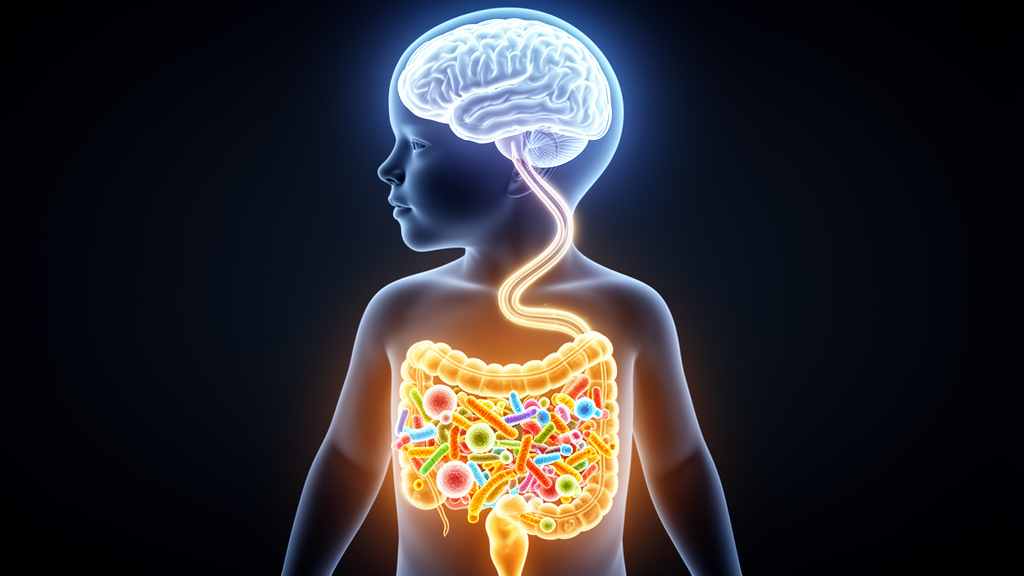
IgA vasculitis is the most common form of small-vessel vasculitis in children, a condition in which abnormal deposits of immunoglobulin A trigger inflammation in the tiny blood vessels of the skin, joints, gut, and kidneys. Most pediatricians encounter it as the classic triad of a distinctive purplish rash, abdominal pain, and arthritis. Yet a small fraction of affected children develop something far more alarming: neurological involvement, ranging from headaches and seizures to altered consciousness. Because central nervous system involvement in IgA vasculitis is rare, it has remained one of the most poorly understood complications of the disease, with no clear mechanistic explanation for why the brain becomes a target in some patients but not others. A new commentary published in Pediatric Research by Qian Xu of Shanghai Tenth People’s Hospital, Tongji University School of Medicine, argues that the answer may lie in an unexpected place: the gut.
The commentary centers on a recent experimental study that took a bold, functionally oriented approach to a question that has long been addressed only through association. Rather than simply cataloging which bacterial species are more or less abundant in children with IgA vasculitis, the researchers asked whether the gut microbiota of these patients could actually transmit disease-relevant biological signals. To do so, they performed fecal microbiota transplantation from children with IgA vasculitis, with or without neurological involvement, into specific pathogen-free mice. This design allowed the investigators to test whether the microbial communities harvested from different patient subgroups carried distinct functional consequences when placed into a standardized animal host.
The results were striking. Mice that received microbiota from children with neurological involvement developed electroencephalographic abnormalities, while mice that received microbiota from children with IgA vasculitis but no neurological signs did not. In other words, the brain-wave disturbances appeared exclusively in the animals colonized with microbes from the neurologically affected donors. This is precisely the kind of outcome that moves a microbiome study from the descriptive realm into the experimental one. It suggests that something about the gut microbial composition of these particular patients, or the metabolites and immune signals that community produces, is capable of influencing neurophysiological function in a recipient organism.
What might that something be? The study pointed to several candidate mediators. The microbiota of neurologically affected children was enriched for Anaeroplasma, a genus of bacteria that has attracted growing attention in microbiome research. Alongside this microbial signature, the investigators detected alterations in short-chain fatty acids, a class of bacterial metabolites with well-documented effects on the immune system and the nervous system. Notably, caproic acid was increased. Short-chain fatty acids are among the most studied chemical messengers of the gut-brain axis: they can cross or modulate the blood-brain barrier’s environment, influence microglial behavior, and shape the differentiation of immune cells. The finding that a specific fatty acid profile accompanied the neurologically relevant microbiota provides a plausible biochemical bridge between gut and brain.
The immune dimension of the story is equally important. The study reported changes in systemic cytokines, including elevated levels of interleukin-17A and interleukin-1 alpha. Both are inflammatory signaling molecules with established roles in neuroinflammation and in the kind of small-vessel immune activation that defines IgA vasculitis itself. Interleukin-17A, in particular, is a hallmark cytokine of a T helper cell lineage that has been implicated in autoimmune and inflammatory diseases of the central nervous system. The convergence of a distinctive microbial genus, an altered metabolite landscape, and a shifted cytokine profile in the same patient subgroup forms what Xu describes as a gut-microbe-metabolite-immune-brain axis, a conceptual model in which each layer of the system could feed forward into the next.
This framework matters because the field of microbiome research has been criticized, fairly, for producing an abundance of correlational findings and a scarcity of causal ones. Hundreds of studies have reported that patients with a given disease harbor a different gut microbiota than healthy controls, but differences in composition do not by themselves establish that microbes drive disease. The commentary emphasizes that the value of the new study lies precisely in its functional experimental design: by transplanting the microbiota into mice and measuring physiological outcomes, the researchers generated evidence that goes beyond a list of differential taxa. Xu argues that integrating microbiome, metabolome, and immune profiling within such a functional framework is the way forward for the field, allowing investigators to move from association toward experimentally tractable hypotheses.
At the same time, the commentary is careful, and appropriately so, about the limits of causal interpretation. The number of donors involved was small, which means the findings could be vulnerable to individual variation and confounding. There was no paired human multi-omics validation, meaning the microbial, metabolite, and immune measurements were not comprehensively cross-validated within the same human cohort in a way that would lock the three layers of the axis together in patients themselves. And the neurophysiological changes observed in the mice were not fully resolved mechanistically; the study showed that brain activity was altered, but it did not pin down the precise cellular or molecular pathway by which the transplanted microbiota produced those alterations. These constraints do not invalidate the work, but they do mean that the results should be read as hypothesis-generating rather than as proof of causation.
The path forward, as Xu lays it out, involves two complementary strategies. The first is scale: larger human cohorts are needed to confirm that the Anaeroplasma enrichment, the caproic acid elevation, and the interleukin-17A and interleukin-1 alpha changes genuinely distinguish children with neurological involvement from those without, and to control for the many variables, from diet to antibiotics to disease activity, that can shape the gut microbiome in hospitalized children. The second is mechanistic depth: gnotobiotic models, in which mice are raised in sterile conditions and colonized with precisely defined microbial communities, would allow researchers to test whether individual bacterial species or defined consortia are sufficient to produce the electroencephalographic abnormalities, and to dissect the contribution of each metabolite and cytokine along the axis.
The broader significance of this work extends beyond a single rare complication of a single pediatric disease. IgA vasculitis has been the subject of earlier microbiome studies, which reported gut dysbiosis and shifts toward gram-positive organisms in affected children, but those studies were associative. The new work represents a template for how such associations can be converted into testable models: identify a clinically meaningful subgroup, transplant its microbiota into a controlled host, measure functional outcomes, and then layer on multi-omics profiling to identify candidate mediators. If this pipeline is validated, it could reshape how researchers approach not only IgA vasculitis but a range of inflammatory conditions in which neurological manifestations appear without a clear explanation.
For clinicians and families, the immediate practical implications remain limited; no microbiome-based diagnostic or therapy for neurological IgA vasculitis can be recommended on the basis of early animal work. But the conceptual payoff is real. A disease complication once viewed as an inexplicable vascular accident in the brain can now be framed as a potential disorder of communication between gut microbes, their metabolites, the immune system, and neural tissue. That reframing, as the commentary makes clear, is only the beginning. The hard work of proving the axis, identifying the responsible organisms and molecules, and translating those findings into biomarkers or interventions for children lies ahead. What the study offers today is something arguably more valuable than a premature conclusion: a rigorous, experimentally tractable set of hypotheses about how the gut may reach the brain in one of pediatric medicine’s most puzzling vasculitic syndromes.
Subject of Research: The role of the gut-brain axis, including microbiota, metabolites, and cytokines, in neurological involvement of pediatric IgA vasculitis.
Article Title: The gut-brain axis in IgA vasculitis with neurological involvement: from association to experimentally tractable hypotheses
Article References: Xu, Q. (2026). The gut-brain axis in IgA vasculitis with neurological involvement: from association to experimentally tractable hypotheses. Pediatric Research. https://doi.org/10.1038/s41390-026-05492-5
Image Credits: AI Generated
DOI: 10.1038/s41390-026-05492-5
Keywords: IgA vasculitis, gut-brain axis, gut microbiota, fecal microbiota transplantation, short-chain fatty acids, caproic acid, Anaeroplasma, interleukin-17A, pediatric vasculitis, neuroinflammation, gnotobiotic mice, microbiome research
Cite Scienmag News
Cassandra Pierce. (October 15, 2026). Gut Microbes Linked to Brain Abnormalities in Childhood Vascular Disease. Scienmag. https://scienmag.com/gut-microbes-linked-to-brain-abnormalities-in-childhood-vascular-disease/
Cassandra Pierce. "Gut Microbes Linked to Brain Abnormalities in Childhood Vascular Disease." Scienmag, 15 October 2026, https://scienmag.com/gut-microbes-linked-to-brain-abnormalities-in-childhood-vascular-disease/. Accessed 15 October 2026.
Cassandra Pierce. "Gut Microbes Linked to Brain Abnormalities in Childhood Vascular Disease." Scienmag. October 15, 2026. https://scienmag.com/gut-microbes-linked-to-brain-abnormalities-in-childhood-vascular-disease/


