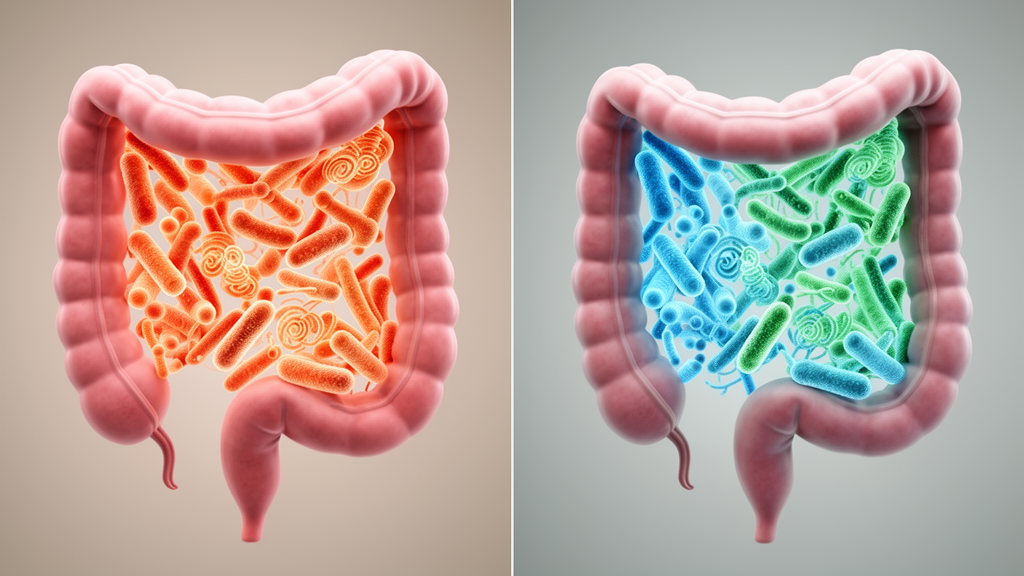
The trillions of bacteria that live in the human gut have become one of the most intensively studied frontiers in medicine, implicated in everything from depression to diabetes. Now a new study from China adds a striking twist to that story: in people with bipolar disorder, the microbial landscape of the gut appears to differ not only according to whether patients also carry metabolic syndrome, but also according to their sex. The research, published in BMC Psychiatry by Xin Zhang of Jining Medical University and colleagues at the Qingdao Mental Health Center, used 16S rRNA gene sequencing to profile the fecal microbiota of 60 inpatients with bipolar disorder, stratified into four groups by sex and by the presence or absence of metabolic syndrome. The findings, while explicitly exploratory, suggest that any attempt to understand the gut-brain connection in severe psychiatric illness may be incomplete without accounting for biological sex.
Bipolar disorder is a chronic and often debilitating mood condition characterized by episodes of mania and depression. What makes it particularly dangerous, however, is not only the psychiatric burden but the physical one. Patients with bipolar disorder die years earlier than the general population on average, and much of that gap is driven by cardiometabolic disease. Metabolic syndrome, a cluster of abnormalities including central obesity, elevated fasting glucose, high triglycerides, low high-density lipoprotein cholesterol, and raised blood pressure, occurs far more frequently in people with bipolar disorder than in the general public. The mechanisms behind this association are still debated, with medications, lifestyle factors, shared genetic vulnerabilities, and chronic inflammation all proposed as contributors. In recent years, the gut microbiota has emerged as a candidate player that could tie many of these threads together, since gut bacteria influence host metabolism, immune signaling, and even neurotransmitter production along the gut-brain axis.
The rationale for the new study rested on a gap in the literature. Although alterations in gut microbial composition have been reported in both metabolic syndrome and bipolar disorder separately, and although sex is well known to shape the microbiome through hormones and other factors, few studies have asked whether the microbial signatures associated with metabolic comorbidity in bipolar disorder differ between men and women. The Chinese team designed a cross-sectional investigation to address precisely that question, enrolling 60 inpatients diagnosed with bipolar disorder according to DSM-5 criteria and dividing them by sex and by whether they met criteria for metabolic syndrome.
The clinical stratification worked as intended. Across the four groups, the researchers found highly significant differences in body mass index, waist circumference, fasting plasma glucose, high-density lipoprotein cholesterol, triglycerides, and systolic blood pressure, all with P values below 0.001. These differences confirmed that the metabolic syndrome grouping captured real and substantial cardiometabolic divergence among the participants. That mattered because the central question was whether the gut microbiome tracked not just with metabolic status in general, but with the intersection of metabolic status and sex.
To answer it, the team sequenced the 16S ribosomal RNA gene, a molecular barcode technique that allows researchers to identify and quantify bacterial taxa in a sample without culturing them. Sequencing reads were grouped into amplicon sequence variants, providing fine-grained resolution of the community structure. The researchers then applied two complementary analytical lenses. Alpha diversity metrics measured how many distinct taxa were present within each individual and how evenly they were distributed, while beta diversity analysis, based on Bray-Curtis dissimilarity and visualized through principal coordinates analysis, asked whether entire microbial communities differed in composition between groups. Differential taxa were flagged using linear discriminant analysis effect size, or LEfSe, a widely used method that identifies features that are both statistically associated with a group and biologically consistent within it.
The results pointed in a consistent direction. Alpha diversity differed across the four groups, with an overall tendency toward higher microbial diversity in the female groups than in the male groups. Higher diversity is often, though not universally, interpreted as a marker of a healthier, more resilient gut ecosystem, so the pattern hints that women in the cohort maintained richer bacterial communities than men regardless of metabolic status. Meanwhile, the principal coordinates analysis based on Bray-Curtis dissimilarity showed a separation trend in overall community structure across the subgroups defined by sex and metabolic syndrome status, suggesting that both variables leave detectable imprints on the architecture of the gut ecosystem.
At the level of individual genera, the picture became more mechanistically interesting. Patients with bipolar disorder and comorbid metabolic syndrome showed lower relative abundances of certain short-chain fatty acid-producing genera and probiotic-associated genera. Short-chain fatty acids, such as butyrate, propionate, and acetate, are metabolites produced when gut bacteria ferment dietary fiber, and they play critical roles in maintaining the integrity of the intestinal barrier, regulating immune tone, and signaling to the nervous system. A depletion of the bacteria that produce them has been reported in a wide range of cardiometabolic and psychiatric conditions, so finding the same depletion pattern in patients carrying both diagnoses is consistent with a broader literature linking microbial metabolic output to systemic inflammation and metabolic dysregulation. Conversely, the patients with metabolic comorbidity showed higher relative abundances of genera previously linked to metabolic or inflammatory disturbances, and the authors note that these patterns showed possible sex-related features, reinforcing the idea that the microbial correlates of metabolic disease in bipolar disorder are not uniform across men and women.
The authors are unusually candid about the limits of what their data can support, and that candor is worth emphasizing. This was a cross-sectional study, meaning it captured a single snapshot in time and cannot establish whether microbial differences precede, follow, or merely co-occur with metabolic syndrome. The cohort included no healthy control group, so the findings speak only to variation within patients with bipolar disorder and cannot identify which features, if any, are specific to the illness itself. The subgroups were modest in size, which limits statistical power and increases vulnerability to confounding. Perhaps most importantly, the study did not perform detailed adjustment for medication exposure, and psychiatric medications, including mood stabilizers and antipsychotics, are known to influence both body weight and gut microbiota, while lifestyle factors such as diet and physical activity were also not fully controlled. The researchers therefore frame their results as exploratory within-cohort associations rather than causal, bipolar-specific, or medication-independent microbial signatures.
Those caveats do not diminish the study’s value so much as they define its place in a larger research program. The microbiome field has repeatedly learned that small, single-center sequencing studies can generate signals that fail to replicate, particularly when confounders like medication and diet are unevenly distributed. What this study contributes is a hypothesis with a specific shape: that sex modifies the relationship between metabolic health and the gut ecosystem in psychiatric patients, and that future work should be powered and designed to test that interaction directly. The authors call for validation in larger, longitudinal studies that include appropriate control groups, which would allow researchers to disentangle illness effects from comorbidity effects, medication effects, and sex effects, and to determine whether microbial changes predict the later development of metabolic syndrome in vulnerable patients.
If the sex-specific patterns hold up, the implications could extend beyond etiology into treatment. Microbiome-targeted interventions, from dietary fiber and prebiotics to probiotics and, more speculatively, fecal microbiota transplantation, are being explored for both metabolic and psychiatric indications. A therapy calibrated to one sex’s microbial profile may not transfer cleanly to the other, and patients with bipolar disorder may require approaches that account for their medication regimens and elevated cardiometabolic risk. For now, the Qingdao team’s message is a measured one: the gut microbiota of patients with bipolar disorder differs in diversity and composition according to both metabolic syndrome status and sex, and any serious effort to exploit that biology for prevention or treatment will need to take both variables seriously from the outset.
Subject of Research: Sex-related gut microbiota differences in bipolar disorder patients with and without metabolic syndrome
Article Title: Sex-related gut microbiota signatures in bipolar disorder with metabolic syndrome: a cross-sectional 16S rRNA gene sequencing study
Article References: Zhang, X., Song, X.-H., Han, W.-J., & Yi, L. (2026). Sex-related gut microbiota signatures in bipolar disorder with metabolic syndrome: a cross-sectional 16S rRNA gene sequencing study. BMC Psychiatry. https://doi.org/10.1186/s12888-026-08629-2
Image Credits: AI Generated
DOI: 10.1186/s12888-026-08629-2
Keywords: gut microbiota, bipolar disorder, metabolic syndrome, 16S rRNA sequencing, sex differences, microbiome, short-chain fatty acids, gut-brain axis, psychiatry, alpha diversity, LEfSe, cross-sectional study
Cite Scienmag News
Glenn Wilkins. (October 15, 2026). Gut Microbes Diverge by Sex in Bipolar Disorder Patients With Metabolic Syndrome. Scienmag. https://scienmag.com/gut-microbes-diverge-by-sex-in-bipolar-disorder-patients-with-metabolic-syndrome/
Glenn Wilkins. "Gut Microbes Diverge by Sex in Bipolar Disorder Patients With Metabolic Syndrome." Scienmag, 15 October 2026, https://scienmag.com/gut-microbes-diverge-by-sex-in-bipolar-disorder-patients-with-metabolic-syndrome/. Accessed 15 October 2026.
Glenn Wilkins. "Gut Microbes Diverge by Sex in Bipolar Disorder Patients With Metabolic Syndrome." Scienmag. October 15, 2026. https://scienmag.com/gut-microbes-diverge-by-sex-in-bipolar-disorder-patients-with-metabolic-syndrome/