


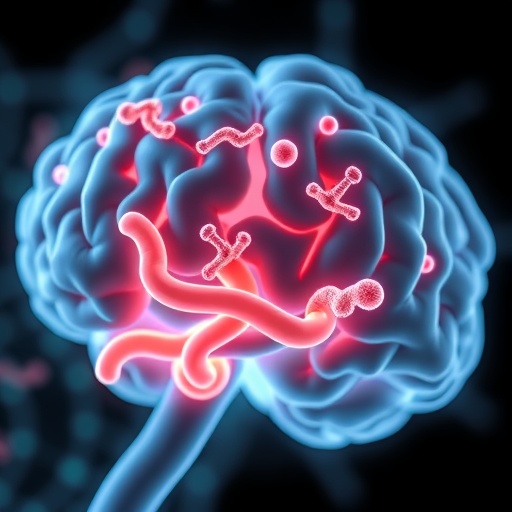
In the evolving landscape of neuroscience, a burgeoning field has cast a spotlight on an often-overlooked player in brain health and disease: the gut microbiome. Recent research conducted by Jiang, Li, Yang, and colleagues, published in Translational Psychiatry, uncovers a profound link between chronic stress, gut bacteria, and gene activity in critical brain neurons. This breakthrough study not only advances our understanding of the gut-brain axis but also opens potential avenues for novel interventions targeting mental health disorders associated with chronic stress.
Chronic stress is a well-documented precipitant for a variety of neuropsychiatric conditions, including depression and anxiety. Traditionally, the pathological mechanisms of stress have been examined with a focus on neural and hormonal pathways, particularly those involving the hypothalamic-pituitary-adrenal (HPA) axis. However, mounting evidence implicates the gut microbiota as a significant modulator of brain function, influencing not only mood but also cognitive and emotional regulation. Jiang et al.’s study deepens this narrative by explicitly linking stress-induced changes in gut microbial populations to alterations in gene expression within specific brain cell types.
To elucidate this complex relationship, the researchers employed a well-validated murine model of chronic stress, meticulously monitoring behavioral, microbiological, and molecular endpoints. Fecal analyses revealed distinct compositional shifts in gut bacterial communities following prolonged stress exposure. More importantly, these microbial changes correlated with modified transcriptional profiles in neurons located within key brain regions governing stress responses. Such convergence suggests that gut bacteria can exert a direct or indirect influence on neuronal gene regulation, potentially via metabolic or immune signaling cascades.
At the cellular level, the team deployed cutting-edge single-cell RNA sequencing technologies to dissect how chronic stress reshapes gene expression in neurons of the medial prefrontal cortex and hippocampus—areas critically involved in executive function and memory. They identified a subset of genes whose expression was significantly dysregulated in stressed mice, many of which are implicated in synaptic plasticity, neurotransmitter synthesis, and neuroinflammation. Strikingly, these gene expression patterns were strongly associated with the observed alterations in gut microbiota, suggesting a mechanistic link.
By integrating microbiome profiling with transcriptomic analysis, the researchers ventured beyond correlation to infer potential causality. Experimental manipulations involving fecal microbiota transplantation (FMT) further substantiated their hypothesis: transferring gut bacteria from stressed to unstressed mice recapitulated some stress-related gene expression changes and behavioral phenotypes. This compelling evidence signals that gut microbes are not mere bystanders but active participants in modulating neural gene dynamics under stress.
Beyond identifying microbial taxa associated with stress, the study probed the molecular signals underlying gut-brain communication. Metabolomic assays uncovered elevated levels of microbial-derived metabolites, including short-chain fatty acids and neurotransmitter precursors, in stressed mice. These compounds can cross the blood-brain barrier or modulate peripheral immune cells, culminating in altered neurophysiology and gene expression profiles within neurons. These findings underscore the gut microbiota’s capability to influence brain function through biochemical mediators.
One of the study’s most innovative aspects is the focus on gene regulatory networks within neurons altered by gut bacteria during chronic stress. Using sophisticated bioinformatics tools, Jiang and colleagues mapped transcription factor activity shifts and epigenetic modifications, revealing a landscape of cellular reprogramming in response to microbial signals. Such neural plasticity at the gene regulatory level suggests potential resilience or vulnerability mechanisms that could be therapeutically targeted.
The implications of these findings are far-reaching. Mental health disorders linked to chronic stress have long evaded effective treatment due to their multifactorial origins and neural complexity. The discovery that gut microbes can fine-tune neuronal gene activity offers an enticing new target: the microbiome itself. This paradigm shift suggests that modifying gut bacteria through diet, probiotics, or microbiota transplantation could ameliorate stress-induced neural dysfunction, possibly preventing or reducing neuropsychiatric symptoms.
Furthermore, this research adds to a growing body of literature suggesting that the gut-brain axis is bidirectional and dynamic. Stress influences gut bacterial composition, while the microbiome reciprocally shapes brain function, creating a feedback loop that can exacerbate or mitigate pathology. Understanding these reciprocal interactions at a molecular and cellular level promises to refine our approaches to treating brain disorders linked to systemic health.
From a methodological standpoint, the combination of chronic stress models, integrative multi-omics analyses, and behavioral assessments exemplifies the power of interdisciplinary research in neuroscience. The technical rigor employed by Jiang et al., including meticulous control of environmental variables and use of advanced computational methods, lends robustness to their conclusions while setting a new standard for future studies in this domain.
Moreover, the fine resolution provided by single-cell transcriptomics allowed the team to discern heterogeneity among neuronal populations in response to microbial cues. This finding is particularly significant because it acknowledges that the brain’s response to systemic signals is not monolithic but varies across different cell types and circuits. Targeting such nuanced cellular differences may pave the way for more precise, cell-specific interventions.
While the study primarily utilizes murine models, the translational potential to human health is evident. The human gut microbiome exhibits remarkable complexity and individual variability, akin to that observed in mice. Future research building on these findings could explore whether similar microbial-neuronal gene interactions occur in people experiencing chronic stress or mental illness, highlighting potential biomarkers for diagnosis or treatment responsiveness.
Jiang and colleagues also highlighted several avenues for further investigation. For instance, the specific signaling pathways linking gut metabolite production to epigenetic remodeling in neurons remain to be fully elucidated. Additionally, identifying the microbial strains with the most profound neuromodulatory effects could refine microbiome-based therapeutic strategies. Addressing these questions will require integration of microbiology, neurogenetics, immunology, and behavioral science in a concerted effort.
The study additionally raises intriguing questions about resilience: are there gut bacterial profiles that confer protection against the detrimental neural effects of stress? If so, manipulating the microbiome composition toward such protective communities may represent an effective prophylactic approach. Mechanistic insights from this research could thus inform personalized medicine approaches tailored to an individual’s microbiota and neurological state.
In summary, this groundbreaking study by Jiang, Li, Yang, and colleagues charts new territory in understanding how chronic stress exerts its deleterious effects on the brain. By unraveling the molecular link connecting gut bacteria to neuronal gene regulation, it lays vital groundwork for microbiome-targeted interventions in neuropsychiatric disorders. As our knowledge of the gut-brain axis deepens, so too does the promise of innovative treatments that leverage the symbiotic relationship between humans and their microbial inhabitants—a relationship more integral to mental health than previously imagined.
Cite Scienmag News
Morgan Morrow. (August 3, 2025). Gut Bacteria Link to Brain Gene Activity Under Stress. Scienmag. https://scienmag.com/gut-bacteria-link-to-brain-gene-activity-under-stress/
Morgan Morrow. "Gut Bacteria Link to Brain Gene Activity Under Stress." Scienmag, 3 August 2025, https://scienmag.com/gut-bacteria-link-to-brain-gene-activity-under-stress/. Accessed 3 September 2026.
Morgan Morrow. "Gut Bacteria Link to Brain Gene Activity Under Stress." Scienmag. August 3, 2025. https://scienmag.com/gut-bacteria-link-to-brain-gene-activity-under-stress/


