

Friday, October 23, 2026
Science
No Result
View All Result
  • Login
  • HOME
  • SCIENCE NEWS
  • CONTACT US
  • HOME
  • SCIENCE NEWS
  • CONTACT US
No Result
View All Result
Scienmag
No Result
View All Result
Home Science News Biology

Growing Up Hungry: Larval Food Stress Hits Female Mosquitoes Hardest

October 23, 2026
in Biology
Daisy Hatcher
By Daisy Hatcher Scienmag Editorial Profile - Food Safety and Toxicology
Reading Time: 2 mins read
0
Growing Up Hungry: Larval Food Stress Hits Female Mosquitoes Hardest

Growing Up Hungry: Larval Food Stress Hits Female Mosquitoes Hardest

65
SHARES
587
VIEWS
Share on FacebookShare on Twitter
ADVERTISEMENT

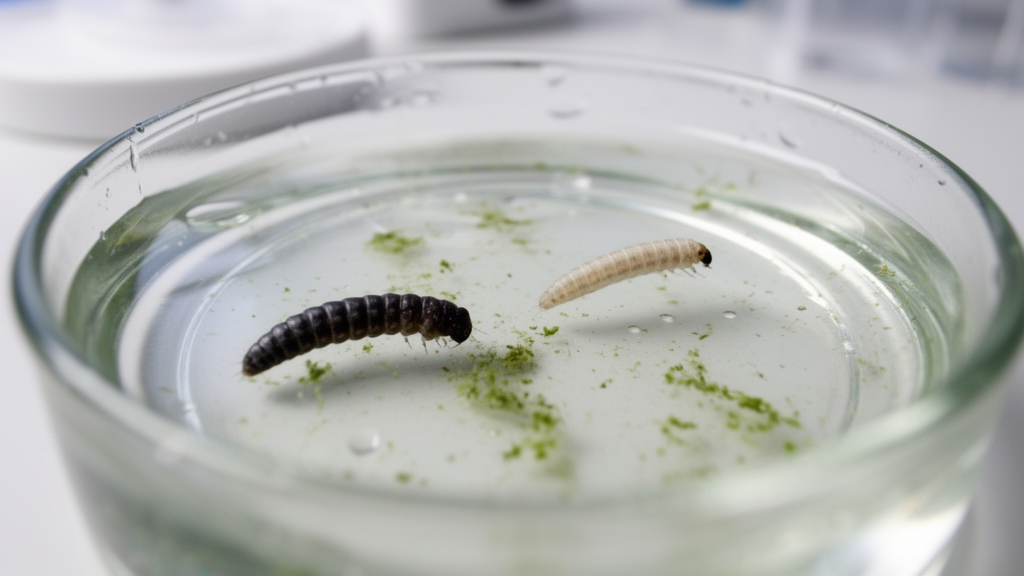
Larval nutrition leaves measurable marks on adult mosquitoes, and a new experimental study of the northern house mosquito Culex pipiens shows that those marks differ sharply between the sexes. Researchers reared larvae under five food levels, ranging from full ad libitum feeding down to just 5% of that amount, and tracked how each level affected survival, development, sex ratio and adult wing morphology. The results, published open access in Parasites & Vectors, reveal that developmental stress becomes detectable well before larvae starve, with nonlinear thresholds emerging around 33–38% of the ad libitum food supply.

The experimental design was straightforward but comprehensive. Larvae were assigned to nutritional treatments of 100%, 50%, 25%, 10% and 5% of the ad libitum condition, allowing the team to map exactly where stress responses switch on. Food restriction reduced survival, slowed and desynchronized development, decreased the proportion of females in emerging cohorts, reduced wing size, altered wing shape and increased variation in wing asymmetry.

These traits together provide a multi-dimensional picture of how a developing mosquito responds to a shrinking food supply. One of the study's clearest findings is that most morphological responses were sex-dependent, with females showing greater sensitivity to nutritional restriction than males. The responses were not linear.

Life-history and morphological traits showed nonlinear patterns, with statistical thresholds detected at roughly 33–38% of the ad libitum level. Among the treatment levels tested, measurable developmental stress first became apparent at 25% of full feeding, while severe population collapse occurred below 10%. This kind of quantitative boundary distinguishes the tested levels at which stress becomes detectable from those at which populations crash.

The researchers also asked which traits serve as the most reliable indicators of nutritional stress. Developmental time and wing size emerged as the most sensitive measures, responding clearly across the food gradient. Fluctuating asymmetry, a commonly used stress marker in insects, showed comparatively lower sensitivity in this system.

Beyond its basic-science interest, the work has practical implications. Environmental conditions during larval development influence many adult life-history traits in holometabolous insects, and understanding these effects is essential for vector control programs and for the laboratory rearing of mosquitoes used in research. By defining biologically meaningful stress levels, the study offers a quantitative framework for optimizing mosquito rearing protocols used in vector biology studies.

Subject of Research: Sex-dependent effects of larval food restriction on life-history and wing traits in Culex pipiens mosquitoes

Article Title: The cost of growing up hungry: sex-dependent effects of larval diet in Culex pipiens

Article References: Santillán-Guayasamín, S., Christe, P., & Glaizot, O. (2026). The cost of growing up hungry: sex-dependent effects of larval diet in Culex pipiens. Parasites & Vectors. https://doi.org/10.1186/s13071-026-07627-3

Image Credits: AI Generated

DOI: 10.1186/s13071-026-07627-3

Keywords: Culex pipiens, larval nutrition, mosquitoes, developmental stress, life-history traits, wing morphology, fluctuating asymmetry, sex-dependent, vector biology, thresholds, Parasites & Vectors, cost

Cite Scienmag News

Daisy Hatcher. (October 23, 2026). Growing Up Hungry: Larval Food Stress Hits Female Mosquitoes Hardest. Scienmag. https://scienmag.com/growing-up-hungry-larval-food-stress-hits-female-mosquitoes-hardest/

Daisy Hatcher. "Growing Up Hungry: Larval Food Stress Hits Female Mosquitoes Hardest." Scienmag, 23 October 2026, https://scienmag.com/growing-up-hungry-larval-food-stress-hits-female-mosquitoes-hardest/. Accessed 23 October 2026.

Daisy Hatcher. "Growing Up Hungry: Larval Food Stress Hits Female Mosquitoes Hardest." Scienmag. October 23, 2026. https://scienmag.com/growing-up-hungry-larval-food-stress-hits-female-mosquitoes-hardest/


Tags: costCulex pipiensdevelopmental stressdevelopmental stress in mosquitoeseffects of larval nutrition on adult mosquito survivalfemale mosquito vulnerability to nutritional stressfluctuating asymmetryimpact of food restriction on mosquito morphologyimplications for mosquito population dynamicslarval food stress thresholdslarval nutritionlife history traitsmorphological markers of larval stressMosquito larval nutritionmosquito sex ratio alterations due to nutritionmosquitoesnon-linear developmental responses in mosquitoesParasites & Vectorssex-dependentsex-dependent effects in mosquito developmentthresholdsvector biologywing morphologywing morphology changes in mosquitoes
Share26Tweet16
Previous Post

Bedside Stomach Ultrasound Linked to Fewer Aspiration Events in Emergency Appendectomy

Next Post

Nickel doping supercharges zinc titanate spinel for dye cleanup under UV light

Related Posts

Eighteen-Year Moth Survey Captures 1,179 Species Across South Korean Islands
Biology

Eighteen-Year Moth Survey Captures 1,179 Species Across South Korean Islands

October 23, 2026
Computational framework maps fluid and solid stresses in the embryonic heart
Biology

Computational framework maps fluid and solid stresses in the embryonic heart

October 23, 2026
Wolbachia Genomes Evolve Rapidly in Mosquito Cell Culture
Biology

Wolbachia Genomes Evolve Rapidly in Mosquito Cell Culture

October 23, 2026
Primer: Genotype Interactions Maintain Host and Parasite Diversity
Biology

Primer: Genotype Interactions Maintain Host and Parasite Diversity

October 23, 2026
Three Forces Drive Bacterial Toxin Evolution
Biology

Three Forces Drive Bacterial Toxin Evolution

October 23, 2026
Engineered RepE Variants Tune Plasmid Copy Number in Bacteria
Biology

Engineered RepE Variants Tune Plasmid Copy Number in Bacteria

October 23, 2026
Next Post
Nickel doping supercharges zinc titanate spinel for dye cleanup under UV light

Nickel doping supercharges zinc titanate spinel for dye cleanup under UV light

  • Mothers who receive childcare support from maternal grandparents show more optimized

    Mothers who receive childcare support from maternal grandparents show more parental warmth, finds NTU Singapore study

    27656 shares
    Share 11059 Tweet 6912
  • University of Seville Breaks 120-Year-Old Mystery, Revises a Key Einstein Concept

    1061 shares
    Share 424 Tweet 265
  • Bee body mass, pathogens and local climate influence heat tolerance

    682 shares
    Share 273 Tweet 171
  • Researchers record first-ever images and data of a shark experiencing a boat strike

    546 shares
    Share 218 Tweet 137
  • Groundbreaking Clinical Trial Reveals Lubiprostone Enhances Kidney Function

    531 shares
    Share 212 Tweet 133
Science

Embark on a thrilling journey of discovery with Scienmag.com—your ultimate source for cutting-edge breakthroughs. Immerse yourself in a world where curiosity knows no limits and tomorrow’s possibilities become today’s reality!

RECENT NEWS

  • Rural Digital Economy Boosts Green Agricultural Productivity in China
  • Eighteen-Year Moth Survey Captures 1,179 Species Across South Korean Islands
  • Nickel doping supercharges zinc titanate spinel for dye cleanup under UV light
  • Growing Up Hungry: Larval Food Stress Hits Female Mosquitoes Hardest

Categories

  • Agriculture
  • Anthropology
  • Archaeology
  • Athmospheric
  • Biology
  • Biotechnology
  • Blog
  • Bussines
  • Cancer
  • Chemistry
  • Climate
  • Earth Science
  • Editorial Policy
  • Marine
  • Mathematics
  • Medicine
  • Pediatry
  • Policy
  • Psychology & Psychiatry
  • Science Education
  • Science News
  • Social Science
  • Space
  • Technology and Engineering

Subscribe to Blog via Email

Enter your email address to subscribe to this blog and receive notifications of new posts by email.

Join 5,152 other subscribers

© 2025 Scienmag - Science Magazine

Welcome Back!

Login to your account below

Forgotten Password?

Retrieve your password

Please enter your username or email address to reset your password.

Log In
No Result
View All Result
  • HOME
  • SCIENCE NEWS
  • CONTACT US

© 2025 Scienmag - Science Magazine

Discover more from Science

Subscribe now to keep reading and get access to the full archive.

Continue reading