


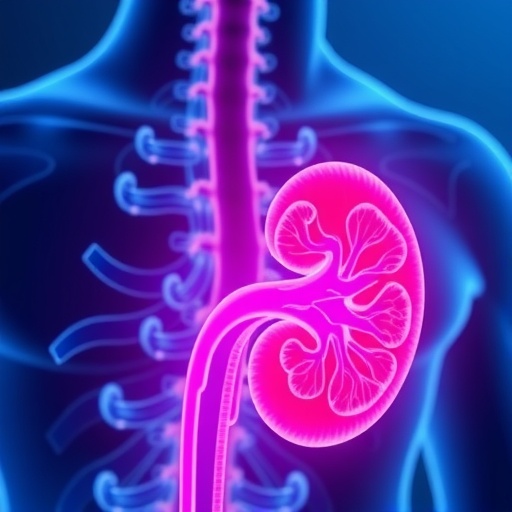
Kidney stones are notorious for inflicting some of the most excruciating pain known to humans, disrupting daily activities and frequently prompting visits to emergency departments. In the United States alone, approximately one in every eleven individuals will suffer from a kidney stone episode at some point, and alarmingly, nearly half will face a recurrence of this painful condition. Despite long-standing evidence emphasizing the benefits of high fluid intake as a primary preventive measure, stone recurrence remains disappointingly common, highlighting the need for deeper investigation into adherence challenges and innovative solutions.
A comprehensive new investigation spearheaded by the Urinary Stone Disease Research Network and coordinated by researchers at the Duke Clinical Research Institute sought to address a critical question: can behavioral interventions be effectively used to help patients increase hydration and thereby reduce the recurrence of urinary stones? This randomized controlled trial, enrolling 1,658 adolescent and adult participants across six major U.S. medical centers—including UT Southwestern Medical Center, Washington University in St. Louis, and Mayo Clinic—marked the most extensive behavioral study ever conducted in this domain.
The experimental intervention was multifaceted, integrating technological and motivational strategies aimed at maximizing fluid consumption. Participants received Bluetooth-enabled smart water bottles capable of precisely measuring daily fluid intake, bespoke “fluid prescriptions” tailored to individual urine output goals, financial incentives, frequent reminder texts, and personalized health coaching. These components collectively were designed to push individuals beyond standard advice to markedly increase their hydration levels with the aim of achieving at least 2.5 liters of urine output per day, a benchmark associated with a lower likelihood of stone formation.
Over a rigorous two-year follow-up, the study employed a robust methodology that distinguished itself by monitoring actual stone recurrence rather than relying solely on indirect metrics such as self-reported fluid intake or urine volume. Participants underwent routine imaging and symptom surveys, ensuring that new stone development or growth of existing stones was accurately tracked. This methodological refinement provided an unprecedented level of clinical precision in assessing the true efficacy of hydration-focused interventions in stone prevention.
Notably, the behavioral program succeeded in encouraging participants to consume more fluids, reflected in increased average urine output compared to the control group receiving standard care alone. However, despite these improvements in hydration behavior, the augmentation in fluid intake fell short of significantly reducing symptomatic stone recurrence rates across the cohort as a whole. This unexpected outcome underscores the complexity of managing kidney stone disease, especially in sustaining high fluid intake consistently over extended periods in real-world settings.
One of the pivotal insights emerging from this trial is the recognition of adherence as a formidable obstacle. Maintaining very high daily fluid consumption proved more challenging than anticipated, even when participants were equipped with state-of-the-art technology and given financial motivation alongside regular behavioral support. This difficulty in sustaining hydration likely contributes substantially to the persistent high rates of stone recurrence observed in this chronic condition, illustrating that knowledge and intention alone may not suffice to alter entrenched behavioral patterns effectively.
Furthermore, the study brings to light the critical necessity for a paradigm shift towards precision prevention in urinary stone disease. Instead of prescribing a uniform hydration goal for all patients, there is growing evidence advocating for individualized fluid targets that account for patient-specific variables such as age, body size, lifestyle factors, and underlying health conditions. Recognizing inter-individual variation in hydration needs could optimize preventive strategies and enhance adherence by tailoring recommendations to each patient’s unique physiological and environmental context.
The clinical implications from leading investigators resonate strongly within the urology and nephrology communities. Gregory E. Tasian, M.D., a principal investigator based at the Children’s Hospital of Philadelphia, emphasizes the importance of identifying which patients genuinely benefit from stringent fluid goals versus those who might require alternative or adjunctive preventive approaches. Understanding the underlying reasons behind adherence challenges is equally vital, potentially involving psychological, occupational, or social barriers that hinder sustained behavior change.
This landmark trial also calls attention to future research directions that extend beyond hydration alone. Exploring new therapies capable of modulating urinary chemistry to prevent mineral crystallization, developing behavioral interventions that more effectively integrate into patients’ lifestyles, and leveraging personalized medicine frameworks represent promising avenues for reducing the burden of kidney stone disease. Innovation is needed not only in clinical treatment but also in overcoming the practical realities that patients face daily.
Alana Desai, M.D., the study’s first author and lead investigator at Washington University in St. Louis, poignantly captures the human toll of kidney stone disease. She notes that the condition is chronic and episodic, characterized by severe pain events that unpredictably disrupt sleep, work productivity, and overall quality of life. Patients yearn for simple, reliable means to mitigate their risk and avoid these potentially debilitating stone episodes, highlighting the urgency of translating research findings into effective, real-world solutions.
The Urinary Stone Disease Research Network’s groundbreaking study, funded by the National Institute of Diabetes and Digestive and Kidney Diseases, represents a significant advance in understanding the behavioral dimensions of kidney stone prevention. By rigorously testing the upper limits of behavioral interventions and documenting their benefits and limitations, this research paves the way for more nuanced, tailored strategies that could ultimately transform patient care.
Despite the sobering outcome regarding fluid intake and stone recurrence, the study’s detailed data and methodological innovations provide a rich resource for scientists and clinicians. It underscores the daunting challenges patients face in adhering to hydration prescriptions over the long term and invites a collaborative reconsideration of prevention paradigms. As the field moves towards personalized interventions, integrating technological, behavioral, and pharmacological advances might hold the key to reducing the global kidney stone burden.
This comprehensive trial serves as a clarion call for continued investment in research that balances empirical rigor with practical application. Achieving sustainable prevention in kidney stone disease demands an interdisciplinary approach, encompassing clinical science, behavioral psychology, patient education, and innovative technology. Only through such integrated efforts can the debilitating cycle of kidney stones and recurrent pain be meaningfully interrupted.
Cite Scienmag News
Ophelia Keating. (March 20, 2026). Groundbreaking Study Evaluates Hydration Strategies to Prevent Kidney Stones. Scienmag. https://scienmag.com/groundbreaking-study-evaluates-hydration-strategies-to-prevent-kidney-stones/
Ophelia Keating. "Groundbreaking Study Evaluates Hydration Strategies to Prevent Kidney Stones." Scienmag, 20 March 2026, https://scienmag.com/groundbreaking-study-evaluates-hydration-strategies-to-prevent-kidney-stones/. Accessed 3 September 2026.
Ophelia Keating. "Groundbreaking Study Evaluates Hydration Strategies to Prevent Kidney Stones." Scienmag. March 20, 2026. https://scienmag.com/groundbreaking-study-evaluates-hydration-strategies-to-prevent-kidney-stones/


