An international team of tide-gauge specialists has released GESLA Version 4, the latest major update to one of the most widely used observational collections in coastal oceanography. The dataset, known as the Global Extreme Sea Level Analysis, now contains 136,069 station-years of higher-frequency sea-level measurements spread across 6,682 individual records drawn from 43 international, national and regional data sources. Compared with the previous release, GESLA-3, the new version adds 45,048 station-years of observations and 1,563 records, an expansion the authors describe as substantial. The work is presented in a preprint currently under review for the journal Earth System Science Data, with discussion opened on 28 October 2026.
The records were obtained from 43 international, national and regional data sources, and the paper's short summary states that the measurements come from 119 countries. The short summary accompanying the paper states that the team combined these measurements, checked them for potential problems and improved how they can be accessed.
GESLA first appeared in 2009, and the new paper does more than announce the fourth release. It traces how the dataset has evolved across all four versions since that first publication, and it reviews how scientific use of the archive has grown and diversified. As part of that review, the authors examined more than 200 published studies that have relied on the collection. The dataset has, according to the abstract, supported numerous published studies and major national and international assessments, including assessment reports of the Intergovernmental Panel on Climate Change.
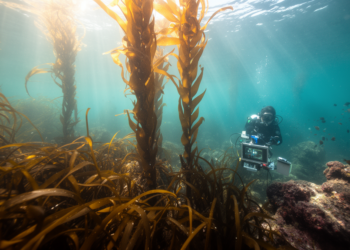
The scientific questions the archive serves are broad. According to the abstract, the dataset is an observational resource for investigating tides, storm surges, extreme sea levels and other coastal and oceanographic processes.
Version 4 is not simply a bigger pile of numbers. The authors report improvements to data processing and consistency, including a systematic review of record time zones.
Accessibility has also been enhanced. GESLA-4 can now be reached programmatically through an Environmental Research Division’s Data Access Program, or ERDDAP, server, and individual stations can be downloaded directly via Amazon Web Services.
The paper itself documents the machinery behind the dataset. The authors describe the assembly of records from the 43 contributing sources, the processing pipeline applied to the raw measurements, the file format in which the data are distributed, and the routes through which users can obtain them.
The short summary of the paper frames the societal stake directly: understanding how coastal water levels change requires reliable tide gauge records, and the expanded collection supports research on tides, storm surges and other coastal and ocean processes that in turn informs how communities respond to changing coastal conditions. In addition to incorporating new data sources, GESLA-4 extends existing records, according to the abstract.
By surveying how the dataset has been used since 2009, the authors document the range of applications the community has found for it, from studies of tides and storm surges to extreme sea levels and broader coastal and oceanographic questions. The authors state that GESLA-4 provides an extensive and readily accessible observational resource for investigating coastal sea levels, their variability and extremes, and their response to a changing climate.
As with any preprint, the findings described are those of the authors and are subject to peer review within Earth System Science Data before formal publication. The dataset itself, versioned as GESLA higher-frequency sea-level dataset Version 4.1, is archived with a Zenodo digital object identifier, giving users a citable, stable reference for the data they analyse.
Subject of Research: A quasi-global higher-frequency sea-level dataset compiled from tide gauge records worldwide
Article Title: GESLA Version 4: Further Enhancements to the Global Higher-Frequency Sea-Level Dataset
Article References: Haigh, I., Marcos, M., Talke, S. A., Carneiro-Barros, J. E., Hague, B. S., Thompson, P., Wilson, S., Nagaraj, M., Beemster, J. G. W., Kenwright, C., Martin, A., Quadrado, G., Wahl, T., & Hart-Davis, M. G. (2026). GESLA Version 4: Further Enhancements to the Global Higher-Frequency Sea-Level Dataset. https://doi.org/10.5194/essd-2026-809
Image Credits: AI Generated
Keywords: sea level, tide gauges, GESLA, storm surges, extreme sea levels, coastal flooding, tides, open data, climate, oceanography, ERDDAP, IPCC
Cite Scienmag News
Violet Maxwell. (October 28, 2026). Global Sea-Level Archive Grows to 136,000 Station-Years in Fourth Release. Scienmag. https://scienmag.com/global-sea-level-archive-grows-to-136000-station-years-in-fourth-release/
Violet Maxwell. "Global Sea-Level Archive Grows to 136,000 Station-Years in Fourth Release." Scienmag, 28 October 2026, https://scienmag.com/global-sea-level-archive-grows-to-136000-station-years-in-fourth-release/. Accessed 29 October 2026.
Violet Maxwell. "Global Sea-Level Archive Grows to 136,000 Station-Years in Fourth Release." Scienmag. October 28, 2026. https://scienmag.com/global-sea-level-archive-grows-to-136000-station-years-in-fourth-release/