


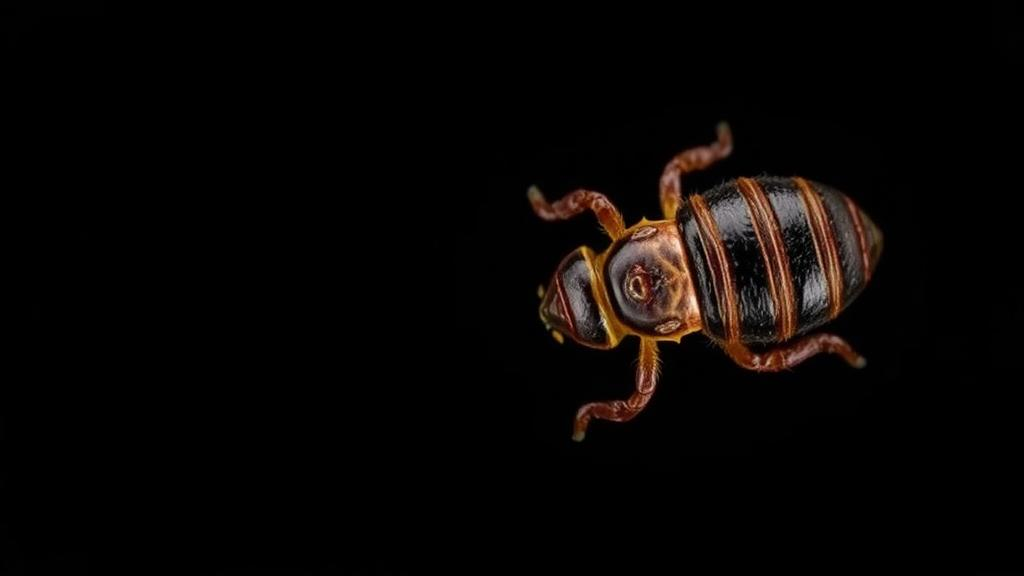
In the southern regions of Ghana, a plump, cream-colored grub known locally as Akokono has long been prized as a delicacy. The larva of the African palm weevil, Rhynchophorus phoenicis, is boiled, fried, and roasted in homes, specialty shops, and street stalls, and it now supports a small but growing commercial farming industry. As global interest in edible insects surges on the promise of sustainable protein, researchers have taken a hard look at what exactly farmed Akokono delivers nutritionally, and whether it is genuinely safe to eat. A new study from Ghana’s CSIR-Food Research Institute, published in Food Science & Nutrition, offers one of the most detailed safety and quality profiles to date for farmed palm weevil larvae, and its findings are a mix of encouraging nutrition and sobering caution.
The research team obtained third-instar larvae from a single commercial rearing batch at a farm in Kumasi, where the insects were raised on oil palm frond substrate under controlled conditions. The larvae, averaging just over eight grams each, were freeze-killed and then divided into four treatment groups: fresh and washed, boiled, fried, and roasted. This allowed the investigators to compare how each common culinary preparation affected the proximate composition, mineral content, heavy metal burden, and microbiological quality of the final product. All proximate and mineral analyses were performed in triplicate on homogenized composites of roughly twenty larvae each, while microbiological testing was conducted in duplicate, with one-way analysis of variance and Tukey’s post hoc tests used to identify statistically significant differences among treatments.
The nutritional results highlight how dramatically cooking method reshapes the food value of these larvae. Fresh palm weevil larvae contained about 71 percent moisture and roughly 11.8 percent protein. Frying drove moisture down to 30.5 percent and concentrated the protein to 27.5 percent, an increase of more than 133 percent relative to the raw material, while roasting lifted protein to 25.3 percent. Boiling, by contrast, slightly increased moisture and actually reduced protein to 10.7 percent, likely because water-soluble nitrogenous compounds leached into the cooking water. Fat told a different story: frying more than doubled the fat content to 34.4 percent as the larvae absorbed cooking oil, pushing the energy value of the fried sample to 442 kilocalories per 100 grams, compared with 182 for the fresh larvae and only 173 for the boiled ones.
Mineral analysis revealed that calcium and iron were the dominant essential minerals in all samples, and both increased significantly with dry-heat cooking. Calcium rose from about 82 parts per million in fresh larvae to 143 ppm in fried and 121 ppm in roasted samples, while iron climbed from 24 ppm to 52 and 45 ppm respectively. Manganese and copper followed the same pattern. Zinc behaved differently, with fresh and boiled samples retaining more of this trace element than the fried and roasted ones, suggesting that moisture loss during high-temperature cooking can carry some dissolved minerals out of the tissue. The authors attribute the overall mineral profile partly to the feed substrate on which the larvae were reared, and they note that such profiles vary widely with geography, diet, and larval life stage.
The chemical safety findings are where the study turns cautionary. Mercury and arsenic were not detected above the analytical method’s limits, but those limits, 0.175 milligrams per kilogram for mercury and 0.425 for arsenic, actually exceed the Codex Alimentarius maximum tolerable limits of 0.02 and 0.01 milligrams per kilogram respectively. In other words, the method could not demonstrate compliance with international thresholds for these two metals, an uncertainty the researchers flag explicitly. More concretely, lead concentrations in all samples ranged from 0.33 to 0.39 milligrams per kilogram, slightly exceeding the Codex limit of 0.30, and cadmium ranged from 0.82 to 0.94 milligrams per kilogram, far above the tolerable limit of 0.05. Cadmium, classified by the International Agency for Research on Cancer as a Group 1 human carcinogen, is associated with kidney damage and bone demineralization under chronic exposure.
To translate these concentrations into health risk, the team applied standard United States Environmental Protection Agency frameworks, assuming a daily intake of 50 grams of larvae and a 70-kilogram adult body weight. Target hazard quotients for all four metals came in below 1.0, the threshold for acceptable non-carcinogenic risk, though values for cadmium and arsenic hovered near or above 0.5, close enough that the authors urge preemptive measures before they potentially cross the line. For lead, which has no established safe threshold for neurodevelopmental effects, the margin of exposure calculated against the European Food Safety Authority benchmark ranged from 1.79 to 1.96, far below the value of 10 generally considered indicative of low concern. For cadmium, incremental lifetime cancer risk estimates of 3.4 to 4.1 times ten to the minus six exceeded the EPA’s acceptable level of one times ten to the minus six, though they remained below the high-risk threshold. A sensitivity analysis showed that at intakes of 10 grams per day all hazard quotients stayed comfortably low, but at 30 grams per day or more, cadmium risk climbed appreciably for fried and roasted portions.
Microbiological testing added another layer of nuance. Raw, unwashed larvae carried aerobic mesophile counts of 7.0 log colony-forming units per gram, well above the European Union limit of 5 log for ready-to-eat foods, along with substantial loads of yeasts, molds, and Enterobacteriaceae. Simply rinsing the larvae under running water reduced aerobic counts and Enterobacteriaceae by roughly two log cycles. Boiling, frying, and roasting then cut aerobic counts to between 1.5 and 3.0 log, within acceptable limits for cooked products, and eliminated detectable yeasts, molds, and Enterobacteriaceae entirely. Crucially, Staphylococcus aureus and Clostridium perfringens were not detected in any sample, meeting both Codex and EU criteria. The message is clear: raw Akokono, as currently produced, is not microbiologically fit for direct consumption, but thorough cooking renders it safe on these indicators.
The researchers also employed ultraviolet-visible spectroscopy as a fingerprinting tool, scanning pulverized samples between 200 and 400 nanometers. Fresh and boiled larvae, with their high moisture, showed indistinct absorption peaks below 300 nanometers, consistent with peptide bonds and saturated fatty acids. Fried and roasted samples produced distinctive peaks at longer wavelengths, between 300 and 375 nanometers, which the authors interpret as evidence of altered protein structure and, in the fried sample, possible lipid oxidation and Maillard reaction products from protein-sugar interactions. The fried sample alone displayed a standalone peak at 350 nanometers. While largely confirmatory, the spectral data illustrate how each cooking method leaves a unique chemical signature on the larvae and reinforce the conclusion that these insects are complex matrices of proteins, lipids, and secondary metabolites.
Water activity measurements rounded out the physicochemical picture, ranging from 0.72 in roasted samples to 0.77 in boiled ones. Interestingly, although fried larvae had lower moisture content than roasted ones, their water activity values were statistically indistinguishable, underscoring that moisture content and water availability do not scale linearly. Both fried and roasted products, with water activity near 0.72 to 0.73, would be expected to resist microbial growth similarly during storage, a relevant consideration for shelf life as commercial Akokono production scales up.
The authors are careful to frame their conclusions within the limits of their design: all samples came from a single commercial batch at one Kumasi farm, and the nutritional and contaminant profiles of R. phoenicis are known to vary with rearing substrate, season, geography, and developmental stage. Generalizing these results to wild-harvested larvae or other farms would be premature, and the team calls for future studies spanning multiple batches, farms, and seasons to establish representative reference values. Still, the study delivers an actionable picture for Ghanaian policymakers and food safety authorities. Farmed palm weevil larvae are undeniably nutritious, offering protein levels that rival conventional meats when dry-cooked, along with meaningful calcium and iron. But the lead and cadmium findings, the lead margin of exposure in particular, and the high microbial loads in raw product signal that standards, hygienic processing protocols, and routine contaminant monitoring must accompany any push to mainstream Akokono as a food of the future. Cooking, the data show, is not optional; it is the difference between a hazardous raw grub and a safe, protein-rich plate.
Subject of Research: Nutritional composition, heavy metal contamination, and microbiological safety of farmed palm weevil larvae (Rhynchophorus phoenicis) prepared by different cooking methods in Ghana
Article Title: Nutritional Composition, Chemical Safety, and Microbiological Quality of Farmed Palm Weevil Larvae (Rhynchophorus phoenicis) From a Commercial Rearing Unit in Ghana
Article References: Mintah, B. K., Ketemepi, H. K., Asiamah, E., Agyekum, A. A., Blessie, E. J. S., Arthur, A. B., & Dabbour, M. (2026). Nutritional Composition, Chemical Safety, and Microbiological Quality of Farmed Palm Weevil Larvae ( Rhynchophorus phoenicis ) From a Commercial Rearing Unit in Ghana. Food Science & Nutrition, 14(10), Article e72402. https://doi.org/10.1002/fsn3.72402
Image Credits: AI Generated
DOI: 10.1002/fsn3.72402
Keywords: edible insects, palm weevil larvae, Akokono, food safety, heavy metals, cadmium, lead, entomophagy, Ghana, food processing, microbiology, sustainable protein
Cite Scienmag News
Daisy Hatcher. (October 1, 2026). Ghana’s Palm Weevil Larvae Pack Protein but Carry Heavy Metal Concerns. Scienmag. https://scienmag.com/ghanas-palm-weevil-larvae-pack-protein-but-carry-heavy-metal-concerns/
Daisy Hatcher. "Ghana’s Palm Weevil Larvae Pack Protein but Carry Heavy Metal Concerns." Scienmag, 1 October 2026, https://scienmag.com/ghanas-palm-weevil-larvae-pack-protein-but-carry-heavy-metal-concerns/. Accessed 4 October 2026.
Daisy Hatcher. "Ghana’s Palm Weevil Larvae Pack Protein but Carry Heavy Metal Concerns." Scienmag. October 1, 2026. https://scienmag.com/ghanas-palm-weevil-larvae-pack-protein-but-carry-heavy-metal-concerns/


