

Wednesday, July 15, 2026
Science
No Result
View All Result
  • Login
  • HOME
  • SCIENCE NEWS
  • CONTACT US
  • HOME
  • SCIENCE NEWS
  • CONTACT US
No Result
View All Result
Scienmag
No Result
View All Result
Home Science News Cancer

Genetic findings from tumor-prone reptile reveal clues for cancer research

July 15, 2026
in Cancer
Reading Time: 2 mins read
0
Genetic findings from tumor-prone reptile reveal clues for cancer research

Genetic findings from tumor-prone reptile reveal clues for cancer research

65
SHARES
587
VIEWS
Share on FacebookShare on Twitter
ADVERTISEMENT

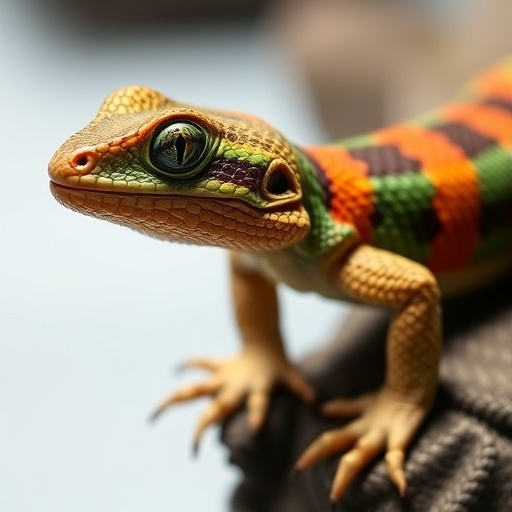
A new genetics study from the University of Nottingham reports that a popular pet gecko—an exceptional “lemon frost” morph of the leopard gecko—has an unusually high natural tendency to develop aggressive tumors. The researchers argue that the species could become a powerful comparative model for understanding how cancer arises and spreads.

The work, published in BMC Biology, focuses on why some animals are highly susceptible to cancer while others show strong resistance. In this case, the lemon frost morph is notable for developing tumors in roughly 80% of individuals, with many cases becoming aggressive and metastatic.

To uncover the biological basis of this vulnerability, the team used whole-genome sequencing and compared tumor tissue to healthy tissue obtained from the same geckos. This within-individual design helps distinguish changes associated with cancer from background genetic variation.

Across the tumors, the researchers identified recurrent genomic alterations rather than one-off mutations. Many affected genes and disrupted biological processes are known to participate in cancer pathways in other organisms, including humans, suggesting shared mechanisms beneath different evolutionary histories.

Because lemon frost geckos develop tumors naturally at a relatively early age, the study design avoids the need for tumor induction typical of many traditional laboratory models. The natural timing offers an unusually clear window into how cancer originates, evolves, and disseminates across the body.

The researchers also highlight that comparative cancer biology can benefit from expanding beyond a narrow set of laboratory species. Species that spontaneously develop cancers at high rates may complement standard models and help generate hypotheses more broadly relevant to human disease.

The findings may also inform translational directions: if conserved pathways are confirmed, they could guide improved strategies for prevention, detection, and treatment. The authors emphasize that studying both cancer-prone and cancer-resistant animals can reveal evolutionary solutions to a disease that affects many taxa.

Beyond its scientific impact, the study underscores the value of biodiversity. Protecting varied species systems preserves natural experiments that may offer insights into complex diseases like cancer.

Subject of Research: Animals (leopard geckos; “lemon frost” morph)
Article Title: Scientists uncover genetic clues from a tumour-prone reptile that could advance cancer research
News Publication Date: 15-Jul-2026
Web References: http://dx.doi.org/10.1186/s12915-026-02661-0
References: 10.1186/s12915-026-02661-0
Image Credits: Dr Tony Gamble, Marquette University
Keywords: cancer research, genomics, whole-genome sequencing, tumor evolution, metastasis, comparative oncology, reptiles, leopard gecko, BMC Biology

Tags: comparative genomics in reptilesearly-onset tumors in reptilesevolutionary insights into cancer mechanismsgecko cancer modelgenetic basis of cancer in reptilesgenetic factors in tumor resistancemetastatic tumor progression in reptilesnatural cancer development in animalspet reptile health and geneticsshared cancer pathways across speciestumor susceptibility in pet reptileswhole-genome sequencing in geckos
Share26Tweet16
Previous Post

Researchers Map Zinc-Ion Battery Future Using Atomic Layer Deposition for Regulation

Next Post

KAIST Unveils Technology to Make Personalized AI Safer

Related Posts

Discovery Paves Way for Drug Therapies for Hypopigmentation Conditions
Cancer

Discovery Paves Way for Drug Therapies for Hypopigmentation Conditions

July 15, 2026
Fred Hutch Announces 2026 Evergreen Fund Awardees
Cancer

Fred Hutch Announces 2026 Evergreen Fund Awardees

July 15, 2026
Immune Ecotypes Could Account for Multiple Myeloma Outcomes Beyond Staging
Cancer

Immune Ecotypes Could Account for Multiple Myeloma Outcomes Beyond Staging

July 14, 2026
Nebraska Study Links Gut Microbe to Cancer-Fighting Immune Response
Cancer

Nebraska Study Links Gut Microbe to Cancer-Fighting Immune Response

July 14, 2026
Sustained virtual smoking cessation doubles quit rates for cancer patients
Cancer

Sustained virtual smoking cessation doubles quit rates for cancer patients

July 14, 2026
Researchers Identify Therapeutic Vulnerability in Aggressive Childhood Leukemia
Cancer

Researchers Identify Therapeutic Vulnerability in Aggressive Childhood Leukemia

July 14, 2026
Next Post
KAIST Unveils Technology to Make Personalized AI Safer

KAIST Unveils Technology to Make Personalized AI Safer

  • Mothers who receive childcare support from maternal grandparents show more

    Mothers who receive childcare support from maternal grandparents show more parental warmth, finds NTU Singapore study

    27656 shares
    Share 11059 Tweet 6912
  • University of Seville Breaks 120-Year-Old Mystery, Revises a Key Einstein Concept

    1061 shares
    Share 424 Tweet 265
  • Bee body mass, pathogens and local climate influence heat tolerance

    682 shares
    Share 273 Tweet 171
  • Researchers record first-ever images and data of a shark experiencing a boat strike

    546 shares
    Share 218 Tweet 137
  • Groundbreaking Clinical Trial Reveals Lubiprostone Enhances Kidney Function

    531 shares
    Share 212 Tweet 133
Science

Embark on a thrilling journey of discovery with Scienmag.com—your ultimate source for cutting-edge breakthroughs. Immerse yourself in a world where curiosity knows no limits and tomorrow’s possibilities become today’s reality!

RECENT NEWS

  • fMRI reveals target-specific brain networks during active GPi deep brain stimulation
  • Drones and Ensemble AI Uncover Hidden Patterns in Urban Water Pollution
  • Discovery Paves Way for Drug Therapies for Hypopigmentation Conditions
  • Gene Therapy Reverses Fragile X Traits in Preclinical Study

Categories

  • Agriculture
  • Anthropology
  • Archaeology
  • Athmospheric
  • Biology
  • Biotechnology
  • Blog
  • Bussines
  • Cancer
  • Chemistry
  • Climate
  • Earth Science
  • Editorial Policy
  • Marine
  • Mathematics
  • Medicine
  • Pediatry
  • Policy
  • Psychology & Psychiatry
  • Science Education
  • Social Science
  • Space
  • Technology and Engineering

Subscribe to Blog via Email

Enter your email address to subscribe to this blog and receive notifications of new posts by email.

Join 5,146 other subscribers

© 2025 Scienmag - Science Magazine

Welcome Back!

Login to your account below

Forgotten Password?

Retrieve your password

Please enter your username or email address to reset your password.

Log In
No Result
View All Result
  • HOME
  • SCIENCE NEWS
  • CONTACT US

© 2025 Scienmag - Science Magazine

Discover more from Science

Subscribe now to keep reading and get access to the full archive.

Continue reading
