

Monday, September 7, 2026
Science
No Result
View All Result
  • Login
  • HOME
  • SCIENCE NEWS
  • CONTACT US
  • HOME
  • SCIENCE NEWS
  • CONTACT US
No Result
View All Result
Scienmag
No Result
View All Result
Home Science News Earth Science

Genetic Engineering in Rice After 50 Years Could Deliver Major Gains

July 28, 2026
in Earth Science
Juliet Wilcox
By Juliet Wilcox Scienmag Editorial Profile - Human Genetics
Reading Time: 2 mins read
0
Genetic Engineering in Rice After 50 Years Could Deliver Major Gains

Genetic Engineering in Rice After 50 Years Could Deliver Major Gains

65
SHARES
587
VIEWS
Share on FacebookShare on Twitter
ADVERTISEMENT

Rice researchers have long debated whether genetic engineering has actually delivered the promised gains in yield and resilience. A new analysis by Chen, Zhang, and Zilberman compiles evidence spanning roughly a half-century of rice biotechnology, asking a simple question with complex consequences: how much progress can be attributed to genetic engineering rather than to conventional breeding, agronomy, or changing climates. The work frames genetic engineering as a “counterfactual” problem—estimating what production might look like without decades of targeted traits and molecular tools.

The study emphasizes that genetic engineering does not only create individual transgenic lines; it also accelerates the pace at which breeders can test and deploy useful traits. By reducing the time between gene discovery and field-relevant performance, engineered interventions can shift the trajectory of rice improvement at population scale. That speed matters because many agronomic challenges—pests, diseases, and heat stress—evolve faster than traditional selection cycles.

A key technical theme is trait stacking and precision. Modern rice engineering can combine performance-related genes with stress-tolerance mechanisms, enabling varieties to maintain productivity under adverse conditions. The authors discuss how engineered traits can be tracked through the genetic architecture of rice, making it possible to connect molecular changes to agronomic outcomes like grain set, biomass allocation, and harvest stability.

Importantly, the analysis also considers that benefits are not uniform across geographies or production systems. Regions with different baseline yields, fertilizer use, irrigation, and pest pressures may experience different marginal returns from engineered varieties. The study interprets these differences as signals of where biotechnology can most efficiently close production gaps.

The authors argue that the strongest potential gains come from earlier and broader adoption of engineered traits that address both yield ceiling and yield risk. In this view, genetic engineering functions as a risk-management technology: even modest average improvements can translate into substantial gains when they reduce the frequency of crop failure.

The broader implication is that policy and deployment strategies should treat biotechnology as part of a long-term breeding pipeline rather than as isolated innovations. With climate variability increasing, the value of engineered stress tolerance may rise, especially where farmers face high uncertainty and limited buffers against bad seasons.

Overall, the findings suggest that half a century of rice genetic engineering has delivered more than incremental upgrades. It has helped reshape what is agronomically achievable—by speeding discovery, enabling coordinated trait improvement, and targeting the stresses that most frequently erode output. The result is a science-backed case for continued investment, stronger capacity building, and careful monitoring of performance in real-world fields.

Subject of Research: Rice genetic engineering and its contribution to crop production gains.

Article Title: Potential gains from a half-century of genetic engineering in rice production.

Article References: Chen, Q., Zhang, Y. Y., & Zilberman, D. (2026). Potential gains from a half-century of genetic engineering in rice production. Communications Earth & Environment, 7(1), Article 623. https://doi.org/10.1038/s43247-025-03068-5

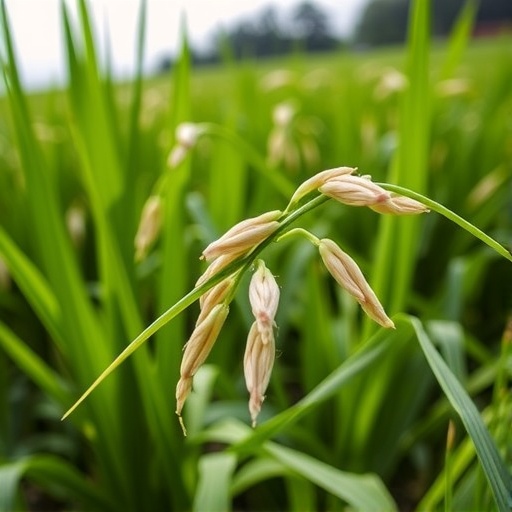
Image Credits: AI Generated

DOI: 10.1038/s43247-025-03068-5

Keywords: accelerating rice trait deployment, climate adaptation in rice through genetic engineering, crop yield improvement through biotechnology, evaluating progress in rice biotechnology, Genetic engineering in rice, genetically engineered rice for pest and disease resistance, history of rice genetic modification over 50 years, impact of genetic modification on rice resilience, precision gene editing in rice, rice biotechnology and molecular tools, role of biotechnology in addressing rice agronomic challenges, trait stacking in rice breeding

Cite Scienmag News

Juliet Wilcox. (July 28, 2026). Genetic Engineering in Rice After 50 Years Could Deliver Major Gains. Scienmag. https://scienmag.com/genetic-engineering-in-rice-after-50-years-could-deliver-major-gains/

Juliet Wilcox. "Genetic Engineering in Rice After 50 Years Could Deliver Major Gains." Scienmag, 28 July 2026, https://scienmag.com/genetic-engineering-in-rice-after-50-years-could-deliver-major-gains/. Accessed 7 September 2026.

Juliet Wilcox. "Genetic Engineering in Rice After 50 Years Could Deliver Major Gains." Scienmag. July 28, 2026. https://scienmag.com/genetic-engineering-in-rice-after-50-years-could-deliver-major-gains/


Tags: accelerating rice trait deploymentclimate adaptation in rice through genetic engineeringcrop yield improvement through biotechnologyevaluating progress in rice biotechnologyGenetic engineering in ricegenetically engineered rice for pest and disease resistancehistory of rice genetic modification over 50 yearsimpact of genetic modification on rice resilienceprecision gene editing in ricerice biotechnology and molecular toolsrole of biotechnology in addressing rice agronomic challengestrait stacking in rice breeding
Share26Tweet16
Previous Post

New Technique Captures Nine Corneal Points Simultaneously

Next Post

Critical Event Timing in Pediatric Intensive Care Unit for English and LOE Patients

Related Posts

Local food environments drive small fish consumption in Ugandan schoolchildren
Earth Science

Local food environments drive small fish consumption in Ugandan schoolchildren

September 7, 2026
Weather patterns drive PM2.5 pollution at Accra traffic intersections
Earth Science

Weather patterns drive PM2.5 pollution at Accra traffic intersections

September 7, 2026
Microplastics detected in farmed prawns from India using machine learning
Earth Science

Microplastics detected in farmed prawns from India using machine learning

September 7, 2026
Real Options Analysis of Gold Mines Under Tenure Constraints
Earth Science

Real Options Analysis of Gold Mines Under Tenure Constraints

September 7, 2026
Simulating long-term heavy metal cleanup in contaminated farm soils
Earth Science

Simulating long-term heavy metal cleanup in contaminated farm soils

September 7, 2026
Ramberg–Osgood model captures dynamic deformation of EPS lightweight soil
Earth Science

Ramberg–Osgood model captures dynamic deformation of EPS lightweight soil

September 7, 2026
Next Post
Critical Event Timing in Pediatric Intensive Care Unit for English and LOE Patients

Critical Event Timing in Pediatric Intensive Care Unit for English and LOE Patients

  • Mothers who receive childcare support from maternal grandparents show more optimized

    Mothers who receive childcare support from maternal grandparents show more parental warmth, finds NTU Singapore study

    27656 shares
    Share 11059 Tweet 6912
  • University of Seville Breaks 120-Year-Old Mystery, Revises a Key Einstein Concept

    1061 shares
    Share 424 Tweet 265
  • Bee body mass, pathogens and local climate influence heat tolerance

    682 shares
    Share 273 Tweet 171
  • Researchers record first-ever images and data of a shark experiencing a boat strike

    546 shares
    Share 218 Tweet 137
  • Groundbreaking Clinical Trial Reveals Lubiprostone Enhances Kidney Function

    531 shares
    Share 212 Tweet 133
Science

Embark on a thrilling journey of discovery with Scienmag.com—your ultimate source for cutting-edge breakthroughs. Immerse yourself in a world where curiosity knows no limits and tomorrow’s possibilities become today’s reality!

RECENT NEWS

  • Eggplant genetics and biotechnology advance crops for food security
  • Women’s role in adopting climate-smart farming technologies in the Sahel
  • Whole-genome sequencing reveals growth-promoting traits of beneficial bacterium Priestia megaterium
  • Novel peptides designed to block drug-resistant pneumonia bacteria targets

Categories

  • Agriculture
  • Anthropology
  • Archaeology
  • Athmospheric
  • Biology
  • Biotechnology
  • Blog
  • Bussines
  • Cancer
  • Chemistry
  • Climate
  • Earth Science
  • Editorial Policy
  • Marine
  • Mathematics
  • Medicine
  • Pediatry
  • Policy
  • Psychology & Psychiatry
  • Science Education
  • Social Science
  • Space
  • Technology and Engineering

Subscribe to Blog via Email

Enter your email address to subscribe to this blog and receive notifications of new posts by email.

Join 5,151 other subscribers

© 2025 Scienmag - Science Magazine

Welcome Back!

Login to your account below

Forgotten Password?

Retrieve your password

Please enter your username or email address to reset your password.

Log In
No Result
View All Result
  • HOME
  • SCIENCE NEWS
  • CONTACT US

© 2025 Scienmag - Science Magazine

Discover more from Science

Subscribe now to keep reading and get access to the full archive.

Continue reading